/ EN

BCIwiki — Brain-computer interface news, research and industry database

Latest

July 2026

NIRx and Artinis Form fNIRS Partnership Backed by Gilde Healthcare

NIRx Medical Technologies and Artinis Medical Systems, the Dutch fNIRS pioneer, have formed a strategic partnership backed by healthcare investor Gilde Healthcare to speed innovation and broader adoption of functional near-infrared spectroscopy (fNIRS) brain imaging. Both companies keep their own brands and operating locations while combining R&D and commercial scale, and leadership is unchanged, with Dr. Patrick Britz remaining chief executive of NIRx and Dr. Willy Colier chief executive of Artinis.
Why it matters fNIRS is a thin supplier market, so a tie-up between two of its main vendors, with a healthcare investor setting the pace, bears directly on what hardware non-invasive BCI labs will be able to buy in the next few years.

MEGIN Opens Dual-MEG Hyperscanning Facility at Tsinghua to Record Two Brains at Once

MEG systems maker MEGIN says it has opened a side-by-side dual-MEG hyperscanning facility at Tsinghua University in Beijing, built with the Department of Neuroscience and Biomedical Engineering at Aalto University. Two MEGIN TRIUX neo systems sit in adjacent magnetically shielded rooms, which the company says allows simultaneous whole-head recording from two interacting participants with millisecond-level synchronization, opening a real-time window on how two brains interact during natural conversation, cooperation and play. MEGIN says the first scientific work from the facility will be presented at the BIOMAG 2026 conference in Beijing, running August 23 to 25, 2026; the announcement does not disclose what the facility cost, how long it took to build, or which research projects are already under way.
Why it matters Hyperscanning has mostly been done with EEG or fNIRS, because putting two whole-head MEG systems side by side is an infrastructure problem rather than a methods one. A pair of TRIUX neo units in adjacent shielded rooms, synchronized to the millisecond, is a capability few sites have, and its landing in Beijing with Aalto involvement is worth logging for anyone tracking where two-brain work can actually be run. The claims here come from the vendor's own announcement, with no independent description of the installation.

Preprint: Effects of EEG Preprocessing on Channel-Wise Attention in Visual EEG Decoding

A preprint uses the Adaptive Thinking Mapper (ATM) model to empirically assess how EEG preprocessing strategies — a baseline MVNN-only pipeline versus a full cleaning pipeline integrating ICA and notch filtering — affect channel-attention representations in visual EEG decoding, using cross-generalization, noise-robustness, and spectro-temporal ablation analyses and examining the structural correspondence between data-driven attention weights and neurophysiological reference networks (GPDC, PDC, DTF). The researchers report the full pipeline suppressed non-neural artifacts such as frontal noise while maintaining comparable decoding accuracy and baseline robustness, and the learned attention spatial organization stayed stable across pipelines. The work has not been peer reviewed.
Why it matters The finding that preprocessing reshapes attention weights without changing decoding accuracy speaks directly to how transparent — and how reproducible — visual BCI decoders are, a prerequisite for interpretable BCI.

Deep Learning Decodes Imagined Sounds and Images From MEG, Topping 70% for Visual Imagery

Researchers recorded magnetoencephalography (MEG) from 18 right-handed participants as they imagined sounds and pictures, then compared two decoders: a convolutional neural network (CNN) and a linear logistic regression model. The CNN decoded both tasks above chance and exceeded 70% accuracy for visual imagery. It still decoded significantly when trained only on cortical regions unrelated to the task, suggesting imagined content is spread across partially overlapping networks rather than confined to a single sensory area, an experimental basis for feeding auditory and visual information into BCI decoders together.
Why it matters By comparing imagined sounds and imagined images within one MEG dataset, the study shows their cortical representations overlap, with decodable information even in task-irrelevant regions; for BCI, that means future decoders need not fixate on a single sensory area and can let modalities complement each other, though with only 18 participants a usable system remains some way off.

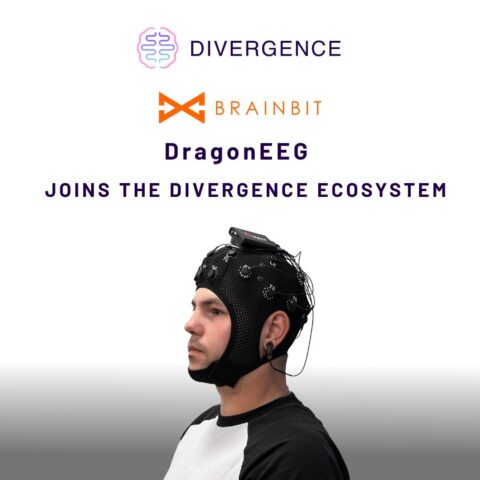
Divergence Neuro Adds BrainBit's 19-Channel DragonEEG to Its Platform

Divergence Neuro has added support for BrainBit's DragonEEG to its platform, bringing in a system with 19 EEG channels laid out on the international 10-20 system plus dedicated EMG, ECG and EOG poly channels. The integration gives clinicians, researchers, educators and developers research-grade EEG acquisition inside the Divergence ecosystem for qEEG brain mapping, neuroscience research and professional neurotechnology development, as qEEG use spreads through neurofeedback, mental health and cognitive performance work.
Why it matters Neurofeedback and qEEG platforms compete mainly on how much hardware they support, so each added device widens the pool of clinicians who can run 19-channel brain mapping without buying a dedicated research amplifier.

Paradromics Names William Marks Chief Clinical Officer as Connexus Study Advances

Paradromics has named William J. Marks chief clinical officer; he brings nearly three decades of experience in clinical neuroscience and implantable devices. The appointment comes as the company advances Connect-One, an early feasibility study of its Connexus BCI system, which is intended to restore communication for people who have lost it to spinal cord injury, stroke or ALS.
Why it matters Executive appointments are usually noise; this one is not. Hiring a chief clinical officer immediately after a first surgical implantation signals that Paradromics is now staffing to run trials rather than to build the device.

SpikeGadgets Takes Neuropixels Recording Wireless in Freely Moving Animals

SpikeGadgets has released wireless dataloggers compatible with Neuropixels probes, letting an animal carry the entire recording system and write high-density probe data straight to onboard storage instead of down a cable. Four studies over the past year used the setup in bats, rats and marmosets, and their findings are reshaping long-standing assumptions about hippocampal replay, prefrontal sequence coding and vocal communication.
Why it matters The tether has quietly bounded what neuroscience can ask about behavior, and moving Neuropixels-scale channel counts onto a flying bat or a foraging rat widens the pool of training data available to anyone building decoders for natural, unconstrained movement.

Chinese Rehabilitation Association Sets July Workshop on Closed-Loop EEG-TMS

The Chinese Association of Rehabilitation Medicine will hold a workshop on EEG-driven closed-loop TMS in Guangzhou, southern China, on July 17, 2026, staged under its Naoke China (脑客中国) series and run by its committee on brain function monitoring and modulation in rehabilitation. The technique reads EEG in real time and triggers a TMS pulse when a target brain state appears, a 'brain-state-dependent stimulation' approach that pairs the spatial precision of TMS with the temporal resolution of EEG, and the program is built around moving BCI work out of the laboratory into neurorehabilitation and the precision diagnosis of brain disorders. Shenzhen Yingchi Technology, a subsidiary of Hanix United, is among the supporting organizations, and registration closes on July 17.
Why it matters Closed-loop stimulation has been a research topic in China rather than a taught clinical skill, so billing this as the country's first public workshop on EEG-triggered TMS puts it at the point where a technique starts moving to practicing rehabilitation clinicians.

Microsoft and INBRAIN Neuroelectronics Partner on AI-Driven BCI Therapeutics

Microsoft and INBRAIN Neuroelectronics said they will work together on AI-driven brain-computer interface therapeutics, pairing INBRAIN's graphene-based neural interfaces with Microsoft's cloud computing and data infrastructure to speed development of treatments for neurological disorders. INBRAIN, a Spanish neurotechnology company, says its system combines graphene electrodes with AI algorithms to read and modulate brain signals with high precision, on a platform it describes as bringing together neuroscience, bioelectronics and AI.
Why it matters Neuromodulation companies have been strong on electrodes and thin on the compute and data layer behind decoding; bringing in a hyperscaler puts a cloud vendor inside the therapeutic stack rather than alongside it, and sets a template other implant developers will be asked about.

INBRAIN and Microsoft Partner on AI for Real-Time BCI Adaptation

INBRAIN Neuroelectronics has announced a partnership with Microsoft to apply the software company's large language models and data analytics tools to make its brain-computer interfaces adapt in real time. INBRAIN builds graphene-electrode BCIs for neurological disorders, spanning invasive and non-invasive applications, and recently partnered with the Mayo Clinic to speed clinical development and commercialization of its BCI therapies, with investigator-led clinical research under way.
Why it matters The interesting part is the dependency rather than the AI: a BCI maker leaning on a hyperscaler's models for real-time adaptation would put a cloud vendor inside the decoding loop of an implanted device, raising latency, regulatory and data-governance questions that ordinary device partnerships do not.

© 2026 BCIwiki.com Digest Topics Tips Subscribe Revisions About