中 / EN

BCIwiki — Brain-computer interface news, research and industry database

Latest

July 2026

Neurosom Wins US Patent for Bayesian EEG Source Mapping and Stimulation Targeting

Neurosom announced it has been granted a patent for a method that combines Bayesian statistical modeling with personalized EEG data and brain atlas models to achieve "super-resolution" in locating the origins of brain electrical activity, potentially improving the guidance of transcranial electrical stimulation (TES). The patent, titled "Method for Bayesian Super-Resolution of Electroencephalographic Source Analysis and Transcranial Electrical Stimulation" (US Pat. No. 12,663,866), was announced on July 9, 2026.
Why it matters Non-invasive stimulation is limited less by hardware than by not knowing what it is hitting, so a granted patent on individualized source localization stakes out the targeting layer where closed-loop TES products will have to compete.


Preprint: Functional Ultrasound Imaging Through a Human Cranial Window Maps Motor Effector Encoding

A preprint shows that functional ultrasound imaging (fUSI), read through an acoustically transparent cranial-window implant, reliably resolved multi-body-part and single-digit movement encoding in one participant's primary sensorimotor cortex, with maps consistent with classical somatotopy and single-trial decoding supported across sessions; analysis of key decoding voxels suggested different Brodmann areas encode single-digit movement differently. The researchers argue fUSI can map motor representations at submillimeter resolution, filling a key gap in humans between invasive electrophysiology and non-invasive blood-flow imaging; the work has not been peer reviewed.
Why it matters fUSI's submillimeter mapping through a cranial window targets the resolution gap between invasive electrodes and non-invasive imaging — a potential new, minimally invasive recording route for BCIs, albeit one still at preprint stage.

Shandong Bids to Be China BCI Testing Hub

Sixteen departments in China's Shandong province, led by the Health Commission, issued the Work Plan for Accelerating Clinical Translation and Application Innovation of Brain-Computer Interfaces, document number Lu Wei Yi Zi [2026] No. 13, dated July 7, 2026 and released on July 8. It is the only provincial BCI document led by a health authority and Shandong's second after the science department's industry plan. The plan advances a positioning it summarises as validated in Shandong, applied globally, working through an alliance, scenarios, policy and industry follow-through. Targets rise in four steps: an operating clinical research alliance in 2026; about 20 core technology breakthroughs and 30 technology SMEs by 2027; at least 30 alliance members, more than 20 foreign and domestic teams setting up validation bases, more than 30 multicentre projects and a 2 billion yuan industry by 2028; and a national validation cluster by 2030.
Why it matters The only provincial BCI document led by a health commission, aimed squarely at the clinical evidence bottleneck. The framing of validation in Shandong for global application is unusual: the province is trying to occupy one link of the value chain through patient volume and trial capacity rather than manufacturing. It also carries industrial targets, including a 2 billion yuan sector by 2028, so it is not a purely clinical plan.

NIRx and Artinis Form fNIRS Partnership Backed by Gilde Healthcare

NIRx Medical Technologies and Artinis Medical Systems, the Dutch fNIRS pioneer, have formed a strategic partnership backed by healthcare investor Gilde Healthcare to speed innovation and broader adoption of functional near-infrared spectroscopy (fNIRS) brain imaging. Both companies keep their own brands and operating locations while combining R&D and commercial scale, and leadership is unchanged, with Dr. Patrick Britz remaining chief executive of NIRx and Dr. Willy Colier chief executive of Artinis.
Why it matters fNIRS is a thin supplier market, so a tie-up between two of its main vendors, with a healthcare investor setting the pace, bears directly on what hardware non-invasive BCI labs will be able to buy in the next few years.

MEGIN Opens Dual-MEG Hyperscanning Facility at Tsinghua to Record Two Brains at Once

MEG systems maker MEGIN says it has opened a side-by-side dual-MEG hyperscanning facility at Tsinghua University in Beijing, built with the Department of Neuroscience and Biomedical Engineering at Aalto University. Two MEGIN TRIUX neo systems sit in adjacent magnetically shielded rooms, which the company says allows simultaneous whole-head recording from two interacting participants with millisecond-level synchronization, opening a real-time window on how two brains interact during natural conversation, cooperation and play. MEGIN says the first scientific work from the facility will be presented at the BIOMAG 2026 conference in Beijing, running August 23 to 25, 2026; the announcement does not disclose what the facility cost, how long it took to build, or which research projects are already under way.
Why it matters Hyperscanning has mostly been done with EEG or fNIRS, because putting two whole-head MEG systems side by side is an infrastructure problem rather than a methods one. A pair of TRIUX neo units in adjacent shielded rooms, synchronized to the millisecond, is a capability few sites have, and its landing in Beijing with Aalto involvement is worth logging for anyone tracking where two-brain work can actually be run. The claims here come from the vendor's own announcement, with no independent description of the installation.

NeuroXess Launches BCI Registration Trial to Evaluate Upper Limb Function Compensation in Tetraplegia

NeuroXess announced the launch of a GCP registration clinical trial at Huashan Hospital, Fudan University, for its implantable BCI system for hand motor function compensation. The trial aims to evaluate safety and efficacy for upper limb function compensation in people with tetraplegia caused by cervical spinal cord injury. According to the company, Professor Mao Ying's team serves as the principal investigator team, and the multicenter study involves 15 Grade III Class A hospitals. Data will support a Class III medical device registration application to the National Medical Products Administration. The system uses flexible electrodes on the cortical surface beneath the dura, with battery, wireless transmission and charging units under the skin of the chest. The announcement concerns trial initiation, not regulatory approval or demonstrated efficacy.
Why it matters The trial targets compensation for upper limb function, rather than claiming to repair spinal cord injury. It also serves a different purpose from earlier implantation work: the company plans to use these multicenter trial data for device registration.

Preprint: Effects of EEG Preprocessing on Channel-Wise Attention in Visual EEG Decoding

A preprint uses the Adaptive Thinking Mapper (ATM) model to empirically assess how EEG preprocessing strategies — a baseline MVNN-only pipeline versus a full cleaning pipeline integrating ICA and notch filtering — affect channel-attention representations in visual EEG decoding, using cross-generalization, noise-robustness, and spectro-temporal ablation analyses and examining the structural correspondence between data-driven attention weights and neurophysiological reference networks (GPDC, PDC, DTF). The researchers report the full pipeline suppressed non-neural artifacts such as frontal noise while maintaining comparable decoding accuracy and baseline robustness, and the learned attention spatial organization stayed stable across pipelines. The work has not been peer reviewed.
Why it matters The finding that preprocessing reshapes attention weights without changing decoding accuracy speaks directly to how transparent — and how reproducible — visual BCI decoders are, a prerequisite for interpretable BCI.

SpikeGadgets Takes Neuropixels Recording Wireless in Freely Moving Animals

SpikeGadgets has released wireless dataloggers compatible with Neuropixels probes, letting an animal carry the entire recording system and write high-density probe data straight to onboard storage instead of down a cable. Four studies over the past year used the setup in bats, rats and marmosets, and their findings are reshaping long-standing assumptions about hippocampal replay, prefrontal sequence coding and vocal communication.
Why it matters The tether has quietly bounded what neuroscience can ask about behavior, and moving Neuropixels-scale channel counts onto a flying bat or a foraging rat widens the pool of training data available to anyone building decoders for natural, unconstrained movement.

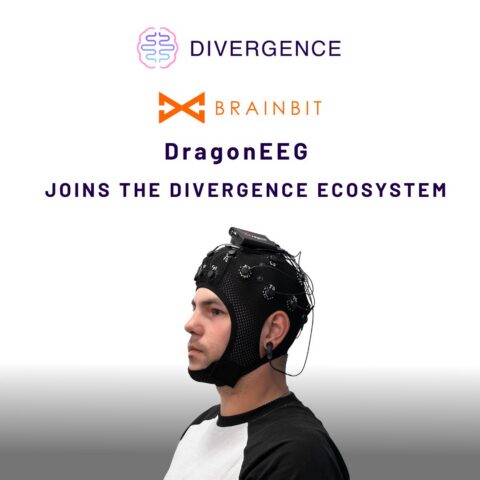
Divergence Neuro Adds BrainBit's 19-Channel DragonEEG to Its Platform

Divergence Neuro has added support for BrainBit's DragonEEG to its platform, bringing in a system with 19 EEG channels laid out on the international 10-20 system plus dedicated EMG, ECG and EOG poly channels. The integration gives clinicians, researchers, educators and developers research-grade EEG acquisition inside the Divergence ecosystem for qEEG brain mapping, neuroscience research and professional neurotechnology development, as qEEG use spreads through neurofeedback, mental health and cognitive performance work.
Why it matters Neurofeedback and qEEG platforms compete mainly on how much hardware they support, so each added device widens the pool of clinicians who can run 19-channel brain mapping without buying a dedicated research amplifier.

Paradromics Names William Marks Chief Clinical Officer as Connexus Study Advances

Paradromics has named William J. Marks chief clinical officer; he brings nearly three decades of experience in clinical neuroscience and implantable devices. The appointment comes as the company advances Connect-One, an early feasibility study of its Connexus BCI system, which is intended to restore communication for people who have lost it to spinal cord injury, stroke or ALS.
Why it matters Executive appointments are usually noise; this one is not. Hiring a chief clinical officer immediately after a first surgical implantation signals that Paradromics is now staffing to run trials rather than to build the device.

© 2026 BCIwiki.com Digest Topics Tips Subscribe Revisions About