/ EN

China

188 entries
August 2026

Review Charts the Shift From Rigid Silicon to Soft Brain Implant Electrodes

Implantable brain-computer interfaces are shifting from rigid silicon architectures to soft, structurally adaptive systems built for seamless, long-term integration with neural tissue, according to a review of flexible electrode materials and structural design published in SmartMat on August 31, 2026. Breakthroughs in materials science and micro/nanofabrication have given this generation of devices mechanical compliance, robust interfacial adhesion and high-fidelity signal acquisition that earlier designs could not reach, the review says. Long-term stability at the electrode-tissue interface remains one of the core bottlenecks for invasive BCI.
Memory Prosthetics Near First-in-Human Trials

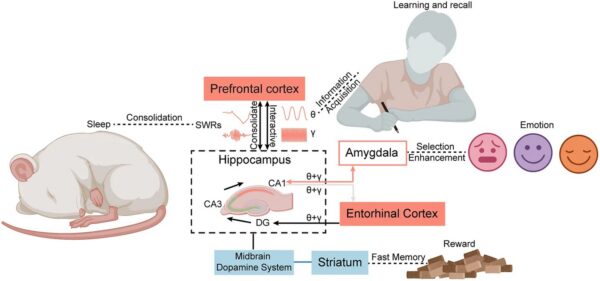
Memory prosthetics — closed-loop brain-computer interfaces that decode hippocampal activity and deliver adaptive stimulation — are moving from animal proof-of-concept toward first-in-human trials, according to a review in iScience. The authors argue that chronically implantable systems require co-design of three subsystems that have been treated in isolation: biocompatible electrode interfaces, on-chip neuromorphic computation, and closed-loop control hardware. The review maps neuroscientific findings such as theta-phase tracking, theta-gamma coupling and sharp-wave ripple detection onto engineering specifications for latency, sampling and charge injection, and onto materials requirements for impedance, switching endurance and chronic stability. It also flags where small-cohort clinical results have been over-generalized.

BCI Plans Across 10 Chinese Provinces All Target 2030, Only Zhejiang and Beijing Reimburse

Ten provincial-level regions have issued 12 brain-computer interface (BCI) policy documents as of August 2026, with hard numeric targets almost exclusively set for 2030, which makes the next four years critical for clearing regulatory and payment hurdles. The payment gate is the tightest constraint, as only Zhejiang and Beijing have moved BCI items into basic medical insurance reimbursement, each with conditions attached. This means most provinces still have to solve reimbursement before the 2030 targets can be met.

BCIs in Elderly Care: Review of 177 Studies Maps Six Ethical Themes

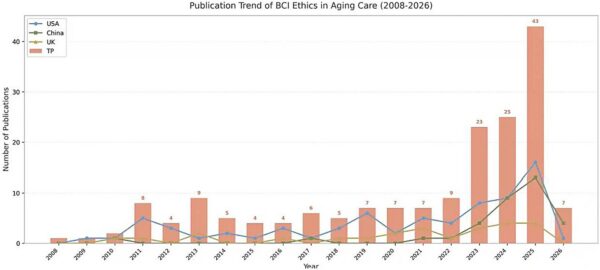
A systematic review in Frontiers in Digital Health screened 12,423 records and analyzed 177 studies of brain-computer interfaces in elderly care, identifying six recurring ethical themes: privacy and data security, informed consent and autonomy, personhood and identity, technical risk and safety, equity and access, and risk-benefit trade-offs. The authors argue those risks are built into the technology's interaction logic rather than sitting at its margins: decoding uncertainty can turn into care misjudgment, the inferability of neural data extends privacy exposure into psychological territory and power asymmetry, and technology-mediated communication strains trust and accountability. Responsible deployment, they conclude, requires embedding ethical principles systematically into care processes.

Xi'an Jiaotong Team Uses Inkjet-Printed Conductive Patterns to Align Neural Cells

Researchers at the Second Affiliated Hospital of Xi'an Jiaotong University in northwestern China and the Key Laboratory of Biomedical Information Engineering of the Ministry of Education have built an in vitro screening platform combining electrospun PLCL with inkjet-printed reduced graphene oxide (rGO) and growth-factor micropatterns. Because it varies conductive, biochemical and topographical cues together, the platform can evaluate printing parameters and electric-field strength in a single system. Under 150 mV/cm direct-current stimulation, PC-12 cells showed more neurite-like outgrowth and better alignment than with no stimulation or at 300 mV/cm.

72-Trial Meta-Analysis Ranks Noninvasive BCI Options for Post-Stroke Arm Recovery

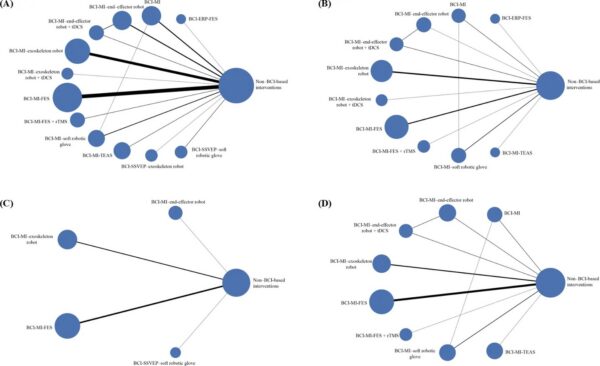
A network meta-analysis of 72 randomized controlled trials covering 2,906 stroke patients found that noninvasive brain-computer interface (BCI) interventions significantly improve upper limb motor function and activities of daily living, with BCI combined with motor imagery and transcutaneous electrical acupoint stimulation ranking highest for motor recovery. The review, published in the Journal of Medical Internet Research on August 28, 2026, sorted 12 intervention types by paradigm, feedback device and adjunctive stimulation to produce relative rankings for clinical use. Evidence certainty was low to moderate, so the authors describe the findings as exploratory and call for higher-quality trials.

Kunming Team Maps Why BCI Performance Has a Ceiling, and How to Push It

A team at Kunming University of Science and Technology, in southwestern China's Yunnan province, has published a paper in the Journal of Biomedical Engineering analyzing how inherent limitations set the capability boundaries of brain-computer interfaces (BCIs). Dynamic neural coding, inter-individual variability, low signal-to-noise ratio, partial observability and paradigm dependence jointly impose upper limits on decoding accuracy, information transfer rate, complex intention decoding, user experience and system stability. The authors propose information enhancement, adaptive decoding, human-machine collaboration and system optimization, arguing that gains will come from extracting more from the neural signal rather than from overcoming the underlying limits.

Tianjin University's MTGNet Denoises EEG, Lifting Fatigue Detection by Over 6 Points

EEG signals are only microvolts strong, so blinks, jaw clenching and muscle activity easily contaminate them. Researchers at Tianjin University and Tiangong University in northern China proposed MTGNet, a framework that suppresses these artifacts while preserving the information downstream tasks need. On the public EEGDenoiseNet dataset, it cut spectral relative root-mean-square error by 18.9%, 31.5% and 14.0% for EMG, EOG and mixed artifacts respectively; on a real-world fatigue EEG dataset, it raised classification accuracy by 6.20 to 6.69 percentage points over unprocessed input. Adapting the framework to a new task takes only 0.33 million low-rank adaptation (LoRA) parameters and no paired clean EEG reference.

DMG-GCN Decodes Air Traffic Controller Workload From EEG at 80.30% Accuracy

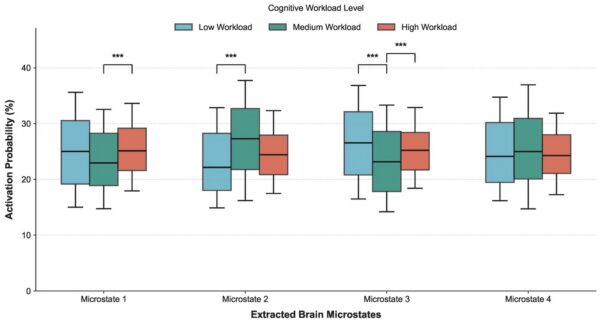
In cross-subject decoding across simulated multi-level air traffic control tasks, the DMG-GCN model reached 80.30% average accuracy and a 78.63% average F1-score, outperforming state-of-the-art baselines. Built by researchers at Nanjing University of Aeronautics and Astronautics and other institutions, the dynamic microstate-guided graph convolutional network targets the inter-subject variability in controllers' EEG that has held back passive brain-computer interfaces for adaptive automation.

BCIFlex Begins China Trial of Implantable Wireless BCI in Tetraplegia

BCIFlex Medical Technology has begun a clinical trial in China evaluating the safety and efficacy of an implantable wireless brain-computer interface in patients left tetraplegic by spinal cord injury. The trial is registered on ClinicalTrials.gov as NCT07784088 and is recruiting. The sponsor is a Chinese device maker headquartered in the Haidian district of Beijing with an office in Shanghai, working on invasive ultra-thin flexible electrodes; its products include digital EEG systems and stereo-EEG depth electrodes.

Chinese Hospitals Test Closed-Loop BCI Neuromodulation for Resistant Depression

A multicenter trial has begun in China to test closed-loop brain-computer interface neuromodulation for treatment-resistant depression, run jointly by the Shanghai Mental Health Center and two Beijing hospitals, Anding Hospital and Xuanwu Hospital. The study will compare closed-loop deep brain stimulation and transcutaneous auricular vagus nerve stimulation against sham stimulation, enrolling patients who have responded inadequately to standard antidepressant treatment. It uses a patient-preference design with randomized assignment within each intervention group.

Review Outlines Three BCI Paradigms for Post-Stroke Hand Rehabilitation

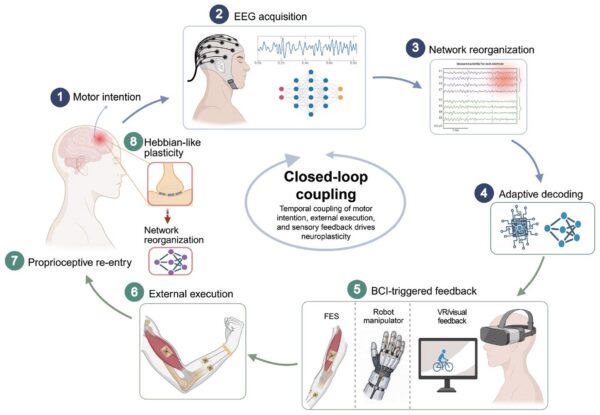
A review in Topics in Stroke Rehabilitation maps the neurophysiological basis of non-invasive EEG-based brain-computer interfaces for post-stroke hand recovery and sorts the field into three paradigms: motor imagery with physical feedback, motor imagery with virtual or multisensory feedback, and steady-state visual evoked potential (SSVEP)-driven training. These systems decode sensorimotor-cortex rhythms during imagined hand movement in real time to drive exoskeletons, functional electrical stimulation or virtual reality, closing a Hebbian feedback loop meant to strengthen or remodel damaged pathways in patients whom conventional rehabilitation, which depends on active movement, often cannot reach. Studies confirm the approaches can improve upper-limb function, the review says, but clinical adoption still faces low signal-to-noise ratios, wide individual variability and 'BCI blindness.'

BCIs Move into Orthopedic Rehab, Targeting Muscle Inhibition after Surgery

Brain-computer interfaces are moving out of neurology and into orthopedic rehabilitation, according to a review arguing that BCIs can raise corticospinal excitability and induce neuroplasticity by decoding movement-related neural signals and closing a feedback loop between central and peripheral systems. The target is postoperative muscle inhibition caused by insufficient central motor drive; available evidence suggests motor imagery-based BCI training improves quadriceps voluntary activation and limits strength loss after ACL reconstruction, though the authors cite thin mechanistic evidence, patient heterogeneity and a lack of standardized protocols as barriers to translation. The review, by researchers at the First Affiliated Hospital of Jinan University in southern China's Guangzhou and other institutions, was published on August 25, 2026, in the Chinese Journal of Reparative and Reconstructive Surgery.

Tianjin University Team Cuts EEG Channels Without Losing Decoding Accuracy

A team at Tianjin University in northern China has built a graph neural network framework that jointly optimizes EEG channel selection and classification, picking a small subset of channels for motor imagery decoding while holding accuracy close to that of the full electrode set. Reported in the journal Chaos, the method was validated on three datasets — BCI Competition IV 2a, High Gamma and a newly collected set — and could cut system complexity for uses such as neurorehabilitation.

Teacher Support Was the Strongest Predictor of Student BCI Adoption

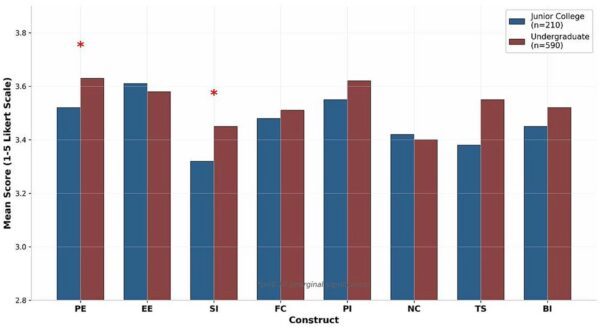
A survey of 800 students at 10 Chinese universities found teacher support was the strongest predictor of willingness to use BCI technology (beta=0.337), while performance expectancy was not significant (beta=0.059). Neuroethical concern was also non-significant in the structural model, yet 28 of 40 interviewees named privacy as their leading worry, suggesting concern may reflect engagement rather than rejection before adoption.

Cochrane Review Finds Small, Low-Certainty Gains for BCI Stroke Rehabilitation

A Cochrane review of 43 randomized trials involving 1,628 participants found that BCI training may produce a small improvement in post-stroke upper-limb motor function compared with conventional rehabilitation, while effects on lower-limb function and activities of daily living were limited or uncertain. No clear advantage emerged over sham BCI, and certainty was low to very low because of bias risk, small samples, heterogeneity and possible publication bias.

Chinese Academy of Sciences Team Releases BCIJelly Toolchain Unifying 18 BCI Datasets

BCI research has long been slowed by inconsistent data formats, divergent decoder implementations and incompatible deployment toolchains. BCIJelly standardizes 18 BCI datasets into inputs ready for AI training and integrates 15 benchmark decoders and 80 reusable modules. Its automated architecture search generates task-specific decoders without manual design and can extend into a large language model-driven closed-loop mode that supports single-task, multitask and cross-species decoder design; the system also offers interactive visualization software that requires no coding. A single-command pipeline compiles trained decoders onto neuromorphic hardware, cutting power consumption 30- to 50-fold while maintaining decoding performance. The work has been validated in humans, macaques and mice across five paradigms: motor, visual, speech, emotion and auditory. It is a preprint that has not been peer reviewed.

Review Maps How Closed-Loop BCIs May Support Post-Stroke Recovery

A review in *Frontiers in Neuroscience* describes closed-loop BCIs as systems that detect motor imagery, motor attempts or sensorimotor rhythms and trigger contingent electrical stimulation, robotic assistance, virtual reality, multisensory feedback or neuromodulation. The authors argue that restoring the timing between intent, assisted movement and sensory feedback may promote activity-dependent plasticity, while stressing that outcomes vary with patient selection, signal quality, dose, feedback modality and trial design.

Dual-View Network Reaches 67.74% on Handwriting-Imagery EEG

DRDNet separates spatial EEG features into two temporal views, models them with a bidirectional Mamba encoder and a Transformer, and then combines them through dynamic fusion and LSTM aggregation. On a public dataset, it reached 67.74% accuracy for imagined Chinese-character strokes and 62.51% for imagined pinyin vowels, outperforming seven EEG-decoding baselines.

BCI emerges as hotspot in post-stroke motor rehab

Published in Neural Regeneration Research on August 18, 2026, the study conducted a bibliometric analysis of 3173 articles from the Web of Science Core Collection on post-stroke limb motor dysfunction and functional recovery from 2016 to 2025, by authors from Beijing Rehabilitation Hospital, Capital Medical University. The field is in a period of rapid expansion, with technology-assisted rehabilitation as the dominant trend and robot-assisted training and virtual reality as the two major technological keywords. Burst literature analysis revealed three hotspot phases, with the recent phase (2020 to present) covering neuromodulation (brain-computer interface and non-invasive brain stimulation), global disease burden and public health policy. Highly cited studies focus on comparative efficacy, robot-assisted training, brain-computer interfaces, vagus nerve stimulation and prediction of rehabilitation outcomes.

Chinese Insurers Begin Covering BCI Procedures and Surgical Risk

Chinese insurers have begun introducing BCI-related coverage. Shanghai's 2026 Hu-huibao plan added up to 150,000 yuan for out-of-pocket materials used in inpatient BCI surgery, PICC Property and Casualty underwrote an invasive-BCI surgical accident policy for the Second Affiliated Hospital of Zhejiang University School of Medicine, and China Pacific Property Insurance covered patients receiving Neuracle's NEO implant at Huashan Hospital.

Sixth-Finger BCI Neurofeedback Aids Stroke

Researchers report that a BCI-controlled sixth-finger neurofeedback intervention improved motor function in stroke: after 8 sessions (2 weeks) of motor-imagery BCI training, 14 patients gained an average of 7.9 points on FMA-UE and 7.1 on the Barthel Index, with 9 of 14 reaching the 6.6-point minimally clinically important difference. EEG tracking across the full intervention showed a two-phase ERD trend that strengthened in week one and narrowed to the contralateral sensorimotor area in week two, and resting-state functional connectivity rose afterward, correlating with motor gains. The authors say the work offers longitudinal evidence on neuroplasticity in stroke rehabilitation.

Fujian Targets a 3 Billion Yuan BCI Industry by 2030

Six Fujian government departments jointly issued a provincial BCI action plan for 2026–2030. It calls for key technical breakthroughs, more than five innovative small and medium-sized companies, one cross-strait joint laboratory and two provincial innovation platforms by 2027; by 2030, Fujian aims to have 30 companies, a complete industry chain and an industry worth more than 3 billion yuan.

Study reviews invasive and non-invasive BCI use

A systematic review of BCI medical applications published on August 17, 2026 in Theoretical and Natural Science covers literature review, comparative case analysis of invasive vs non-invasive techniques, and interdisciplinary assessment. It reports that invasive BCIs reach 80% to 100% task success rates in robotic arm control but are limited by surgical hazards, progressive signal deterioration and costs above $250,000, while non-invasive BCIs are safer and more widely deployed in community neurorehabilitation with about 70% effectiveness for post-stroke upper-limb recovery, yet suffer poor signal-to-noise ratios, a BCI illiteracy rate near 30% and low information transfer speeds. The review also addresses neural data privacy, autonomy paradoxes and inequitable access.

MRieHy Framework for Online MI-BCI Adaptation

Researchers propose MRieHy, a multi-feature Riemannian hypergraph framework for online test-time adaptation of motor imagery BCI decoding. It aligns multi-day distributions via Riemannian means of covariance matrices, builds one hypergraph with Riemannian distance and a second with cosine similarity, fuses them with adaptively learned weights, and decodes buffered online samples after Riemannian alignment. On a private four-class ECoG dataset and two public four-class EEG datasets, MRieHy shows notable gains over state-of-the-art baselines, targeting the cross-day transferability and online operation that clinical MI-BCI still lacks.

BCI Pricing in Eleven Chinese Jurisdictions: Implantation RMB 4,389-7,980, Insurance Coverage in Two

Eleven Chinese provincial-level jurisdictions had published prices for brain-computer interface medical services. The invasive implantation fee runs from RMB 4,389 at the lowest hospital tier in Sichuan to RMB 7,980 in Beijing (approx. $650 to $1,180 at RMB 6.74 to the dollar, the mid-August 2026 rate), and the non-invasive fitting fee from RMB 643 to 990. Sichuan, Hainan, Qinghai and Xinjiang tier prices by hospital grade, Shanghai leaves the amount to each hospital, and Jiangsu's three figures appear only in a July 2025 draft. Beijing lists all three fees as Class A at four named hospitals; Zhejiang covers the fitting fee as Class B, limited to prosthetic fitting. Sichuan, Jiangxi, Hainan, Qinghai and Xinjiang assign Class C, Shanghai excludes the fees, and Hubei and Guangdong have prices without a coverage decision.

Wearable BCI Hits 79.38% Online Decoding Accuracy

The study was published in ITM Web of Conferences on August 14, 2026, addressing the demand for portable, real-time brain-computer interface systems in stroke rehabilitation by completing the physical integration and online experimental validation of a wearable system. The system uses a specialized EEG headset with miniaturized acquisition circuits secured via pogo pins, featuring 10 core recording channels positioned over the sensorimotor cortex. During the evaluation phase, the research team recruited 6 healthy subjects and 2 stroke-affected hemiplegic patients for closed-loop experiments based on motor imagery and motor attempts. Common Spatial Pattern was used for spatial feature extraction and Linear Discriminant Analysis for intention classification, with personalized sub-band optimization applied to further improve recognition. The authors report an average offline recognition rate of 84.91% and a classification accuracy of 79.38% in the more challenging online real-time testing. Analysis of spatiotemporal spectra and R² value distributions validated activation patterns in the sensorimotor areas during motor intention triggering, which the authors present as support for advancing the technology from laboratory settings toward community rehabilitation.

WABO Appoints Speech-Cognition Researcher Jianwu Dang as Joint Scientist

WABO appointed Jianwu Dang to its Scientific Advisory Board and named him joint scientist. Dang, a researcher at the Shenzhen Institutes of Advanced Technology and a distinguished professor at Shenzhen University of Advanced Technology, will support task-conditioned intent models that combine EEG, EMG, speech, text and task context; WABO said the work is not aimed at context-free mind reading.

China bet $1B on BCI in 6 months. Who got the money?

China's brain-computer interface sector recorded 47 funding rounds in the first half of 2026, 38 of them disclosing terms for a combined RMB 5.38 billion (approx. $750 million). A broader tally used by Chinese financial media puts the total at 64 deals and roughly RMB 7.25 billion (approx. $1 billion). Either figure is more than double the whole of 2025 (49 deals, RMB 2.72 billion) at a comparable deal count. The record lists every deal by month — company, technical approach, round, amount, investors — and identifies three structural patterns: ultrasound and non-invasive approaches moving quickly into a field long defined by implants, Big Tech and municipal state funds entering at the same time, and nearly half of all transactions still sitting at angel or seed stage.
© 2026 BCIwiki.com Digest Topics Tips Subscribe Revisions About