

August 2026
BCI Clinic Cohort: 1,641 Motor Patients
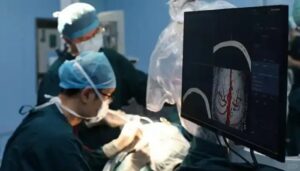
A prospective cohort of 1,641 motor dysfunction patients, 66.24% chronic stroke, provides the first clinical profile for personalised BCI system design.
Taichung Veterans Hospital Completes BCI-Controlled Exoskeleton Gait Trial After Stroke
A completed RCT compared BCI-controlled versus conventional exoskeleton gait training in stroke patients, training 2 times a week for 4 weeks.
Zhejiang Cuts BCI Device Review to 40 Days
The General Office of China's Zhejiang Provincial People's Government issued Several Measures for Promoting Industry-University-Research Coordination in Brain-Computer Interfaces, document number Zhe Zheng Ban Fa [2026] No. 33, dated July 16, 2026 and released on August 12, comprising 18 measures in five areas. Class II BCI devices of clear clinical value may enter a special review procedure with the timeline cut to within 40 working days, while medical consumables are listed through a green channel within 10 working days. Funding comes in four tiers: up to 10 million yuan for a provincial major science and technology project, up to 8 million yuan for research hospitals deeply involved in preclinical work and product launch, up to 3 million yuan for applied basic research, and 1 million, 500,000 and 100,000 yuan for leading international, national and local standards. Beds used solely for clinical research are exempt from efficiency and DRG performance assessment.
Review: BCI in Neurorehab and Nursing for Paraplegia
A review systematically examines stratified BCI rehabilitation strategies and comprehensive nursing models for paraplegic patients, showing BCIs can activate neuroplasticity and relieve spasticity.
Review: SSVEP-BCI Application Bottlenecks and Solutions
A review analyses technical, hardware, and user-level bottlenecks facing SSVEP-BCI systems in real-world deployment, summarising solutions including EMG fusion denoising, novel sponge electrodes, and hybrid paradigms.
Review Maps Deep Learning for Motor Imagery BCIs
CLMT-Net Decodes Fine-Grained Within-Limb Motor Imagery EEG
Researchers propose CLMT-Net, a contrastive learning network based on a multi-scale Transformer, for fine-grained within-limb MI decoding, achieving 76.13% accuracy on the MI-2 dataset.
Review: BCI in Ophthalmology for Diagnosis and Visual Restoration
Game Theory-Based Joint Learning Boosts Online MI-BCI Decoding
A game theory-based adaptive human-machine joint learning method for online MI-BCI decoding improves accuracy by 9.7% and 5.6% in 14-subject online experiments (both p < 0.01).
BLCU Team's Falsifiable Substitution Test Keeps 0.968 AUC After Target Events Are Removed
Brain-computer interface decoders can guess the right label using information unrelated to the target mental state. A team at the School of Psychology, Beijing Language and Culture University (BLCU), proposes a falsifiable substitution-test standard: candidate evidence must persist in disjoint data, survive capacity-matched substitutions of physical organization or listener templates, and remain testable after target events are excluded. Across six EEG datasets (41 participants), averaging four neural-speech margin metrics brought 5-second decoding to what the authors call a leading level; in two hierarchical interfaces, parent-stream error scores kept AUCs of 0.968 and 0.965 after all target-command events were excluded. The framework offers a test for attributing evidence in neuroscience and BCI.
Shanghai's Neuro Space Hits One-Year Mark: 52 Firms, World's First Invasive BCI Approved

WABO EEG Art Demo Yields 100+ Works at ChinaJoy
WABO (瓦博科技) says it ran a four-day neural art experience at the Snapdragon Pavilion during ChinaJoy 2026, held from July 31, 2026 to August 3, 2026 in Shanghai, producing more than 100 AI artworks with participants. Visitors wore a non-invasive EEG headband and viewed feedback derived from their signal state, with task-specific features feeding the artwork-generation process; the company says no private thoughts were read. The setup paired WABO's acquisition hardware with a Snapdragon X Elite laptop, keeping signal processing, model inference and image generation on the endpoint, which the company describes as a practical test of a neural-intent workflow outside a controlled development setting.
ReCIL: Rehearsal-Based Class Incremental Learning for Cross-Subject Motor Imagery Classification
Researchers propose ReCIL, a rehearsal-based class incremental learning method for cross-subject motor imagery classification that lets a model learn new MI classes sequentially without retraining from scratch. Using Euclidean alignment to reduce cross-subject EEG distribution shift and global-local replay to preserve earlier-task knowledge, ReCIL achieved a good balance between plasticity and stability across three public MI datasets. The authors report it as the first study of cross-subject class incremental learning for MI classification.
Haidian Hosts Nearly 60% of China's Key BCI Firms
Beijing's Haidian district is accelerating its push to become a hub for brain-computer interface development, with nearly 60% of China's key BCI companies based in the district, CCTV.com reported on August 6, 2026. According to the report, the Zhongguancun (Haidian) BCI Industry Cluster was formally unveiled at the 2026 Zhongguancun Forum annual meeting and now hosts more than 20 BCI projects, and an AI-plus-BCI standards testing and validation laboratory has been completed. The report did not disclose a list of the cluster's projects, the methodology behind the company figure, or further construction plans.
Air Force Medical University Releases Multi-Day fNIRS Stroop Dataset from 55 Adults
Researchers at Air Force Medical University have published a functional near-infrared spectroscopy (fNIRS) dataset in Scientific Data: frontal hemoglobin responses from 55 young adults, each recorded across three color-word Stroop sessions spread over about two weeks, with more than 30 trials per condition. The authors offer it for work on conflict inhibition, for building decoders for neurofeedback training, and for training large-scale cross-subject fNIRS models.
BiGSTF-Net: Inter-Modal Mutual Guidance and Intra-Modal Spatio-Temporal Fusion for EEG-fNIRS Cognitive Classification
The study proposes BiGSTF-Net, a multimodal architecture that exploits the complementary properties of EEG and functional near-infrared spectroscopy (fNIRS) for cognitive-state decoding: heterogeneous spatio-temporal extractors capture each modality's representations, a modal residual interaction unit provides bidirectional cross-modal guidance, and a spatio-temporal gating unit fuses intra-modal features. Under cross-session evaluation on multiple BCI datasets, BiGSTF-Net consistently outperformed representative multimodal fusion baselines; ablations validated each component and visualizations matched the known neurophysiological features of the two signals.
AutoMI: Hands-Free Motor Imagery EEG Classification via LLM Multi-Agents
The study presents AutoMI, a framework that uses LLM multi-agents to automatically and rapidly iterate on motor imagery EEG classification models, combining a Q-learning policy with deterministic rules and integrating planning, execution and output agents with predefined tools, plus experience tracking and rollback. Models built by AutoMI reached 77.62%, 78.08% and 83.02% accuracy on the IV2a, OpenBMI and ECUST-MI datasets — up 18.42%, 9.27% and 19.25% over automated optimization algorithms.
EEG-fNIRS fusion decodes imagined handwriting
Researchers report FRED, a principled EEG-fNIRS fusion framework for imagined handwriting decoding, posted to arXiv as a preprint on August 4, 2026 and not yet peer reviewed. Imagined handwriting offers a temporally rich paradigm for non-invasive neural decoding, and EEG-fNIRS fusion promises complementary neural information, but fusion is typically heuristic and lacks principled treatment of frequency-band redundancy. FRED builds frequency-decorrelated temporal ensembles for imagined handwriting decoding. The ensemble reaches 0.8076/0.7242/0.7492 accuracy on the public/private/overall test partitions without test-set adaptation or output constraints, and the complete system reaches 0.8498/0.7718/0.7952, ranking fourth on the private split. A modality audit finds fNIRS-only decoding at chance (0.2511 overall), while adding fNIRS to EEG changes accuracy by only +0.0025.
Integrated Decoding of Local and Prospective Spatial Representations for Future Decision Prediction
The study recorded hippocampal CA1 population activity in rats performing a sequential spatial decision task in a modified T-maze, dividing the decision into initiation, running and approach phases. Local theta sequences consistently over-represented the actual choice, while prospective representations driven by choice-arm place cells shifted from predicting the actual choice during running to representing potential paths more evenly at the choice point. Integrating local and prospective features improved decoding, reaching 74.4% accuracy for future choice prediction and 78.2% for upcoming trajectory decoding.
EEG-guided extraction switches speakers in 2.04 s
Researchers report SAGE, a switch-aware EEG-guided soft gating framework for target speaker extraction, posted to arXiv as a preprint on August 3, 2026 and not yet peer reviewed. Under in-trial auditory attention switching, neural noise and intrinsic latency can delay or destabilize attention tracking, and conventional methods often cause discontinuities at switching points. SAGE treats in-trial switching as dynamic selection, generating two candidate speech streams with a robust separator and using an EEG-guided switch-aware gating module to produce smooth fusion weights and suppress transition artifacts. It integrates latency-compensated alignment and an uncertainty-driven conservative strategy, outperforms baselines, achieves 8.67 dB SI-SDR and 88.24% STOI, and reduces average switching latency to 2.04 s.
StairMed BCI Users Complete Three to Four Hours of Computer Work
People's Daily Online reported that multiple people with high-level paralysis used StairMed's minimally invasive implantable BCI for three to four consecutive hours of computer work, including e-commerce logistics coordination and vending-machine data labeling. The company reported a 256-channel system and latency below 50 milliseconds. The article did not provide a participant count, standardized protocol or adverse-event table.
China's First National Standards for Brain-Computer Interfaces Take Effect
Two national standards for brain-computer interfaces took effect in China on 1 August 2026, the first foundational standards the field has had there. GB/T 47023 defines a reference architecture for BCI systems; GB/T 47127 sets a common format for multimodal data, down to directory structure and file naming. Both carry the GB/T prefix, marking them as recommended rather than mandatory, so they bind no one by law and work only as far as industry and procurement choose to adopt them.
July 2026
EasyBCI Plans BCI Preprocessing for Six Signals
This preprint introduces EasyBCI, which the authors say automates BCI preprocessing across six signal types with a two-phase large language model agent. The study is a preprint and has not been peer reviewed. On EEG with a fixed linear classifier, the authors report that all five EasyBCI backbones preserve more task-relevant separability than the manual pipeline, and that the system extends to five additional modalities spanning nearly three orders of magnitude in sampling rate.
A Multi-Paradigm Longitudinal EEG Dataset Including 'Sixth-Finger' and 'Affected-Hand' Motor Imagery of Stroke Patients
Researchers released a multi-paradigm longitudinal EEG dataset from 24 stroke patients, covering a novel 'sixth-finger' motor imagery paradigm and affected-hand motor imagery. The dataset spans the full pre-training, post-training and follow-up stages and includes raw EEG, preprocessed data and patient clinical information. Preliminary analysis with classical classifiers (CSP+SVM, CSP+LDA) kept average cross-paradigm classification accuracy at roughly 85%–86%.
China Implants First 320-Resolution Visual BCI
Zhejiang Provincial People's Hospital performed China's first 320-resolution visual BCI implant; a woman blind for nearly 20 years reportedly reads, writes and walks again.
Three Weeks of Motor Imagery BCI Improves Arm Function in Subacute Stroke
A study of 60 patients with subacute stroke hemiplegia found that adding motor imagery brain-computer interface training to conventional rehabilitation significantly improved upper limb motor function, simplified upper limb function scores, and daily living abilities. The experimental group of 30 received 3 weeks of additional BCI training, 5 days per week, while the control group received only conventional rehabilitation. The experimental group showed greater improvements in Fugl-Meyer upper limb scores, simplified upper limb function scores, and Barthel Index, with statistically significant differences.
Eastern China's Shandong Performs Its First Invasive Brain-Computer Interface Implant
Surgeons in eastern China have implanted a brain-computer interface in a man who has been unable to move his limbs for more than two years. Eight ultraflexible electrodes sit 4 mm into his cortex, wired to a chip mounted on the skull. It is the first invasive BCI operation performed in Shandong province, and the patient now begins up to six months of training to control devices by thought.
Biohybrid Neural Interface Controls Eel Swimming
Researchers achieved closed-loop speed control of freely swimming eels through lateral-line nerve stimulation, with a proportional-derivative feedback controller dynamically adjusting stimulation frequency. The biohybrid system reduced velocity deviations by 63.7% (forward) and 50.6% (backward) compared to fixed-frequency stimulation.
DSTF-Net Decodes SSVEP from Frontal EEG, Dropping the Occipital Electrode
Researchers writing in npj Biomedical Innovations have proposed DSTF-Net, a framework that decodes steady-state visual evoked potentials (SSVEP) from frontal EEG alone, removing the need for electrodes over the occipital cortex. In cross-subject transfer to 20 new users, including eight brain-injured patients lying supine, it improved decoding accuracy by as much as 33.47% over baseline methods.