
/ EN

Non-invasive BCI

94 entries

Non-invasive BCIs collect brain signals via scalp EEG, functional near-infrared spectroscopy, and other techniques without surgery. This topic covers EEG headsets, SSVEP spellers, motor imagery paradigms, and product and research developments in the field.

July 2026

Case Report: 3 Stroke Patients Gain Arm Function After 24 BCI-FES Sessions

Three stroke patients with hemiplegia improved on upper-limb motor scores and daily-living measures after 24 sessions of visually guided brain-computer interface training paired with functional electrical stimulation, according to a case report. The patients trained five times a week, and stimulation fired only when the system detected motor imagery-related EEG patterns; gains appeared on Brunnstrom stages, the Fugl-Meyer Assessment and the Barthel Index, most clearly in wrist and hand control. The report cautions that the findings are preliminary and require validation in larger randomized controlled trials.
N400 Window Shapes Semantic Decoding

Aalto University researchers connected the classic N400 evoked response with semantic-vector decoding in a controlled MEG word-priming experiment. The study involved 25 native Finnish speakers who read word groups with different levels of semantic relatedness. Unrelated primes produced larger N400 responses and supplied the most useful training examples for a decoder mapping distributed MEG activity to semantic vectors. The researchers report that semantic information could be decoded from about 100 to 500 ms after stimulus onset. After the N400 peak, however, neural responses no longer mapped reliably to context-invariant semantic vectors. The result suggests that the end of the N400 window may mark a transition from word-specific representation toward broader contextual meaning. This bioRxiv preprint has not been peer reviewed.

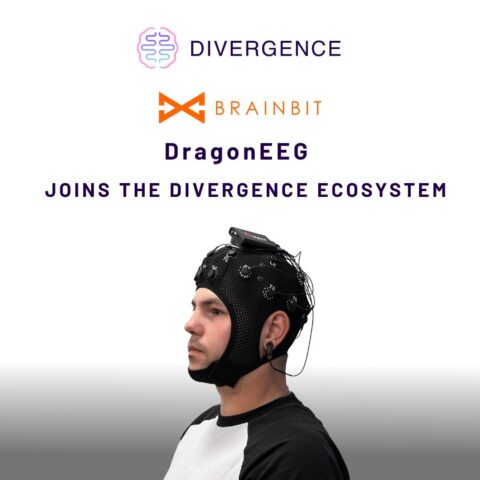
Divergence Neuro Adds BrainBit's 19-Channel DragonEEG to Its Platform

Divergence Neuro has added support for BrainBit's DragonEEG to its platform, bringing in a system with 19 EEG channels laid out on the international 10-20 system plus dedicated EMG, ECG and EOG poly channels. The integration gives clinicians, researchers, educators and developers research-grade EEG acquisition inside the Divergence ecosystem for qEEG brain mapping, neuroscience research and professional neurotechnology development, as qEEG use spreads through neurofeedback, mental health and cognitive performance work.

Bio-Inspired Methods Target EEG Robustness

A perspective review published in Computers in biology and medicine examines EEG non-stationarity across sessions, people, and recording conditions. It asks whether mechanisms that help the brain maintain functional stability can improve the robustness of brain-computer interface models. The review covers synaptic plasticity, homeostatic regulation, neural oscillations, and spiking representations, comparing bio-inspired approaches with conventional machine learning and transfer learning. It also considers hybrid designs that combine biologically grounded mechanisms with artificial neural networks. The author proposes operational definitions for bio-inspired, bio-plausible, and bio-realistic modeling, together with a minimum specification for continual EEG benchmarks. Because direct EEG evidence remains limited for several proposed mechanisms, the review stresses the need to distinguish empirical findings from hypotheses and future research directions.
June 2026

FDA Clears Universal Brain UB ERP System

The FDA cleared Universal Brain's UB ERP System on June 30, 2026, finding it substantially equivalent under submission number K253767 through the traditional 510(k) pathway. The agency classifies it as Non-Normalizing Quantitative Electroencephalograph Software, a Class II device under regulation 882.1400, with neurology as the assigned review panel. Event-related potentials are obtained by averaging EEG time-locked to stimuli; components such as P300 serve both clinical assessment and the classic paradigms behind noninvasive BCI spellers.

Dynamic Wavelets Boost Imagined-Speech EEG

A study published in Computers in biology and medicine proposes dynamic wavelet-basis selection to improve non-invasive EEG imagined-speech classification. For each EEG epoch, the method minimizes wavelet entropy to select an informative basis and then injects Gaussian noise into the corresponding coefficients. A convolutional neural network with channel-wise excitation classifies the augmented signals. The dataset contains 32 channels, 8 stimuli, and recordings from 10 participants. The words-vowels combination reached a highest classification accuracy of 98% with a Cohen's kappa of 0.95, although performance was lower for the full class set. The researchers report that the method outperformed conventional augmentation strategies and static wavelet approaches, offering an adaptive way to address noise and non-stationarity in EEG decoding.

FDA Clears Neuroelectrics Enobio Dx EEG Systems

The FDA cleared Neuroelectrics Barcelona's Enobio Dx line, in 8-, 20- and 32-channel models, on June 13, 2026, finding it substantially equivalent under submission number K261604 through the special 510(k) pathway. The agency classifies it as a Full-Montage Standard Electroencephalograph, a Class II device under regulation 882.1400, with neurology as the assigned review panel. Neuroelectrics is known in neuromodulation and BCI research for noninvasive EEG acquisition and transcranial electrical stimulation hardware.

FDA Clears VoxNeuro Cognitive EEG Software

The FDA cleared VoxNeuro's Cognitive Function Neuroimaging (cfNI) Software, version 1.0.0, on June 12, 2026, finding it substantially equivalent under submission number K253015 through the traditional 510(k) pathway. The agency classifies it as Normalizing Quantitative Electroencephalograph Software, a Class II device under regulation 882.1400, with neurology as the assigned review panel. Normalizing quantitative EEG software compares an individual's EEG metrics against a reference population database before reporting, supporting objective assessment of cognitive function.

Bispectral EEG Separates Grasping Stages

A study published in Computers in biology and medicine applies cross-frequency bispectral analysis to nonlinear EEG activity during the planning and execution of natural reach-to-grasp movements. The researchers extracted magnitude- and phase-based features from complex bicoherence matrices and assessed them through classification, permutation-based feature selection, and within-subject statistics. Execution showed stronger nonlinear coupling than planning, led mainly by beta- and gamma-driven interactions. Decoding precision versus power grasps performed similarly across the two stages, suggesting that grasp-type representations emerge during planning and persist into execution. Compared with conventional analytical baselines, bispectral features provided consistent advantages for grasp-type discrimination and multiclass classification. The findings offer a new set of motor-decoding features for future brain-computer interface and neuroprosthetic research.

Suzhou Hospital Registers Closed-Loop BCI Trial Using fNIRS and rTMS for Female Overactive Bladder

Women with overactive bladder often rely on drugs and behavioral training, with limited relief. A newly registered trial at The First Affiliated Hospital of Soochow University takes a different route: patients perform a task while functional near-infrared spectroscopy reads prefrontal brain activity, and an algorithm decides when to deliver transcranial magnetic stimulation, closing the loop. The interventional, parallel-design trial plans to enroll 66 women aged 18 to 75, 33 in the experimental arm and 33 in a control arm that receives open-loop sham stimulation, with the overactive bladder symptom score as the primary endpoint. No device model or results are disclosed in the registration, and recruitment has not yet started.
May 2026

Tianjin Plans 10bn Yuan BCI Fund Cluster

The General Office of China's Tianjin Municipal People's Government issued the Action Plan for Promoting Innovative Development of Brain-Computer Interfaces in Tianjin (2026-2030), document number Jin Zheng Ban Fa [2026] No. 8, dated May 26, 2026 and released on May 28. All product targets sit on the non-invasive track, while invasive systems are covered only by milestones for entering registration trials and winning market approval. By 2027 Tianjin wants two to three national-level innovation platforms, more than five non-invasive products in clinical use, more than ten new products across elderly care, education, entertainment, smart living and advanced manufacturing, 50 innovative firms, one to two national standards, and three to five industry funds. By 2030 it targets more than ten non-invasive products in large-scale clinical use, market approval for invasive products, and a fund cluster exceeding 10 billion yuan.

Xuanwu Hospital Registers Trial Combining Non-invasive BCI, Spinal Cord Stimulation and Exoskeleton for Spinal Cord Injury

Can a non-invasive brain-computer interface read motor intention and, combined with spinal cord stimulation and exoskeleton training, improve function after spinal cord injury? Xuanwu Hospital, Capital Medical University has registered a single-arm exploratory trial that plans to enroll 10 patients aged 18 to 65 with spinal cord injury. The intervention combines all three into one rehabilitation regimen. The primary outcome is the overall clinical efficacy rate 6 months after surgery; secondary outcomes include improvement in the Visual Analogue Scale for pain and the incidence of adverse events related to the trial devices.

Xi'an Jiaotong University First Affiliated Hospital Registers Multicenter Trial of SSVEP-BCI-Driven Stimulation for Post-Stroke Dysphagia

The trial tests whether a steady-state visual evoked potential (SSVEP) brain-computer interface can drive functional electrical stimulation of swallowing muscles more effectively than conventional neuromuscular electrical stimulation. It plans to enroll 90 patients, 45 per arm, all within 6 months of a first ischemic or hemorrhagic stroke and aged 18 to 80. The primary outcome is the Standard Swallowing Assessment, with secondary measures including the Functional Oral Intake Scale and the Penetration-Aspiration Scale. First enrollment is listed for June 1, 2026.

Trial Pairs iTBS With Motor Imagery BCI Training for Post-Stroke Arm Impairment

Guangdong Provincial Hospital of Traditional Chinese Medicine has registered a parallel-design interventional trial, ChiCTR2600124411, that plans to enroll 81 patients with unilateral upper-limb impairment after stroke in three groups of 27. Two groups receive intermittent theta-burst stimulation (iTBS) over the dorsolateral prefrontal cortex or the primary motor cortex, and one receives sham stimulation; all three undergo motor imagery BCI training. Primary outcomes are BCI decoding accuracy, the Fugl-Meyer Assessment and brain network topology. The trial was registered on May 12, 2026 and is not yet recruiting.
April 2026

Bengbu Medical University Hospital Registers Multicenter Trial of MRI-Guided Temporal Interference Stimulation for Refractory Migraine

A randomized, sham-controlled trial will pair a non-invasive brain-computer interface with MRI-guided multichannel temporal interference stimulation in patients whose migraines resist medication. It plans to enroll 78 people aged 18 to 65, split evenly between real and sham stimulation, with headache frequency as the primary endpoint. The registration lists only design and bibliographic fields, so device details and actual enrollment remain unknown and efficacy has yet to be read out.

ChiCTR Registers Multicenter Trial of BCI Mindfulness Meditation in Chronic Tinnitus

The Chinese Clinical Trial Registry (ChiCTR) has logged a multicenter randomized controlled trial testing whether brain-computer interface-based mindfulness meditation relieves the symptoms of chronic tinnitus. Registered on April 23, 2026 as ChiCTR2600123258, the trial has not begun enrolling patients, and its design, sample size and sponsor must be read from the original registration record. It is the first multicenter registration to combine BCI with mindfulness meditation for chronic tinnitus, moving the approach from single-center exploration toward multicenter validation.

Beijing Tiantan Hospital Registers BCI Robot Mirror-Therapy Trial in 40 Stroke Patients

The trial combines a brain-computer interface with robotic mirror therapy into a single intervention, while the control arm receives conventional comprehensive rehabilitation only. It enrolls patients aged 30 to 80 with unilateral upper-limb motor impairment 1 to 6 months after ischemic or hemorrhagic stroke, whose lesions are confined to the basal ganglia. The primary endpoint is the Fugl-Meyer Assessment of the Upper Extremity, with EEG, functional MRI and the Modified Ashworth Scale among secondary measures. The planned enrollment is 40 patients, with first enrollment set for May 1, 2026.

Xidian Team Drops Transformer Encoder, MLP Decoder Holds 0.94–0.98 AUC

Researchers at Xidian University built DisCo-Former, a Transformer framework for single-trial rapid serial visual presentation (RSVP) EEG decoding with three components guided by neurophysiological priors, then found its attention consistently collapsed: attention maps went nearly uniform and value-projection weights shrank toward 0. Stripping out the Transformer encoder left DisCo-MLP, a pure multilayer perceptron that matched or beat the Transformer version across two datasets and three evaluation regimes, with within-subject mean AUCs of about 0.94 to 0.98. For RSVP-EEG, the authors argue, modeling the signal's structure matters more than architectural complexity. The study was published in the International Journal of Neural Systems on April 10, 2026.
March 2026

FDA Clears Zeto New Wave EEG System

The FDA cleared Zeto's New Wave System on March 13, 2026, finding it substantially equivalent under submission number K260455 through the special 510(k) pathway. The agency classifies it as a Full-Montage Standard Electroencephalograph, a Class II device under regulation 882.1400, with neurology as the assigned review panel. That category covers standard electroencephalograph hardware acquiring a complete montage of scalp channels.
February 2026

Children With Cerebral Palsy Show Keen Interest in BCI-Controlled Boccia Ramp

Researchers designed an assistive Boccia ramp controlled by a brain-computer interface so that children with severe motor impairments who cannot speak can take part in the Paralympic sport. Six caregivers took part in semi-structured interviews and six children completed a newly developed 21-item survey; the children showed keen interest in playing Boccia with a BCI. The study also maps current barriers and facilitators to sport participation, and the issues that must be resolved before such technology can be rolled out.
January 2026

Researchers Say BCIs Should Decode User Goals, Not Motor Cortex Signals

Researchers in Germany, the Netherlands and Japan argue in an opinion piece that brain-computer interface design should be rebuilt around ideomotor theory, which treats voluntary action as driven by internally represented sensory outcomes. BCI research has made remarkable technical progress but remains limited in scope, the authors write, typically relying on motor and visual cortex signals in a narrow range of patient populations, and they describe this underused framework as a principled basis for next-generation interfaces that align more closely with the brain's own intentional and action-planning architecture. Reorganizing BCIs around the purpose of an action, meaning the user's goals and anticipated effects, would be a more intuitive, generalizable and scalable path, they suggest, and advances in neural recording and artificial intelligence-based decoding of sensory representations make the shift feasible and timely, potentially easing persistent usability and generalizability problems in BCI design.

BrainCo Registers FocusXin ADHD Hardware and Software as Class II Devices

BrainCo's FocusXin Medical Edition combines a single-channel prefrontal EEG device registered as 浙械注准20232071898 with ADHD rehabilitation software registered as 浙械注准20252211934. The Class II system is intended for supplementary rehabilitation training in children aged 6 to 12 with ADHD. Its defined medical use should not be generalized into approval for an unspecified consumer BCI product.
December 2025

FDA Clears Hippoclinic HippoMind EEG Software

The FDA cleared Hippoclinic's HippoMind, version 1.0, on December 3, 2025, finding it substantially equivalent under submission number K251881 through the traditional 510(k) pathway. The agency classifies it as Non-Normalizing Quantitative Electroencephalograph Software, a Class II device under regulation 882.1400, with neurology as the assigned review panel. Unlike normalizing tools, non-normalizing quantitative EEG software reports an individual's own EEG metrics without reference to a population database.
November 2025

FDA Clears Naox NX01 Reduced-Montage EEG Device

The FDA cleared Naox Technologies' NX01 on November 25, 2025, finding it substantially equivalent under submission number K251550 through the traditional 510(k) pathway. The agency classifies it as a Reduced-Montage Standard Electroencephalograph, a Class II device under regulation 882.1400, with neurology as the assigned review panel. Reduced-montage systems record with fewer electrodes than a conventional clinical montage, trading spatial resolution for faster setup and the possibility of wearable form factors.
October 2025

Nihon Kohden's EEG-1260A Neurofax System Clears FDA 510(k)

Nihon Kohden's EEG-1260A Neurofax system, along with its amplifier unit and photic stimulator, received FDA 510(k) clearance on October 9, 2025. The device is a Class II medical device in the neurology specialty, with software for quantitative EEG analysis. The traditional 510(k) clearance indicates substantial equivalence to a legally marketed device.
© 2026 BCIwiki.com Digest Topics Tips Subscribe Revisions About