

Non-invasive BCIs collect brain signals via scalp EEG, functional near-infrared spectroscopy, and other techniques without surgery. This topic covers EEG headsets, SSVEP spellers, motor imagery paradigms, and product and research developments in the field.
August 2026
Kandu's At-Home IpsiHand BCI Improves Arm Function in Chronic Stroke Trial

Fujian Targets a 3 Billion Yuan BCI Industry by 2030
Six Fujian government departments jointly issued a provincial BCI action plan for 2026–2030. It calls for key technical breakthroughs, more than five innovative small and medium-sized companies, one cross-strait joint laboratory and two provincial innovation platforms by 2027; by 2030, Fujian aims to have 30 companies, a complete industry chain and an industry worth more than 3 billion yuan.
Study reviews invasive and non-invasive BCI use
A systematic review of BCI medical applications published on August 17, 2026 in Theoretical and Natural Science covers literature review, comparative case analysis of invasive vs non-invasive techniques, and interdisciplinary assessment. It reports that invasive BCIs reach 80% to 100% task success rates in robotic arm control but are limited by surgical hazards, progressive signal deterioration and costs above $250,000, while non-invasive BCIs are safer and more widely deployed in community neurorehabilitation with about 70% effectiveness for post-stroke upper-limb recovery, yet suffer poor signal-to-noise ratios, a BCI illiteracy rate near 30% and low information transfer speeds. The review also addresses neural data privacy, autonomy paradoxes and inequitable access.
Wearable BCI Hits 79.38% Online Decoding Accuracy
The study was published in ITM Web of Conferences on August 14, 2026, addressing the demand for portable, real-time brain-computer interface systems in stroke rehabilitation by completing the physical integration and online experimental validation of a wearable system. The system uses a specialized EEG headset with miniaturized acquisition circuits secured via pogo pins, featuring 10 core recording channels positioned over the sensorimotor cortex. During the evaluation phase, the research team recruited 6 healthy subjects and 2 stroke-affected hemiplegic patients for closed-loop experiments based on motor imagery and motor attempts. Common Spatial Pattern was used for spatial feature extraction and Linear Discriminant Analysis for intention classification, with personalized sub-band optimization applied to further improve recognition. The authors report an average offline recognition rate of 84.91% and a classification accuracy of 79.38% in the more challenging online real-time testing. Analysis of spatiotemporal spectra and R² value distributions validated activation patterns in the sensorimotor areas during motor intention triggering, which the authors present as support for advancing the technology from laboratory settings toward community rehabilitation.
EEG2MOTION: Full-Body Motion From Brain Signals
Researchers debut EEG2MOTION, billed as the first EEG-motion-text dataset for human motion synthesis, with nearly 20,000 paired samples across thousands of motions, plus a generative framework (EMMM) that couples an EEG encoder with a motion decoder to synthesize coherent full-body motions from non-invasive brain activity. Multimodal contrastive learning aligns non-invasive EEG embeddings with text, video and motion representations to decode high-level semantics. The team says it is the first work to generate diverse whole-body motions from non-invasive brain signals.
Few-Shot Calibration Raises EEG Emotion Decoding Accuracy to 0.77
CNN bi-LSTM Hybrid Decodes Motor-Imagery EEG
The preprint was posted to arXiv on August 13, 2026, proposing a hybrid deep-learning architecture that combines a convolutional neural network with a bidirectional long short-term memory network to decode motor-imagery EEG. The author notes that motor-imagery brain-computer interfaces are seen as a promising route to flexible communication between the brain and external devices, particularly for people affected by stroke or neurodegenerative disorders, but that reliable decoding remains difficult because EEG recordings carry substantial noise and relate to underlying brain activity in complex, weakly informative ways. In the proposed architecture, the CNN learns high-level spatial and temporal representations directly from raw MI-EEG recordings, while the bi-LSTM models temporal dependencies among the extracted features. The approach was evaluated on both a publicly available dataset and a privately acquired dataset collected with an EEG acquisition system, with robust performance reported on two- and three-class motor-imagery classification and promising subject-independent decoding across the methods compared. The work is a preprint and has not been peer reviewed.
Taichung Veterans Hospital Completes BCI-Controlled Exoskeleton Gait Trial After Stroke
A completed RCT compared BCI-controlled versus conventional exoskeleton gait training in stroke patients, training 2 times a week for 4 weeks.
Deep Learning Benchmark for Ear-EEG BCI
Review: SSVEP-BCI Application Bottlenecks and Solutions
A review analyses technical, hardware, and user-level bottlenecks facing SSVEP-BCI systems in real-world deployment, summarising solutions including EMG fusion denoising, novel sponge electrodes, and hybrid paradigms.
DWT and Chirplet Transform Boost MI-EEG Classification to 94.8%
Researchers propose combining discrete wavelet transform and chirplet transform for motor imagery EEG classification, achieving 94.8% accuracy on CBCIC with 1.03-second response time.
Review: Closed-Loop EEG BCI for Mental Health
SSVEP-BCI Dataset for Children Released
Researchers release a steady-state visual evoked potential-based BCI dataset collected from children and adolescents.
Review: BCI in Ophthalmology for Diagnosis and Visual Restoration
Game Theory-Based Joint Learning Boosts Online MI-BCI Decoding
A game theory-based adaptive human-machine joint learning method for online MI-BCI decoding improves accuracy by 9.7% and 5.6% in 14-subject online experiments (both p < 0.01).
CLMT-Net Decodes Fine-Grained Within-Limb Motor Imagery EEG
Researchers propose CLMT-Net, a contrastive learning network based on a multi-scale Transformer, for fine-grained within-limb MI decoding, achieving 76.13% accuracy on the MI-2 dataset.
Integrated BCI System Enables Robotic Control
Researchers from Southwest State University developed an integrated brain-computer interface system supporting both synchronous and asynchronous paradigms, achieving 60-65% recognition accuracy in EEG-based robotic device control tasks.
WABO EEG Art Demo Yields 100+ Works at ChinaJoy
WABO (瓦博科技) says it ran a four-day neural art experience at the Snapdragon Pavilion during ChinaJoy 2026, held from July 31, 2026 to August 3, 2026 in Shanghai, producing more than 100 AI artworks with participants. Visitors wore a non-invasive EEG headband and viewed feedback derived from their signal state, with task-specific features feeding the artwork-generation process; the company says no private thoughts were read. The setup paired WABO's acquisition hardware with a Snapdragon X Elite laptop, keeping signal processing, model inference and image generation on the endpoint, which the company describes as a practical test of a neural-intent workflow outside a controlled development setting.
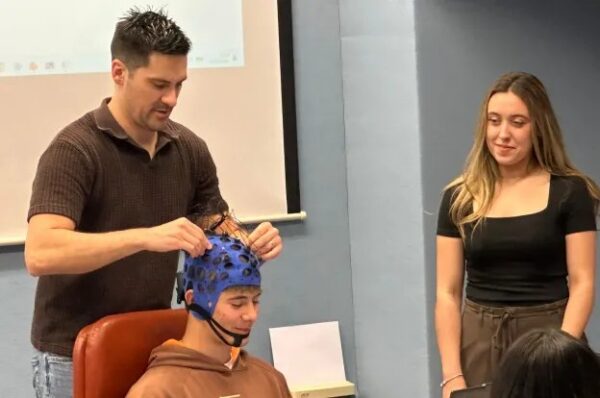
P300 BCI Reads Silently Chosen Digits in a Granada Classroom
2-Block EEG Gait Decoder Reaches 70.5 ms Latency
This preprint reports a 2-block lightweight architecture for real-time EEG gait decoding that the authors say enables closed-loop lower-limb exoskeleton control. In closed-loop deployment, the study reports a 55.3% gait initiation success rate with Rex assistance and 52.7% volitionally, with a mean end-to-end processing time of 70.5 ms (±41.5). The authors add that the manuscript was accepted for publication at the 2026 IEEE International Workshop on Machine Learning for Signal Processing (MLSP 2026).
BrainPatch Wins FCC Certification for US Market
BrainPatch, which makes non-invasive neurotechnology, says it has secured FCC certification, a step the company needed before it could sell its products in the US. In a blog update dated August 3, 2026, the firm said the approval confirms its technology meets US regulatory requirements and marks a milestone in its international expansion; it also brings the technology closer to buyers, partners and backers in the country it calls the largest consumer market.
CORTIVA Hits 73.5% Top-1 in EEG-to-Image Retrieval
CORTIVA, a candidate-score fusion framework for EEG- and MEG-to-image retrieval, reached 73.5% Top-1 and 95.3% Top-5 accuracy across ten participants on the 200-way THINGS-EEG2 benchmark, beating the strongest reported baseline by 10.3 and 5.4 percentage points. Instead of compressing heterogeneous visual supervision into a single embedding before ranking, the authors let separate decoding routes align to different visual targets and score the same candidate pool independently, merging only the temperature-scaled score vectors, which they say preserves complementary evidence; with a modality-specific encoder the same approach reached 42.4% Top-1 on THINGS-MEG. The work is a preprint and has not been peer reviewed.
July 2026
EasyBCI Plans BCI Preprocessing for Six Signals
This preprint introduces EasyBCI, which the authors say automates BCI preprocessing across six signal types with a two-phase large language model agent. The study is a preprint and has not been peer reviewed. On EEG with a fixed linear classifier, the authors report that all five EasyBCI backbones preserve more task-relevant separability than the manual pipeline, and that the system extends to five additional modalities spanning nearly three orders of magnitude in sampling rate.
Portugal's University of Aveiro Registers VR-Based BMI Trial in Spinal Cord Injury
The University of Aveiro in Portugal has registered a study (NCT07732868) testing a brain-machine interface protocol that pairs virtual reality with sensory feedback, visual, auditory and tactile, and/or an exoskeleton in people with spinal cord injury. Participants attend 12 monitored sessions, one a week, each lasting roughly one to two hours, moving a virtual avatar through motor imagery while non-invasive EEG records brain activity. The study focuses on changes in brain activity that track clinical improvement and on how information moves between brain regions, and it collects age, sex, injury level and type, time since injury, functional grade and neuropathic pain; it is at the registration stage with no results yet.
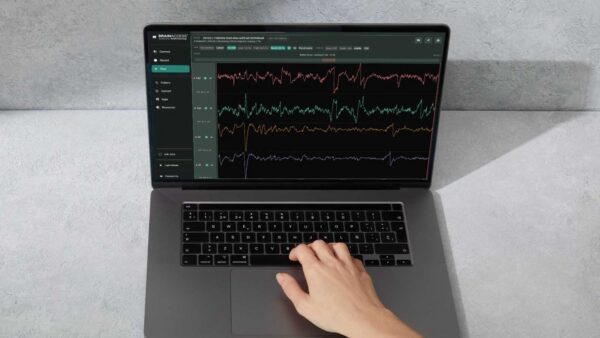
BrainAccess Rebuilds Its Board App Interface and Adds AI Assistant Jena
Preprint: Simultaneous Decoding of Kinetic and Kinematic Movement Parameters by Noninvasive Brain Imaging
A preprint proposes three regression models — a partial least squares regressor, a multilayer perceptron and an attention-based regressor — to decode multiple kinematic and kinetic parameters of grasp-and-lift tasks simultaneously from EEG signals. Evaluated on the WAY EEG GAL dataset, the attention-based regressor performed best with an R² of 0.8 and 29.2 ms latency, markedly improving simultaneous multi-parameter decoding, though per-parameter decoding declined; the multilayer perceptron was more consistent across the two settings but less accurate (R² = 0.49). The study has not been peer reviewed.
Can a BCI boost attention in older adults? UT Austin launches trial
The University of Texas at Austin has registered a study on ClinicalTrials.gov to explore whether an EEG-based brain-computer interface (BCI) decoding the P300 event-related potential in real time, combined with non-invasive interventions such as mindfulness relaxation or transcranial electrical stimulation, can enhance attention and memory neural markers—proxies for cognitive reserve—in healthy older adults and those with mild cognitive impairment (MCI). The trial is recruiting and aims to test whether targeted modulation of attention-related brain activity can support cognitive reserve.
EEG Decodes Picture Categories More Reliably Than Word Categories
UC Irvine researchers tested an EEG category-decoding task in 30 participants viewing pictures and words from five semantic groups. All picture-category pairs were statistically separable, but only one word-category pair was; parietal and left-temporal electrodes contributed more to picture decoding than frontal and right-temporal sites. The bioRxiv preprint has not been peer reviewed.
Only 11 pediatric BCI trials worldwide, children may be underrepresented
A registry-based cross-sectional analysis found only 11 pediatric brain-computer interface (pBCI) clinical trials worldwide, spanning 7 countries. Eight evaluated non-implanted devices and 3 evaluated implanted systems. Non-implanted trials had a median enrollment of 29 participants and median duration of 56.0 days; implanted trials had a median enrollment of 8 and median duration of 365.3 days. Only 4 studies enrolled exclusively pediatric participants; the rest recruited both children and adults. The authors conclude that current pBCI research is limited in scope and that children may be inadequately prioritized.