中 / EN

Non-invasive BCI

212 entries

Non-invasive BCIs collect brain signals via scalp EEG, functional near-infrared spectroscopy, and other techniques without surgery. This topic covers EEG headsets, SSVEP spellers, motor imagery paradigms, and product and research developments in the field.

September 2026

Hybrid BCI Replaces Exoskeleton Crutch Controls at 95.06% SSVEP Accuracy

A hybrid brain-computer interface replaced crutch control for 10 participants walking with a custom lower-limb exoskeleton, classifying steady-state visual evoked potentials with 95.06% accuracy and reaching F1 scores of 99.80% and 99.22% for its wink- and clench-triggered asynchronous switches, researchers reported in IEEE TNSRE. Measured against crutch control, the system scored 78.25 versus 53.50 on the System Usability Scale and 3.15 versus 7.85 on NASA-TLX physical demand.
NETBCI Dataset Pairs MEG and EEG from 19 Users across Four BCI Training Sessions

A team in France and the United States has released NETBCI, a longitudinal multimodal dataset pairing magnetoencephalography (MEG) and electroencephalography (EEG) from 19 healthy subjects across 4 sessions performed on 4 different days, built to study how brain networks reorganize during brain-computer interface training. Controlling a BCI remains a learned skill that a non-negligible proportion of users never acquire even after several sessions, the authors write, and the causes of that inter-individual variability remain an open question. Each session comprises 2 eyes-open resting-state recordings of 3 minutes each plus 6 runs in which participants either sustained right-hand motor imagery or stayed at rest to control the position of a virtual cursor, and the release also includes anonymized MRI scans and behavioral scores; the authors say they hope the sample size and range of modalities will support analyses beyond brain network reorganization.

Researchers Find Basketball Players Show Stronger Brain Response When Imagining Shots

Researchers recording EEG from 17 basketball players and 16 novices found that only the players showed a significant, sustained weakening of sensorimotor rhythms when imagining a shot or lifting a box, most clearly for an imagined free throw. This rhythm weakens during imagined movement and is commonly used as a marker of motor cortex engagement. Among the players, however, stronger imagery ability went with a smaller weakening, which may mean the brain was working more efficiently. The researchers conclude that neurofeedback training based on brain signals should not use one-size-fits-all targets but should account for a trainee's motor expertise and imagery ability. The study is a preprint and has not been peer reviewed.

Researchers Release 57-Person fNIRS Dataset Tying Signal Quality to Variability

Researchers have released an open, near whole-head functional near-infrared spectroscopy (fNIRS) dataset from 57 participants and found that signal quality partly explains why brain activation differs from person to person. fNIRS, a non-invasive technique that shines light through the scalp to measure changes in blood oxygen in the brain, often yields results that vary widely between individuals and are hard to reproduce, and researchers suspect systemic physiological fluctuations and differences in signal quality may distort task-evoked hemodynamic responses. The team recorded participants at rest and during real movement, imagined movement, emotion recognition, visual and auditory tasks, alongside peripheral physiology including heart rate, respiration, skin conductance, ECG and EMG, plus short-channel recordings. Four quality metrics, including the scalp coupling index and signal-to-noise ratio, were all significantly related to channel length and to task activation estimates; group-level analysis confirmed activation in the expected brain regions. The study is a preprint and has not been peer reviewed.
August 2026

72-Trial Meta-Analysis Ranks Noninvasive BCI Options for Post-Stroke Arm Recovery

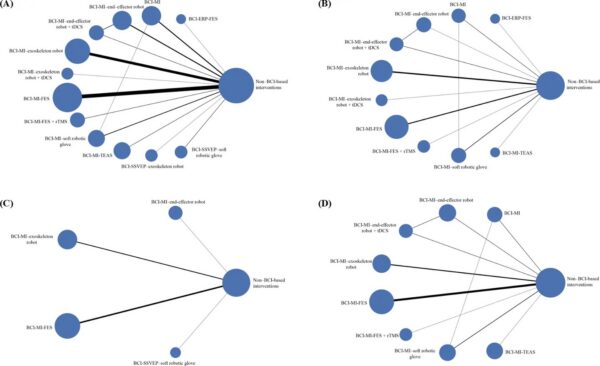
A network meta-analysis of 72 randomized controlled trials covering 2,906 stroke patients found that noninvasive brain-computer interface (BCI) interventions significantly improve upper limb motor function and activities of daily living, with BCI combined with motor imagery and transcutaneous electrical acupoint stimulation ranking highest for motor recovery. The review, published in the Journal of Medical Internet Research on August 28, 2026, sorted 12 intervention types by paradigm, feedback device and adjunctive stimulation to produce relative rankings for clinical use. Evidence certainty was low to moderate, so the authors describe the findings as exploratory and call for higher-quality trials.

SSVEP-TFFNet Beats FBCCA in XR Headsets, Even at Four Electrodes

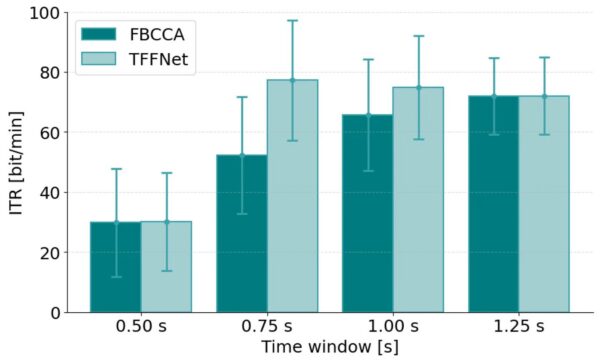
Researchers at the University of Naples Federico II in Italy report that the SSVEP-TFFNet deep-learning model outperforms filter bank canonical correlation analysis (FBCCA) at classifying steady-state visual evoked potentials (SSVEP) recorded in extended reality (XR), where headset visuals degrade EEG quality. They used an open XR benchmark dataset of 30 subjects and 1200 trials acquired with Microsoft HoloLens 2. Cutting the montage from 8 channels to 6 or 4 left performance close to the full set, supporting lightweight, wearable XR-BCI designs.

LLM Correction of BCI Typing Can Silently Change Meaning, 20-Model Benchmark Finds

Large language models used to correct error-prone text from P300 brain-computer interface spellers can produce fluent sentences that no longer mean what the user intended, a failure the researchers call intent drift. Across 20 open-weight models tested on simulated P300 output, drift rose from 2.2% at a 0% character error rate to 60.3% at 40%, with an odds ratio of 2.30 per 10-percentage-point increase. Model confidence separated correct from incorrect outputs with an AUROC of 0.83 but was poorly calibrated: 28.4% of high-confidence outputs were unfaithful. Clinically important messages such as medication doses drifted slightly more than matched controls (odds ratio 1.10). None of six correction strategies eliminated drift; conservative strategies reduced it, but even the best still produced wrong output 18 times per 100 corrections. The study is a preprint and has not been peer reviewed.

Singapore's NUH Tests Lifescapes BCI for Hand Recovery After Stroke

National University Hospital in Singapore has registered a clinical trial (NCT07784920) evaluating Lifescapes, an EEG-based brain-computer interface, for hand motor recovery after stroke. The 32-participant study, not yet recruiting, will compare Lifescapes therapy delivered with reduced therapist supervision against conventional rehabilitation and assess whether it is operationally feasible in the local clinical setting. Lifescapes combines motor imagery practice, biofeedback, neuromuscular electrical stimulation and robotic assistance for stroke patients with severe hand paralysis; an earlier trial in 40 patients showed improvement in motor function.

Language Models Changed 4.4% of P300 Speller Choices in Data From 47 ALS Patients

P300 spellers are a common brain-computer interface communication tool for people with ALS, and researchers have begun adding large language models as language priors to raise spelling accuracy. But accuracy alone cannot show whether an output came from the patient's brain signals or the model's prediction. A retrospective study re-decoded 3,373 P300 speller selections from 47 people with ALS, fusing reconstructed neural posteriors with 25 language priors ranging from 5-gram models to a 46.7-billion-parameter model. The prior accounted for a participant-weighted mean of 8.6% of posterior displacement, a neural contribution fraction of 0.914. In 4.4% of selections, the fused system produced the intended character where neural evidence alone would not have. Results were similar across 21 neural language models. The work is a preprint and has not been peer reviewed.

German Team Decodes Hand Motor Imagery From EEG Microstate Sequences at 89% Accuracy

German researchers tested whether sequences of EEG microstates, a handful of brief, stable patterns of brain activity, can serve as on/off switches for a brain-computer interface. Participants imagined moving the left or right hand, and a deep learning model read the microstate sequences to tell which hand, using the result as a trigger command. With transfer learning across sessions or participants, peak accuracy reached about 89%, though reaching 80% took about 400 seconds of calibration on average. The researchers say the approach could ease the calibration burden before use. The work is a preprint and has not been peer reviewed.

Gaze-Plus-Motor-Imagery BCI Reaches 100% Accuracy With 16-Channel EEG

Motor imagery BCIs have long faced two problems: wide variation between users and only a small number of distinguishable commands. In this study, users first select a target by looking at it, then confirm the choice with imagined movement, merging the two steps into one. In tests with 15 healthy participants using 16-channel EEG, the hybrid paradigm outperformed motor imagery alone in every channel configuration, reaching up to 100% accuracy. The researchers also found that fixating on the target made EEG responses more stable, which supports using fewer electrodes and lowering the hardware barrier.

Phase-sliding oscillation lifts async BCI to 94.2%

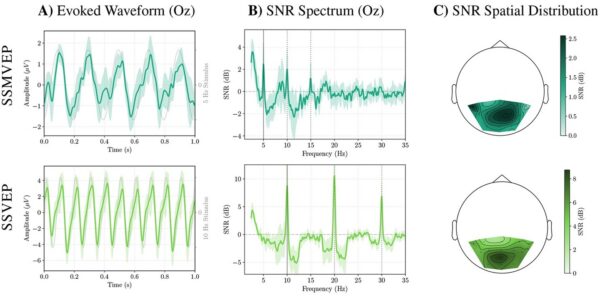
Phase mismatch between live EEG and fixed templates has long been the weak point of asynchronous steady-state visual evoked potential (SSVEP) brain-computer interfaces, which are seen as a promising route to real-world control. A new method, PSO-AC, exploits a phase-sliding oscillation phenomenon the authors observed and validated. Offline, 22 participants produced a mean control/non-control accuracy of 94.2% from just two seconds of EEG data, a result the authors say outperforms a state-of-the-art baseline; 9-class decoding also kept its edge across different time delays. Online, in robotic-arm experiments, the method delivered more stable command triggering and higher control efficiency, with the command cost per successful trial falling from 4.30 to 1.14. The paper was published in the International Journal of Neural Systems on August 21, 2026.

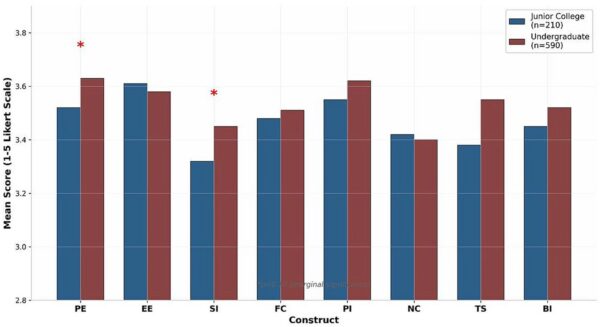
Teacher Support Was the Strongest Predictor of Student BCI Adoption

A survey of 800 students at 10 Chinese universities found teacher support was the strongest predictor of willingness to use BCI technology (beta=0.337), while performance expectancy was not significant (beta=0.059). Neuroethical concern was also non-significant in the structural model, yet 28 of 40 interviewees named privacy as their leading worry, suggesting concern may reflect engagement rather than rejection before adoption.

Cochrane Review Finds Small, Low-Certainty Gains for BCI Stroke Rehabilitation

A Cochrane review of 43 randomized trials involving 1,628 participants found that BCI training may produce a small improvement in post-stroke upper-limb motor function compared with conventional rehabilitation, while effects on lower-limb function and activities of daily living were limited or uncertain. No clear advantage emerged over sham BCI, and certainty was low to very low because of bias risk, small samples, heterogeneity and possible publication bias.

Motion-Based Visual BCI Reaches 85.67% Accuracy Without Flicker

A code-modulated motion visual-evoked-potential paradigm replaced flickering targets with pseudo-random motion sequences. In a four-target online BCI, it achieved 85.67% mean accuracy with a 2.61-second selection time—below c-VEP and SSVEP, but above steady-state motion VEP—while participants reported no clear comfort preference between motion and flicker.

Fujian Targets a 3 Billion Yuan BCI Industry by 2030

Six Fujian government departments jointly issued a provincial BCI action plan for 2026–2030. It calls for key technical breakthroughs, more than five innovative small and medium-sized companies, one cross-strait joint laboratory and two provincial innovation platforms by 2027; by 2030, Fujian aims to have 30 companies, a complete industry chain and an industry worth more than 3 billion yuan.

Study reviews invasive and non-invasive BCI use

A systematic review of BCI medical applications published on August 17, 2026 in Theoretical and Natural Science covers literature review, comparative case analysis of invasive vs non-invasive techniques, and interdisciplinary assessment. It reports that invasive BCIs reach 80% to 100% task success rates in robotic arm control but are limited by surgical hazards, progressive signal deterioration and costs above $250,000, while non-invasive BCIs are safer and more widely deployed in community neurorehabilitation with about 70% effectiveness for post-stroke upper-limb recovery, yet suffer poor signal-to-noise ratios, a BCI illiteracy rate near 30% and low information transfer speeds. The review also addresses neural data privacy, autonomy paradoxes and inequitable access.

Southern Federal University Releases Directional-Word EEG Data From 22 Volunteers

Southern Federal University recorded directional-word EEG from 22 healthy volunteers: 12 native Russian speakers and 10 native Spanish speakers. Both groups performed six directional words, with an additional “next” command in Russian. Recordings used 38 electrodes at 500 Hz, with concurrent articulation-related EMG in six participants. Random Forest accuracy of 78 ± 4% came from per-participant five-fold cross-validation distinguishing rest, overt speech and inner speech—not six-word recognition. Keypress, muscle and task-order effects require consideration in subsequent analyses.

Wearable BCI Hits 79.38% Online Decoding Accuracy

The study was published in ITM Web of Conferences on August 14, 2026, addressing the demand for portable, real-time brain-computer interface systems in stroke rehabilitation by completing the physical integration and online experimental validation of a wearable system. The system uses a specialized EEG headset with miniaturized acquisition circuits secured via pogo pins, featuring 10 core recording channels positioned over the sensorimotor cortex. During the evaluation phase, the research team recruited 6 healthy subjects and 2 stroke-affected hemiplegic patients for closed-loop experiments based on motor imagery and motor attempts. Common Spatial Pattern was used for spatial feature extraction and Linear Discriminant Analysis for intention classification, with personalized sub-band optimization applied to further improve recognition. The authors report an average offline recognition rate of 84.91% and a classification accuracy of 79.38% in the more challenging online real-time testing. Analysis of spatiotemporal spectra and R² value distributions validated activation patterns in the sensorimotor areas during motor intention triggering, which the authors present as support for advancing the technology from laboratory settings toward community rehabilitation.

EEG2MOTION: Full-Body Motion From Brain Signals

Researchers debut EEG2MOTION, billed as the first EEG-motion-text dataset for human motion synthesis, with nearly 20,000 paired samples across thousands of motions, plus a generative framework (EMMM) that couples an EEG encoder with a motion decoder to synthesize coherent full-body motions from non-invasive brain activity. Multimodal contrastive learning aligns non-invasive EEG embeddings with text, video and motion representations to decode high-level semantics. The team says it is the first work to generate diverse whole-body motions from non-invasive brain signals.

CNN bi-LSTM Hybrid Decodes Motor-Imagery EEG

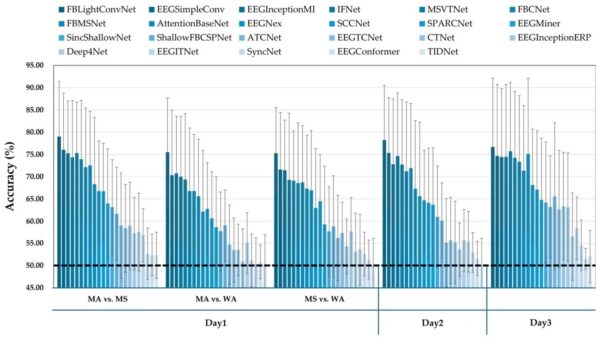
The preprint was posted to arXiv on August 13, 2026, proposing a hybrid deep-learning architecture that combines a convolutional neural network with a bidirectional long short-term memory network to decode motor-imagery EEG. The author notes that motor-imagery brain-computer interfaces are seen as a promising route to flexible communication between the brain and external devices, particularly for people affected by stroke or neurodegenerative disorders, but that reliable decoding remains difficult because EEG recordings carry substantial noise and relate to underlying brain activity in complex, weakly informative ways. In the proposed architecture, the CNN learns high-level spatial and temporal representations directly from raw MI-EEG recordings, while the bi-LSTM models temporal dependencies among the extracted features. The approach was evaluated on both a publicly available dataset and a privately acquired dataset collected with an EEG acquisition system, with robust performance reported on two- and three-class motor-imagery classification and promising subject-independent decoding across the methods compared. The work is a preprint and has not been peer reviewed.

Few-Shot Calibration Raises EEG Emotion Decoding Accuracy to 0.77

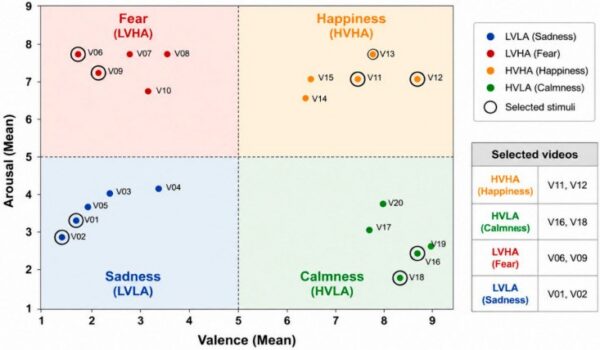
Researchers at Walailak University in Thailand tested EEG-based emotion recognition under auditory stimulation, scoring valence and arousal. Discrete wavelet transform features reached 0.88 accuracy when classifiers were trained and tested on the same subject, but leave-one-subject-out evaluation fell to near chance, exposing how far EEG emotion signatures differ between people. Few-shot adaptation closed part of that gap: with 75% of a new subject's calibration data, functional connectivity features reached 0.77.
© 2026 BCIwiki.com Digest Topics Tips Subscribe Revisions About