

August 2026
BCIs in Elderly Care: Review of 177 Studies Maps Six Ethical Themes
ERP-XTTN: Calibration-Free ERP Decoder Comes within 0.025 AUROC of the Best Baseline
Researchers at the University of Colorado Boulder have built ERP-XTTN, a cross-attention model that classifies event-related potentials (ERPs) in users it has never seen, with no per-user calibration. Across three public datasets and eight ERP components, it trailed the best baseline by 0.025 AUROC on average using only three channels. The work appeared in the Journal of Neural Engineering.
Xi'an Jiaotong Team Uses Inkjet-Printed Conductive Patterns to Align Neural Cells
Researchers at the Second Affiliated Hospital of Xi'an Jiaotong University in northwestern China and the Key Laboratory of Biomedical Information Engineering of the Ministry of Education have built an in vitro screening platform combining electrospun PLCL with inkjet-printed reduced graphene oxide (rGO) and growth-factor micropatterns. Because it varies conductive, biochemical and topographical cues together, the platform can evaluate printing parameters and electric-field strength in a single system. Under 150 mV/cm direct-current stimulation, PC-12 cells showed more neurite-like outgrowth and better alignment than with no stimulation or at 300 mV/cm.
72-Trial Meta-Analysis Ranks Noninvasive BCI Options for Post-Stroke Arm Recovery
SSVEP-TFFNet Beats FBCCA in XR Headsets, Even at Four Electrodes
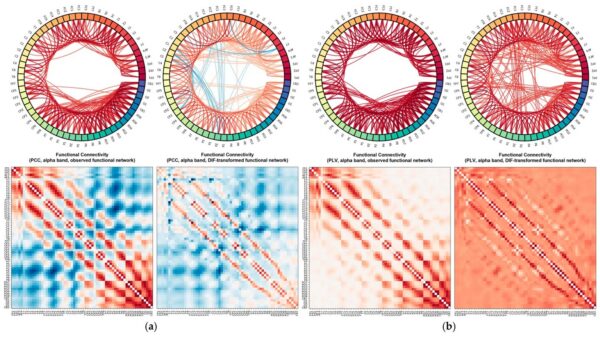
Diffusion Inverse Filtering Lifts BCI Emotion Recognition With Fewer Electrodes
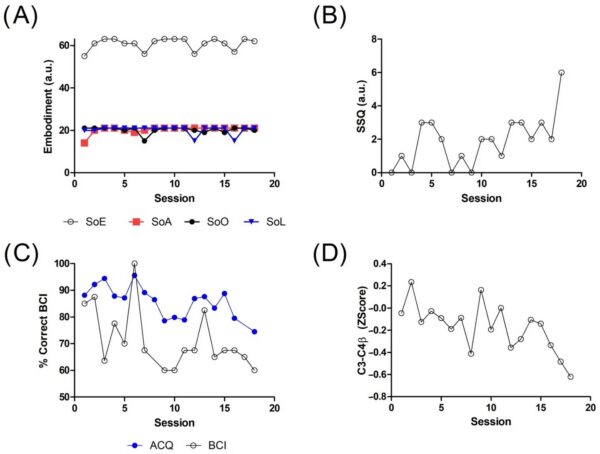
Embodiment and Simulator Sickness Map to Distinct EEG Patterns in XR-BCI
Kunming Team Maps Why BCI Performance Has a Ceiling, and How to Push It
A team at Kunming University of Science and Technology, in southwestern China's Yunnan province, has published a paper in the Journal of Biomedical Engineering analyzing how inherent limitations set the capability boundaries of brain-computer interfaces (BCIs). Dynamic neural coding, inter-individual variability, low signal-to-noise ratio, partial observability and paradigm dependence jointly impose upper limits on decoding accuracy, information transfer rate, complex intention decoding, user experience and system stability. The authors propose information enhancement, adaptive decoding, human-machine collaboration and system optimization, arguing that gains will come from extracting more from the neural signal rather than from overcoming the underlying limits.
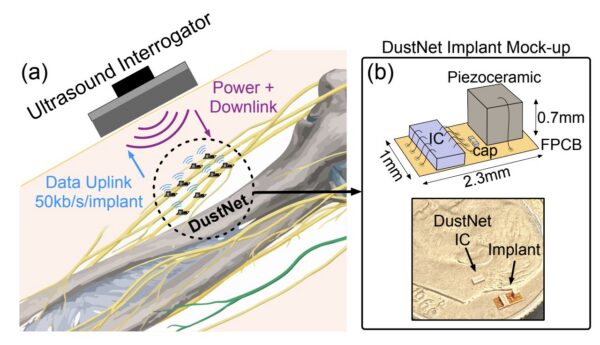
UC Berkeley Team Proposes DustNet, a Wireless Network of Ultrasonic Neural Implants
Tianjin University's MTGNet Denoises EEG, Lifting Fatigue Detection by Over 6 Points
EEG signals are only microvolts strong, so blinks, jaw clenching and muscle activity easily contaminate them. Researchers at Tianjin University and Tiangong University in northern China proposed MTGNet, a framework that suppresses these artifacts while preserving the information downstream tasks need. On the public EEGDenoiseNet dataset, it cut spectral relative root-mean-square error by 18.9%, 31.5% and 14.0% for EMG, EOG and mixed artifacts respectively; on a real-world fatigue EEG dataset, it raised classification accuracy by 6.20 to 6.69 percentage points over unprocessed input. Adapting the framework to a new task takes only 0.33 million low-rank adaptation (LoRA) parameters and no paired clean EEG reference.
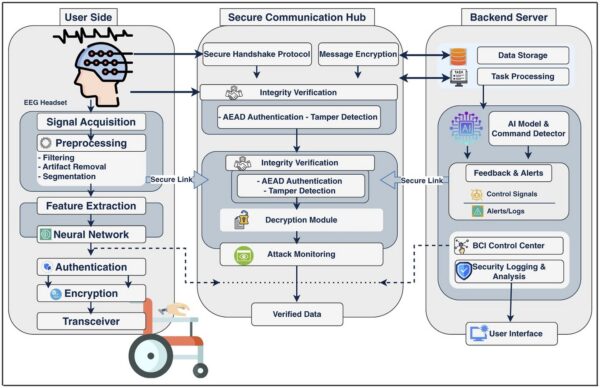
Post-Quantum Encryption Adds Just 0.45 ms of Latency to a BCI Link
BCI Society Workshop Tackles Outcome Measures for Pivotal Trials
A workshop at the BCI Society Meeting 2025, run with the Implantable BCI Collaborative Community (iBCI-CC), took up how clinical outcome assessments (COAs) for pivotal BCI trials should be selected, developed and validated. Participants pointed to patient heterogeneity, the absence of widely validated COAs, and the difficulty of capturing outcomes that matter in home and daily-life settings. The discussion lays groundwork for the iBCI-CC Clinical Study Endpoints Workgroup to build a transparent process for identifying meaningful aspects of health and concepts of interest, in support of regulatory approval and reimbursement.
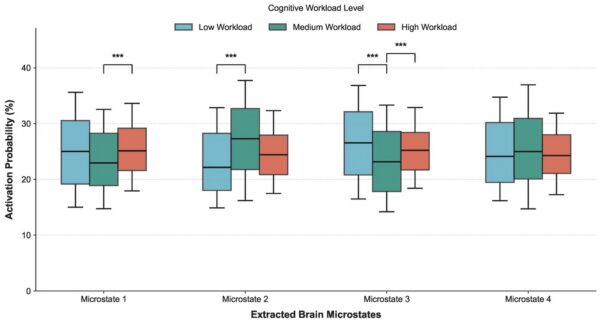
DMG-GCN Decodes Air Traffic Controller Workload From EEG at 80.30% Accuracy
Review Outlines Three BCI Paradigms for Post-Stroke Hand Rehabilitation
A review in Topics in Stroke Rehabilitation maps the neurophysiological basis of non-invasive EEG-based brain-computer interfaces for post-stroke hand recovery and sorts the field into three paradigms: motor imagery with physical feedback, motor imagery with virtual or multisensory feedback, and steady-state visual evoked potential (SSVEP)-driven training. These systems decode sensorimotor-cortex rhythms during imagined hand movement in real time to drive exoskeletons, functional electrical stimulation or virtual reality, closing a Hebbian feedback loop meant to strengthen or remodel damaged pathways in patients whom conventional rehabilitation, which depends on active movement, often cannot reach. Studies confirm the approaches can improve upper-limb function, the review says, but clinical adoption still faces low signal-to-noise ratios, wide individual variability and 'BCI blindness.'
LibriBrain100 Releases Over 100 Hours of MEG Data, Some 80 From One Subject
LibriBrain100, a magnetoencephalography (MEG) dataset released on August 25, 2026, contains more than 100 hours of high-quality recordings, about 80 of them from a single subject, the deepest within-subject collection of its kind. It is meant as a standardized benchmark for neural speech decoding and ships with open-source tooling and an online competition; a further 32 subjects contribute roughly 40 minutes each to offset thin per-subject data. Using an existing decoding model, the team reported state-of-the-art results on a word-classification benchmark, which it takes as evidence of both data quality and the value of deep within-subject recording.
Preprint: VN-SST Decodes Motor Cortex Signals With Less Training Data
A preprint introduces the von Neumann State-Space Transformer (VN-SST), a neural decoding model that is more data-efficient than a modern Transformer across three motor-cortex decoding benchmarks, with the largest gains where training data is scarce.
Motor Cortex Excitability Rises Then Falls in the Hour after Finger-Tapping Fatigue
Researchers at Sapienza University of Rome had 20 healthy young adults complete 10 consecutive blocks of finger tapping, then used transcranial magnetic stimulation (TMS) to track motor cortex excitability over the following 60 minutes. Excitability rose after the fatiguing task and drifted back to baseline, and participants whose tapping slowed most showed the largest increases. The findings were published in Clinical Neurophysiology on August 25, 2026, and the authors say they offer a framework for studying altered compensatory responses in neurological disorders.
BCIs Move into Orthopedic Rehab, Targeting Muscle Inhibition after Surgery
Brain-computer interfaces are moving out of neurology and into orthopedic rehabilitation, according to a review arguing that BCIs can raise corticospinal excitability and induce neuroplasticity by decoding movement-related neural signals and closing a feedback loop between central and peripheral systems. The target is postoperative muscle inhibition caused by insufficient central motor drive; available evidence suggests motor imagery-based BCI training improves quadriceps voluntary activation and limits strength loss after ACL reconstruction, though the authors cite thin mechanistic evidence, patient heterogeneity and a lack of standardized protocols as barriers to translation. The review, by researchers at the First Affiliated Hospital of Jinan University in southern China's Guangzhou and other institutions, was published on August 25, 2026, in the Chinese Journal of Reparative and Reconstructive Surgery.
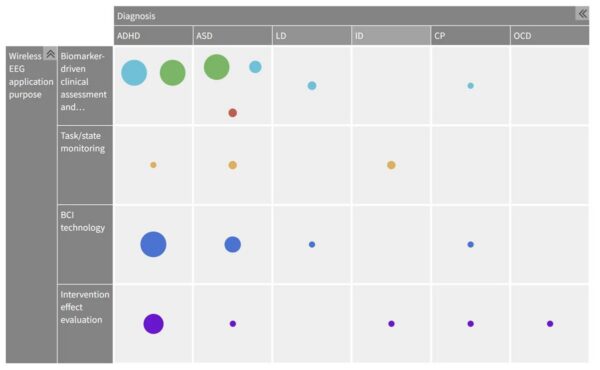
Wireless EEG Use Climbs in Children With Developmental Disabilities, BCI at 28.1%
Interpretable BCI Framework Pairs Emotion Recognition With Thought-to-Speech Decoding
A new study proposes an interpretable brain-computer interface framework that combines affective state recognition with EEG decoding to enable emotion-aware thought-to-speech. Tested on public imagined-speech EEG datasets in subject-independent settings and scored on accuracy, precision, recall, F1-score, inference speed and interpretability, the framework improved decoding reliability over conventional opaque models and produced clinically meaningful explanations, the authors report. They present it as a practical basis for assistive communication tools for people with paralysis, amyotrophic lateral sclerosis, locked-in syndrome and other conditions that disrupt natural speech.
Children Designing Their Own P300 BCI Interface Choose Animation, Color and Sound
Thirty-eight typically developing children aged 8 to 12 used a design application to build their own picture-based interface for a P300 brain-computer interface augmentative and alternative communication (P300-BCI-AAC) system, in a study of what children themselves want from such interfaces. They consistently chose preferred colors, animation — zooming most of all — and sound cues: animation aided visual accessibility and target location, background color changes carried preferred colors into the display, and video GIFs and picture overlays added personal relevance. The authors call motion, color, personalization and visual clarity preliminary priorities for pediatric BCI-AAC design, and point to follow-up work with children who use AAC daily and with people who have motor difficulties.
Tianjin University Team Cuts EEG Channels Without Losing Decoding Accuracy
A team at Tianjin University in northern China has built a graph neural network framework that jointly optimizes EEG channel selection and classification, picking a small subset of channels for motor imagery decoding while holding accuracy close to that of the full electrode set. Reported in the journal Chaos, the method was validated on three datasets — BCI Competition IV 2a, High Gamma and a newly collected set — and could cut system complexity for uses such as neurorehabilitation.
Preprint: Quantum-Inspired Circuits Lift Neural Decoding Accuracy in 3 of 4 Seeds
A preprint bolts parameterized quantum circuits onto a ResNet-50 backbone as residual sidecar modules and tests them on 31-class decoding of neural population activity from imagined handwriting. The backbone-gradient variant improved accuracy in three of four seeds and consistently lowered linear CKA similarity to the baseline features, which the authors read as a structural reorganization of the learned representation. They claim no quantum advantage.
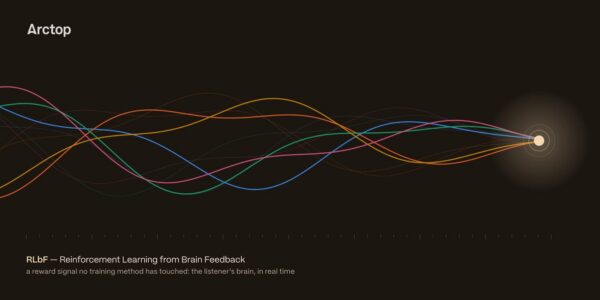
Arctop Unveils RLbF, Which Trains LLMs on Real-Time EEG Feedback
Gaze-Plus-Motor-Imagery BCI Reaches 100% Accuracy With 16-Channel EEG
Motor imagery BCIs have long faced two problems: wide variation between users and only a small number of distinguishable commands. In this study, users first select a target by looking at it, then confirm the choice with imagined movement, merging the two steps into one. In tests with 15 healthy participants using 16-channel EEG, the hybrid paradigm outperformed motor imagery alone in every channel configuration, reaching up to 100% accuracy. The researchers also found that fixating on the target made EEG responses more stable, which supports using fewer electrodes and lowering the hardware barrier.
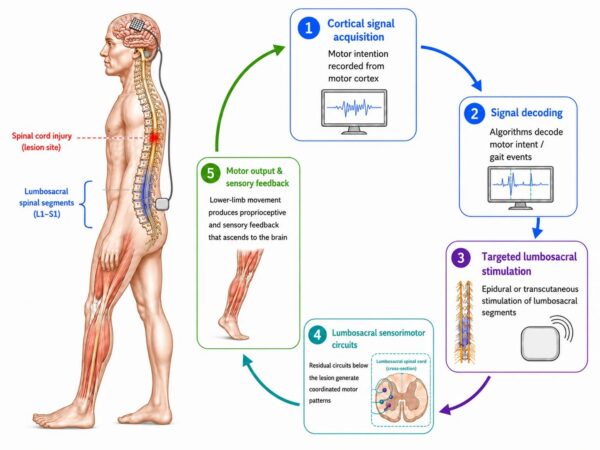
Brain-Spine Interfaces Remain Supported by Limited Clinical Evidence
Phase-sliding oscillation lifts async BCI to 94.2%
Phase mismatch between live EEG and fixed templates has long been the weak point of asynchronous steady-state visual evoked potential (SSVEP) brain-computer interfaces, which are seen as a promising route to real-world control. A new method, PSO-AC, exploits a phase-sliding oscillation phenomenon the authors observed and validated. Offline, 22 participants produced a mean control/non-control accuracy of 94.2% from just two seconds of EEG data, a result the authors say outperforms a state-of-the-art baseline; 9-class decoding also kept its edge across different time delays. Online, in robotic-arm experiments, the method delivered more stable command triggering and higher control efficiency, with the command cost per successful trial falling from 4.30 to 1.14. The paper was published in the International Journal of Neural Systems on August 21, 2026.
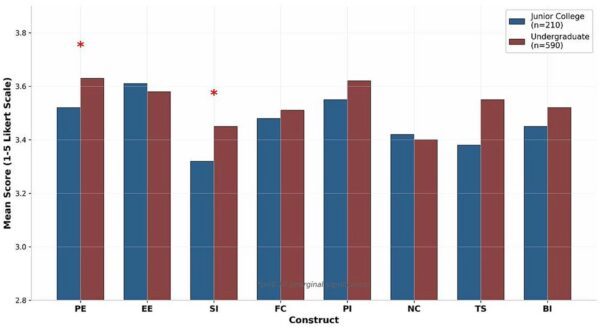
Teacher Support Was the Strongest Predictor of Student BCI Adoption
Cochrane Review Finds Small, Low-Certainty Gains for BCI Stroke Rehabilitation
A Cochrane review of 43 randomized trials involving 1,628 participants found that BCI training may produce a small improvement in post-stroke upper-limb motor function compared with conventional rehabilitation, while effects on lower-limb function and activities of daily living were limited or uncertain. No clear advantage emerged over sham BCI, and certainty was low to very low because of bias risk, small samples, heterogeneity and possible publication bias.