/ EN

Decoding Algorithms

133 entries

Neural signal decoding is the technical core of brain-computer interfaces, translating brain electrical activity into executable commands or intelligible language. This topic covers algorithm advances in motor imagery classification, speech decoding, and attention detection, along with engineering challenges such as transfer learning and online adaptation.

July 2026

BCI Paradigm Measures Auditory Frequency Discrimination Without Behavioral Reports

Researchers ran 11 healthy participants through a personalized rapid serial auditory presentation paradigm and decoded the resulting weak auditory evoked responses trial by trial with a new model, the Multi-Scale Spatial-Temporal Dual Attention Network (MS-STAMNet), reaching an unweighted average recall of 69.67±6.12% and an AUC of 0.7618±0.07, ahead of the EEGNet and PLNet baselines. Conventional measurement of the auditory frequency difference limen (FDL) depends on participants actively reporting what they hear, which leaves it open to subjective bias. Regression analysis found that neural decoding and behavioral performance came apart, suggesting the model picks up frequency deviations too small to reach conscious report.

Real-Time fMRI Pipeline Decodes Single-Trial Visual Perception Within Seconds

An arXiv preprint adapts the computationally intensive MindEye2 pipeline for real-time reconstruction of perceived natural images from fMRI. Using the open-source RT-Cloud platform, the researchers decoded single-trial visual perception within seconds of image presentation and analyzed the factors behind performance changes from offline to real-time processing. The work has not been peer reviewed.

Preprint: Interpretable Metrics Quantify Event-Related (De)Synchronization Variability for BCI

A preprint proposes interpretable metrics that separately quantify temporal, spatial, and frequency variability in BCI-related brain activity, tested across two motor-imagery BCI datasets totaling 133 participants and validated through within-subject and cross-subject classification experiments. The researchers report negative correlations of -0.2 to -0.4 under most conditions, indicating lower variability tracks higher BCI performance, and note the metrics show deep-learning and Riemannian classifiers differ in robustness to variability, with weaker correlations for the former. The work has not been peer reviewed.

MCSS Framework Tops 98% Motor Imagery Accuracy While Resisting EEG Reconstruction

A new study proposes a hybrid Markov chain-spatial statistical (MCSS) machine learning framework for classifying motor imagery EEG, reporting classification accuracy above 98% for every subject on BCI Competition III datasets IVa and IVb when paired with a support vector machine. Because the method discretizes signals into symbolic states and works from transition probability matrices rather than raw traces, the original neural waveforms are hard to reconstruct; the authors report that membership inference attacks stayed near chance level and that feature inversion attacks produced low reconstruction similarity.

Adding EMG to Hybrid BCI Expands Command Space from 15 to 60 Targets

Researchers have paired steady-state motion visual evoked potentials (SSMVEP) with electromyography (EMG) in a hybrid brain-computer interface, using a parallel architecture to expand the command space from 15 targets to 60. The multimodal setup reached an information transfer rate of 62.33 bits/min, against 42.49 bits/min for the best single-modality condition. Deep-learning decoding of the two signal streams held classification accuracy steady while lowering the effort required of users with severe motor impairment.

Preprint: Differentiable Logic Gate Networks for Low-Latency EEG Classification on Edge Devices

A preprint evaluates differentiable logic gate networks (Diff-Logic), compiled into pure boolean circuits, as a low-latency EEG classification option for resource-constrained BCIs. Across four EEG datasets and two task types — binary dementia screening and three-class emotion recognition — Diff-Logic reached 80.2% Macro F1 on dementia screening, 6.8 points above the multilayer perceptron baseline, and on power-constrained devices the MLP ran 2.3× slower and occupied 14× more memory, while Diff-Logic's inference time stayed nearly flat as model size grew 10×. The study has not been peer reviewed.

UCL Workshop Syncs EEG, Eye Tracking, ECG and GSR in a Flight Simulator

Researchers demonstrated synchronized EEG, ECG, GSR and eye tracking during a flight-simulation experiment at a workshop held with Professor Tom Carlson at University College London. A g.Nautilus 28-channel wireless EEG headset, ECG and GSR sensors and Tobii Pro Glasses 3 captured the signals in real time, tracking mental workload, engagement and heart rate variability (HRV) across two complete flight cycles of take-off, free flight and landing. The rig can be set up in 30 minutes and leaves participants free to move throughout.

Miniscope Enables Real-Time Neural Decoding

Beijing Normal University researchers developed a low-cost structured-illumination miniscope weighing less than 3 g. The system uses a Ronchi grating and time-multiplexed excitation for HiLo imaging, providing optical sectioning in freely behaving mice. It suppresses out-of-focus background fluorescence while retaining the speed, field of view, and accessibility of widefield miniscopes, and it supports optically sectioned multiplane imaging to increase neuronal yield. In hippocampal recordings, the researchers observed better region-of-interest signal quality and spatial-information readout. They also demonstrated a proof-of-principle closed-loop brain-machine interface supported by rapid online signal extraction and real-time neural decoding. The work is a bioRxiv preprint and has not been peer reviewed.

N400 Window Shapes Semantic Decoding

Aalto University researchers connected the classic N400 evoked response with semantic-vector decoding in a controlled MEG word-priming experiment. The study involved 25 native Finnish speakers who read word groups with different levels of semantic relatedness. Unrelated primes produced larger N400 responses and supplied the most useful training examples for a decoder mapping distributed MEG activity to semantic vectors. The researchers report that semantic information could be decoded from about 100 to 500 ms after stimulus onset. After the N400 peak, however, neural responses no longer mapped reliably to context-invariant semantic vectors. The result suggests that the end of the N400 window may mark a transition from word-specific representation toward broader contextual meaning. This bioRxiv preprint has not been peer reviewed.

MOJO Framework Boosts Neural Decoder Accuracy When Labels Are Scarce

Researchers have proposed MOJO, a training scheme that pairs masked autoencoding with a supervised objective for decoders that tokenize spiking activity. Tested on monkey motor cortex, multi-region mouse recordings and human electrocorticography during speech, MOJO beat purely supervised models, with the widest margins in few-shot finetuning where labels were limited, and produced more interpretable neuronal representations. The paper, posted to arXiv on July 15, 2026, has not been peer reviewed.

32-Channel Event-Based Analog Front End Compresses Neural Signals Adaptively

Researchers have built a 32-channel event-based analog front-end chip in 180 nm CMOS that encodes biosignals in two modes, pulse frequency modulation and adaptive asynchronous delta modulation. The chip retunes its output data rate in real time to the envelope of the incoming signal, giving high compression and, the authors argue, a route to wireless transmission and online processing of neural signals in brain-computer interfaces.

Preprint: Event-Based Neural Decoding for Neuroprosthetic Motor Control

A preprint proposes an event-based neural decoding method for neuroprosthetic motor control, arguing that deep-network-driven prostheses are limited by high latency, energy use and space — wired links restrict mobility and wireless links restrict information throughput, while spiking networks trade off task performance for low-power inference. The authors' event-based gated recurrent unit generates a sparse communication pattern with graded spikes, outperforming classical spiking neural networks on task performance, and pairs with efficient training and sparse inference to enable on-device neural decoding under latency, energy and space constraints. The study has not been peer reviewed.

Preprint: Learning Residual Kinematic Corrections for Continuous Neural Decoding via Reinforcement Learning

A preprint proposes a two-stage CNN-LSTM-RL framework that uses reinforcement learning to apply residual kinematic corrections to the output of a CNN-LSTM continuous motor imagery decoder. The RL agent is trained offline, without direct EEG input, to optimize motion accuracy against a target trajectory. Compared with CNN-LSTM alone, CNN-LSTM-RL lifted the 2D mean correlation from 0.5076 to 0.7181 and the VR-scene correlation from 0.6420 to 0.7780, cutting RMSE by 40.2% and 38.2% respectively. The authors say correcting kinematic error through offline residual RL strengthens 3D BCI motor imagery decoding without additional neural data; the study has not been peer reviewed.

A Novel Deep Learning Approach for Privacy-Preserving Encoded EEG-Based BCIs with Clinical LLM Applications

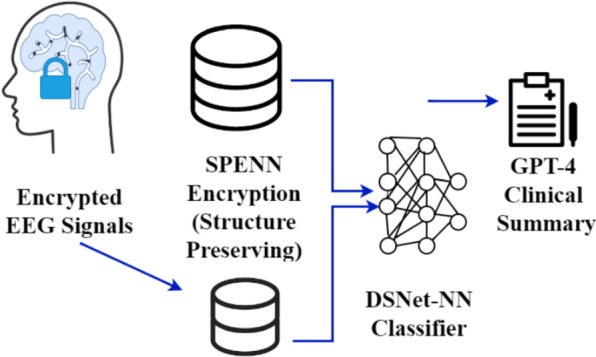
The study presents DSNet, a deep denoising structure-preserving neural encoding network that classifies privacy-preserving encoded EEG without decryption. Common spatial pattern (CSP) features are converted to irreversible neural codes — an irreversible neural transformation designed for privacy rather than a formal cryptographic guarantee — and two deep-learning architectures (a feedforward network and a recurrent RNN) classify in the encoded feature space. On public datasets, DSNet-NN exceeded 87% accuracy for every subject, outperforming the RNN variant and baselines while staying resilient to simulated privacy attacks; the study also integrated GPT-4 to generate clinical-style summaries from model outputs.

BIOSerenity Trains EEG Models on Jean Zay, Finds Scaling Diverges From Language AI

French neurotech company BIOSerenity ran three months of large-scale EEG AI training experiments on Jean Zay, France's most powerful supercomputer for research, including a 300-million-parameter model trained on 110,000 hours of EEG data across 64 GPUs. It also fully trained two model families, Mercury and Neptune, in three sizes each, from about 13 million to 100 million parameters and on about 5,000 to 40,000 hours of data. Neptune improved as it scaled up while Mercury did the opposite, its smallest version performing best, a sign that brain-signal AI does not scale the way language models do; the results have not been peer-reviewed.

Implanted Neural Interfaces Track Glioma Progression in Mice

Researchers at Coherence Neuro Global, Inc. and other institutions have used implanted neural interfaces to track glioma growth in freely behaving mice over time. Across several mouse strains and glioma models, tumor progression went with elevated gamma-band activity in the tumor microenvironment, and machine learning models read tumor burden off the chronic recordings, with gamma trajectories predicting individual growth rates. The work was posted to bioRxiv on July 9, 2026, and has not been peer reviewed.

Neurosom Wins US Patent for Bayesian EEG Source Mapping and Stimulation Targeting

Neurosom announced it has been granted a patent for a method that combines Bayesian statistical modeling with personalized EEG data and brain atlas models to achieve "super-resolution" in locating the origins of brain electrical activity, potentially improving the guidance of transcranial electrical stimulation (TES). The patent, titled "Method for Bayesian Super-Resolution of Electroencephalographic Source Analysis and Transcranial Electrical Stimulation" (US Pat. No. 12,663,866), was announced on July 9, 2026.

Preprint: Effects of EEG Preprocessing on Channel-Wise Attention in Visual EEG Decoding

A preprint uses the Adaptive Thinking Mapper (ATM) model to empirically assess how EEG preprocessing strategies — a baseline MVNN-only pipeline versus a full cleaning pipeline integrating ICA and notch filtering — affect channel-attention representations in visual EEG decoding, using cross-generalization, noise-robustness, and spectro-temporal ablation analyses and examining the structural correspondence between data-driven attention weights and neurophysiological reference networks (GPDC, PDC, DTF). The researchers report the full pipeline suppressed non-neural artifacts such as frontal noise while maintaining comparable decoding accuracy and baseline robustness, and the learned attention spatial organization stayed stable across pipelines. The work has not been peer reviewed.

Deep Learning Decodes Imagined Sounds and Images From MEG, Topping 70% for Visual Imagery

Researchers recorded magnetoencephalography (MEG) from 18 right-handed participants as they imagined sounds and pictures, then compared two decoders: a convolutional neural network (CNN) and a linear logistic regression model. The CNN decoded both tasks above chance and exceeded 70% accuracy for visual imagery. It still decoded significantly when trained only on cortical regions unrelated to the task, suggesting imagined content is spread across partially overlapping networks rather than confined to a single sensory area, an experimental basis for feeding auditory and visual information into BCI decoders together.

Beihang and Tsinghua Team Fuses EEG, Video and Motion to Flag VR Cybersickness

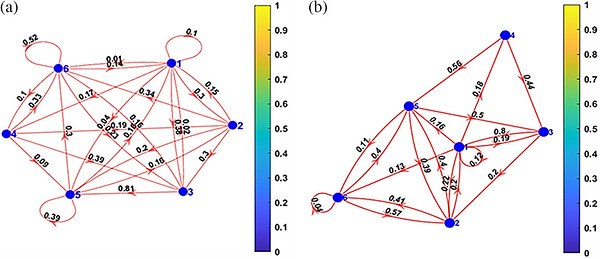
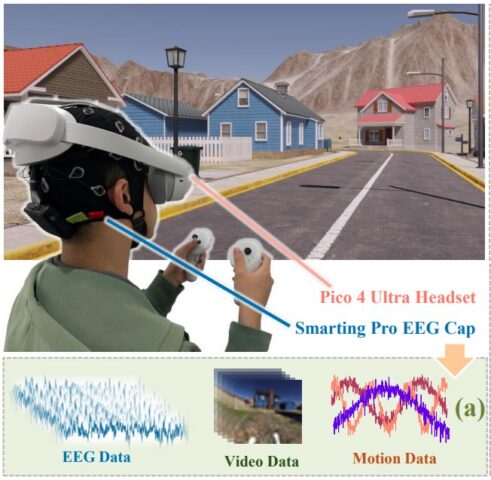
Researchers at Beihang University and Tsinghua University in Beijing built a multimodal contrastive learning framework that pairs EEG with synchronized video and motion data to detect cybersickness in virtual reality, representing the EEG as a connectivity graph and using an attention-based encoder to map the video and motion streams onto the same structure. Fusing all three signals separated cybersick from non-cybersick states more cleanly than any single modality or pair, and the model automatically pruned prefrontal connections unrelated to cybersickness. The setup used mBrainTrain's Smarting PRO 32-channel wireless EEG system and a Pico 4 Ultra headset, with 29 healthy adults navigating a VR scene under their own control.

Bio-Inspired Methods Target EEG Robustness

A perspective review published in Computers in biology and medicine examines EEG non-stationarity across sessions, people, and recording conditions. It asks whether mechanisms that help the brain maintain functional stability can improve the robustness of brain-computer interface models. The review covers synaptic plasticity, homeostatic regulation, neural oscillations, and spiking representations, comparing bio-inspired approaches with conventional machine learning and transfer learning. It also considers hybrid designs that combine biologically grounded mechanisms with artificial neural networks. The author proposes operational definitions for bio-inspired, bio-plausible, and bio-realistic modeling, together with a minimum specification for continual EEG benchmarks. Because direct EEG evidence remains limited for several proposed mechanisms, the review stresses the need to distinguish empirical findings from hypotheses and future research directions.

June 2026

Multi-View Contrastive Learning Improves Cross-Subject ERP Classification

MVCLDG combines raw EEG and Hilbert-derived phase information with domain-alignment and contrastive-learning constraints to improve classification across unseen users. It outperformed baseline and representative domain-generalization methods on a public error-related-negativity dataset and a semantic-syntactic-violation dataset without target-domain adaptation; ablation and activation-map analyses supported the contribution and neurophysiological plausibility of its components.

LEGEND Decodes Tri-Modal Signals for SCI

A study published in Computers in biology and medicine introduces LEGEND, a neural-decoding architecture that jointly models cortical EEG, spinal ESG, and peripheral-muscle EMG for a neural bypass in spinal cord injury rehabilitation. The model encodes the three signal modalities in Lorentz hyperbolic space, connects 51 channel nodes through a signed tri-layer phase-locking-value graph, and refines the representation with graph attention. Under strict leave-one-subject-out evaluation on the Steele dataset, LEGEND achieved 56.51%±12.27% accuracy, 23.4 percentage points above EEGNet. The researchers argue that hyperbolic representations can capture complex relationships across the motor hierarchy, providing a computational foundation for rehabilitation decoding that links brain, spinal, and muscle activity.

Brain-to-Image Framework Splits Shared and Personal Features to Cut Calibration Data

Researchers at Lanzhou University, Zhejiang University, the University of Hong Kong and Sun Yat-sen University have built MindShow, a unified generative framework that reconstructs images from fMRI at cohort level rather than one subject at a time. A hierarchically conditioned mixture-of-experts encoder separates population-shared latent representations from subject-specific neural traits, so a new subject can be adapted with limited calibration data; a gated Perceiver bottleneck maps fMRI features into fixed-size image and text tokens, an optimal transport loss aligns them with a pretrained vision-language model, and a frozen diffusion model renders the image. The authors report better high-level reconstruction metrics with competitive structural fidelity, in a study published in Medical Image Analysis on June 20, 2026.

Dynamic Wavelets Boost Imagined-Speech EEG

A study published in Computers in biology and medicine proposes dynamic wavelet-basis selection to improve non-invasive EEG imagined-speech classification. For each EEG epoch, the method minimizes wavelet entropy to select an informative basis and then injects Gaussian noise into the corresponding coefficients. A convolutional neural network with channel-wise excitation classifies the augmented signals. The dataset contains 32 channels, 8 stimuli, and recordings from 10 participants. The words-vowels combination reached a highest classification accuracy of 98% with a Cohen's kappa of 0.95, although performance was lower for the full class set. The researchers report that the method outperformed conventional augmentation strategies and static wavelet approaches, offering an adaptive way to address noise and non-stationarity in EEG decoding.
© 2026 BCIwiki.com Digest Topics Tips Subscribe Revisions About