
中 / EN
September 2026

Preprint: Self-Updating Models Predict All Seizures in 75% of Patients Amid Drift

Researchers showed that seizure-prediction methods lose much of their accuracy in continuous use, with mean AUROC dropping from 90% offline to 57.9% online across 664.9 hours of intracranial EEG from 16 patients with drug-resistant epilepsy, because brain signals drift over time. An online evolutionary framework that keeps selecting and updating models on the data stream predicted every seizure in 75% of patients and missed only one in 87.5%. Reading only contacts in the epileptogenic network cut the required contacts by 79.12%. The team has released the dataset. The study is a preprint and has not been peer reviewed.
Tsinghua Team Launches TrustBCI to Share BCI Data Without Moving It

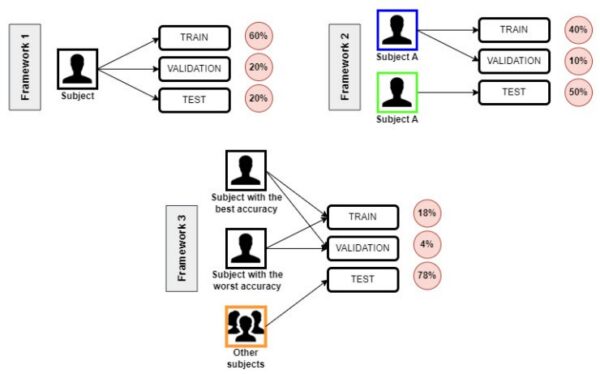
Training accurate BCI models depends on large, diverse EEG datasets, but that data is usually locked inside individual hospitals and labs, stored in inconsistent formats and restricted by privacy rules, which makes it hard to share. TrustBCI brings three functions into one platform: turning raw BCI datasets into assets that can be exchanged, using incentives to keep institutions contributing data, and letting users run computations without access to the raw records. The platform demonstrates two workflows, controllable data synthesis, which generates new datasets, and privacy-preserving query, which returns only query results. That suggests BCI models could be trained jointly across institutions without first pooling the data in one place.

LLMs Cut P300 Speller Keystrokes by More Than 62%, Review Finds

This review traces the evolution of P300 brain-computer interfaces from classic spellers to AI agents. The P300 is a positive brain potential that appears about 300 milliseconds after a rare stimulus, and systems use it to determine which character a user wants to select. According to the review, recent systems such as ChatBCI and MindChat, which pair P300 spellers with large language models, cut keystrokes by more than 62% and nearly triple communication speed. The author also proposes an end-to-end architecture: an EEG headset and a real-time CNN detector, topped by an AI-agent layer made up of an LLM planner and IoT control interfaces.

Anisotropic Hydrogel Electrode Records P300 and SSVEP Signals

Electrodes for non-invasive brain-computer interfaces have long traded off conductivity, conformity to the skin and durability. A conductive hydrogel made by in situ directional freezing copolymerization forms vertically aligned ion channels and an interconnected nanoporous network, giving it higher conductivity than conventional hydrogel electrodes. In preliminary P300 and steady-state visual evoked potential (SSVEP) experiments, it recorded signals comparable in quality to conventional wet- and dry-electrode benchmarks, while also offering a tissue-matched compressive modulus, high stretchability, skin adhesion and rapid self-healing. The paper presents these experiments as a feasibility demonstration and reports no data on long-term wear stability, scaled-up fabrication or human clinical trials.

Pretraining Cuts Labeled Data Needed for BCI Decoding by Over 90%

Training a decoder to read brain signals usually means collecting a large labeled dataset from every new subject, which is slow and a burden on patients. The proposed method, MAPA, first runs self-supervised pretraining on unlabeled intracranial EEG recordings pooled across subjects, then transfers to new ones. The difficulty is that electrode contact placement and neuroanatomy vary from person to person, so MAPA adds two spatial encodings, an anatomical region embedding and a relative positional encoding, to a standard masked autoencoder. In cross-subject tests, about 164 labeled trials were enough to reach the accuracy that otherwise takes 3,500. The team reports that MAPA set new best results on the Neuroprobe benchmark in all three settings, within-session, cross-session and cross-subject, without fine-tuning, suggesting that calibration for implanted BCIs could become much shorter.

fMRI-Guided Training Lifts EEG Individual-Finger Decoding Accuracy to 74.53%

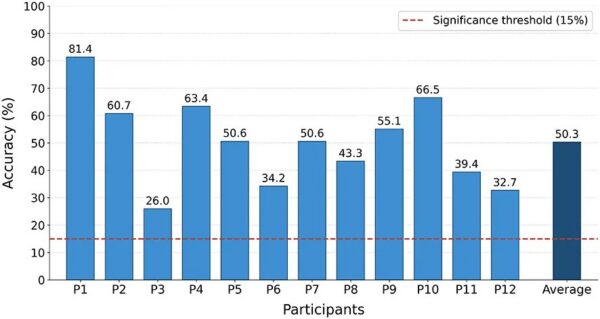
Because the fingers' representations sit close together in the motor cortex, telling individual finger movements apart from scalp EEG has long been difficult. Researchers first learned a set of spectral projections from simultaneously recorded EEG and functional MRI (fMRI), then used the class geometry derived from fMRI to correct EEG predictions. In tests on 12 healthy participants, group average accuracy for two-class movement execution rose from 66.93% to 74.53%, and for three-class execution from 44.83% to 56.58%; for two-class motor imagery it rose from 80.78% to 85.63%. At inference the system uses EEG alone, with no paired fMRI data required.

Memorial University Team Combines Two Mental Images to Push EEG BCI to 8 Classes

Researchers in the Department of Electrical and Computer Engineering at Memorial University of Newfoundland in Canada had participants perform two imagery tasks at once, imagining singing while imagining moving one hand or both feet, to expand the number of states an active brain-computer interface can distinguish. Using EEG from 14 healthy participants, filter-bank common spatial pattern features and regularized linear discriminant analysis, they separated these dual-imagery tasks from their single components and from rest. Peak accuracies reached 64.1% for 3 classes and 63.0% for 4 classes; at 7 and 8 classes, average accuracies of about 55% and 50% far exceeded chance levels of 14.3% and 12.5%. The authors acknowledge the accuracy is not yet sufficient for a practical multi-command BCI but say combined imagery is feasible.

Passenger EEG Helps Self-Driving AI Spot Road Risks Early With 95.3% Balanced Accuracy

Researchers recorded passengers' EEG as they watched driving scenes in a highly automated vehicle, then trained models to judge whether a risk lay ahead and where the hazard appeared. A 3D-CRNN reached 95.3% ± 2.7% balanced accuracy in risk prediction and raised hazard identification from 80.9% to 85.0%. In cross-subject tests on passengers the model had not seen, balanced accuracy fell to 64.9% ± 8.5%, showing the approach is still some way from deployment.

EEG Motor-Imagery BCI Steers Wheelchair Prototype, With SVM Decoding at 90.7%

A research team built an EEG motor-imagery brain-computer interface and connected its decoder to a physical differential-drive wheelchair prototype, offering people with severe motor impairments a non-invasive means of control, though the uncertainty of EEG decoding has long hindered such systems from driving physical actuators. Using Filter Bank Common Spatial Pattern features on a public dataset, the team compared support vector machine (SVM), k-nearest neighbors and linear discriminant analysis classifiers; SVM reached 90.7% mean accuracy, and 85.9% when replayed on an independent dataset through a hardware-in-the-loop setup. Confidence-based command validation raised accuracy among accepted commands to 97.6%, at the cost of accepting only 60.7% of them. Layered safeguards (confidence gating, self-terminating steering, transition braking, communication timeout supervision and a hardware emergency cutoff) limit the consequences of decoding errors.

Random Forest Tells Real From Imagined Movements, Even on Consumer-Grade EEG

Can a machine tell from EEG alone whether a person is actually moving or only imagining the movement? A preprint study tested a Random Forest classifier on consumer-grade and research-grade EEG systems and found it could separate the two kinds of activity and identify which body part was involved. EEG is a basic tool for studying the brain's electrical activity during movement, and BCIs use that activity to build assistive technologies, particularly for people with physical disabilities; because extracting features and patterns from the signal remains complex, the task is often handed to machine learning. The study also found that differences in EEG between individuals drag down classification accuracy, meaning a model that works for one person may perform worse on another. The work is a preprint and has not been peer reviewed.
More Components Can Hurt P300 Spellers, Full-Factorial Study Finds

P300 BCI spellers are often built by switching on every component that works on its own, on the assumption that more is better. A preprint study tested that assumption with a four-component full-factorial experiment and found that a component's value is conditional, not additive. Subject calibration was the strongest single contributor; Euclidean Alignment made up for the lack of calibration in zero-calibration settings; and stacking components that are each useful on their own could lower performance, an effect the authors call component anti-synergy. Language model support was not universally beneficial either: its effect depended strongly on how strong the underlying EEG pipeline was.

New Filtering Pipeline Keeps BCI Decoding at 76% During Brain Stimulation

Running a motor-imagery BCI while transcranial alternating current stimulation (tACS) is switched on has been difficult, because stimulation artifacts swamp the brain rhythms the decoder relies on and push accuracy close to chance. In a controlled test with 14 healthy participants, a real-time spatial filtering pipeline combining spatio-spectral decomposition with beamforming held accuracy at 76 ± 9% during stimulation, while a standard Laplacian filter managed only 58 ± 9%. That makes closed-loop "stimulate while reading" operation feasible at the signal level; whether it actually improves BCI performance or produces neuroplastic changes, the paper explicitly leaves to future research.

OPM-MEG Beats EEG by 3.6 Points in Non-Invasive Speech Decoding

Ten native Mandarin speakers read aloud six single-vowel rhymes while optically pumped magnetometer magnetoencephalography (OPM-MEG) and EEG recorded the same task. In the 150-500 ms window after stimulus onset, OPM-MEG decoded significantly more accurately than EEG with all five classifiers tested. The best-performing combination, common spatial pattern features with a linear support vector machine, reached a mean accuracy of 60.3% for OPM-MEG versus 56.7% for EEG. That suggests speech BCIs that need no implanted electrodes and do not restrict head movement may have a clearer signal path than EEG.

Study Adds Protective Coatings to Pillar Electrodes in Retinal Prostheses

The study proposes coating the gold pillar sidewalls of the PRIMA retinal prosthesis with titanium dioxide or platinum while protecting surrounding device regions. The approach combines photolithography and electrodeposition to address tissue contact with exposed gold while preserving surrounding implant functionality. The authors report that both coatings were biocompatible in in-vivo studies and prevented adverse retinal tissue reactions to gold. Titanium dioxide had a lower specific capacitance than platinum, which the authors say better limits sidewall current and directs charge injection mainly through the pillar tops. These findings concern electrode materials and interfaces, not demonstrated improvements in patients' vision from the new coatings.

1,145-Patient Meta-Analysis Finds Stronger Evidence for Robotic Stroke Rehab Than BCI

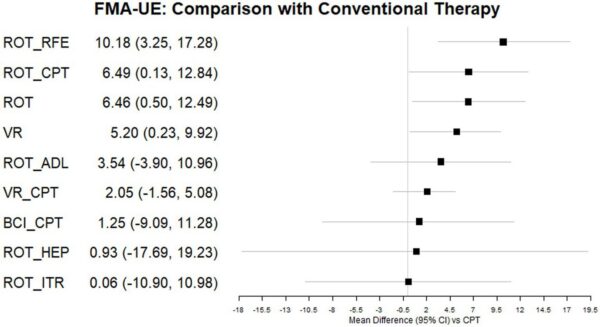
Which new technology does most for upper-limb recovery after stroke: virtual reality, robotics or a brain-computer interface (BCI)? A systematic review and network meta-analysis placed all three in a single evidence network, pooling 25 randomized controlled trials and 1,145 stroke survivors. The authors searched PubMed, Web of Science, the Cochrane Library and Embase from inception to October 2025, used conventional physical therapy as the common comparator in a star-shaped network, and applied a Bayesian random-effects model to estimate relative efficacy and calculate SUCRA rankings. Robot-assisted training produced the most robust findings, with two studies supporting robotics plus conventional physical therapy and three supporting robotics alone; only one BCI study yielded extractable data, too little to judge efficacy. The authors caution that the top-ranked intervention, robotics combined with rehabilitative functional electrical stimulation, rests on a single trial and should not be read as definitive evidence of superiority.

Preprint: Federated NEXUS-MI Cuts Motor-Imagery BCI Backbone Traffic by About 42%

Motor-imagery brain-computer interfaces vary widely between users and have little calibration data, and federated learning lets them share a model without uploading raw EEG. NEXUS-MI treats gateway synchronization as a joint learning-and-communication control problem: raw EEG and classifier heads stay local, while an edge coordinator maintains the shared backbone network. On the BCICIV-2a and OpenBMI datasets, communication-aware coordination cut server-to-client backbone traffic by about 42%, with small, implementation-dependent differences in cohort-average accuracy. Those averages masked individual vulnerability: on BCICIV-2a, losses relative to an ideal-link reference reached about 12 percentage points.

Imagining Jogging Strengthens Sense of Owning a BCI-Controlled Avatar, Keio Team Finds

Participants steering a virtual avatar with a brain-computer interface reported a stronger sense that the avatar's body was their own when they imagined jogging than when they imagined opening their right hand, even though jogging imagery produced weaker EEG signals. Forward movement was driven by motor imagery-related sensorimotor rhythm event-related desynchronization from scalp EEG and direction by eye gaze, as participants guided a jogging avatar along a curved course before rating their embodiment in questionnaires. The researchers say neural signal strength and embodied experience can diverge, so the congruence between imagery and action should be weighed alongside standard decoding metrics.

Parkinson's Patients Learn to Control Deep Brain Stimulation Through a BCI Game

Researchers at the University of California, San Francisco (UCSF), a public research university known for its neuroscience work, had two Parkinson's disease patients train at home with a brain-computer interface (BCI) airplane-simulator game, learning to down-regulate cortical beta activity and thereby control the intensity of their own deep brain stimulation (DBS). The work, posted as a preprint on medRxiv on August 17, 2026, points to BCI applications in neuromodulation and to more personalized treatment for Parkinson's and other conditions; its conclusions have not yet been peer reviewed.

Generative AI Lowers the Bar for BCI Attacks, Putting Cognitive Autonomy at Risk

Researchers have mapped the brain-computer interface (BCI) attack surface along five dimensions (forged neural signals, desynchronization-based evasion, replay hijacking, "Vein Tapping" eavesdropping and embedded backdoors), which they group as "NERVE Attacks" and describe as orthogonal and together spanning the full BCI stack. Their EEGle framework, which the team is releasing to the community for building and verifying device security, surfaced 17 new neuro-specific attack instances and a stealth-versus-effectiveness trade-off in backdoor design. The authors warn that generative AI is lowering the barrier for non-expert attackers, with risks to cognitive autonomy, mental privacy and physical safety, from neural data exfiltration to malicious control of BCI-connected devices. The preprint, by Zahra Tarkhani, Georgios Akkogiounoglou, Lorena Qendro, Isabel Tscherniak and Anil Madhavapeddy, has not been peer reviewed.

KU Leuven Team Finds EEG Tracking of Moving Objects Weakens Farther From the Gaze Point

Even when the eyes stay fixed on one point, the brain tracks moving objects in a video, and that tracking grows stronger with attention. But researchers at KU Leuven found that EEG tracking of an object's motion weakens the farther the object sits from the fixation point, meaning decoding methods that read attention from tracking strength may mistake where an object is for where attention is.

Review maps how BCIs turn motor cortex signals into robotic arm commands

How can people with severe motor disorders bypass damaged nerve pathways and steer a robotic arm with their thoughts? This review traces the full signal chain: recording neural activity from the motor cortex, preprocessing it, extracting features, decoding it and generating continuous, discrete or multi-degree-of-freedom arm commands. The author compares signal acquisition in invasive, non-invasive and intravascular BCIs and argues that jointly optimizing signal quality, decoding algorithms and shared control is key to more natural and reliable arm operation, while noting that long-term stability, control accuracy and clinical safety remain limited.

Sleep spindles dampen motor cortex without added inhibition

Sleep spindles, brief bursts of brain rhythm during deep sleep linked to memory consolidation, further lowered the excitability of the motor pathway beyond the drop already seen in spindle-free N2/N3 sleep. Researchers timed magnetic pulses to the motor cortex using live EEG readings. Contrary to their hypothesis, a measure of local GABA-A inhibition did not change with spindles or their phase. The study is a preprint and has not been peer reviewed.

Peking Union Medical College Team's 480-Target Hybrid BCI Hits 260 Bits per Minute

A team at the Institute of Biomedical Engineering, Chinese Academy of Medical Sciences and Peking Union Medical College, has built a hybrid brain-computer interface (BCI) that combines surface electromyography (sEMG) with steady-state visual evoked potentials (SSVEP), encoding 480 targets with 120 flicker frequencies and four hand gestures. In online experiments it achieved a mean classification accuracy of 84.55 ± 7.23% and a mean information transfer rate (ITR), a key measure of practical BCI performance, of 260.07 ± 30.41 bits/min. Its command set matches the largest target counts in existing systems, and the authors place its performance among the top, offering a technical reference for large-command-set BCIs. The work appeared in Cognitive Neurodynamics on September 7, 2026.

Compact Hybrid Deep Learning Model Reaches 83.89% on Four-Class Motor Imagery EEG

Researchers have proposed a compact hybrid deep learning model for classifying four-class motor imagery EEG signals. Combining spatial convolutional filtering, bidirectional temporal modeling and an attention mechanism, the end-to-end model reached a mean accuracy of 83.89% on the public BCI Competition IV Dataset 2a, outperforming conventional baselines. The authors say bidirectional temporal modeling and attention weighting make motor imagery classification more robust, which could help BCIs assist patients with motor disabilities, and that the model offers an efficient option for decoding in resource-constrained settings.

Preprint: A 10 mW Comms Budget Can't Carry 1,000-Channel Brain Implants

To move from lab prototypes to long-term clinical systems, implantable brain-computer interfaces must place thousands to millions of electrodes several millimeters to centimeters deep in brain tissue without heating it by more than about 1 degree Celsius. This review benchmarks inductive, mid-field, RF, ultrasonic, magnetoelectric, optical, UWB and electro-quasistatic wireless links against three clinical axes (depth, size and data rate), noting that almost every clinically relevant implant is weakly coupled, with coupling coefficients of only 10^-3 to 10^-1. Within a communication budget of about 10 mW, narrowband high-Q links suit power transfer and low-speed data, but at 1-10 nJ/b they cannot deliver the more than 10 Mbps to tens of Gbps uplinks that interfaces with a thousand or more channels require. The study is a preprint and has not been peer reviewed.

AI Model Reads Specific Memories From Human Neurons

A transformer neural network trained on single-neuron spikes, recorded with intracranial microelectrodes while participants watched an audiovisual episode once, predicted which specific people or places they would name during later free recall. The brain regions carrying that information shifted across sleep: medial temporal lobe signals decoded memories before sleep, frontal cortex signals after. The authors say such decoding could point toward brain-computer interfaces for episodic memory disorders. The study is a preprint and has not been peer reviewed.

Researchers Add Confidence Neuron to Echo State Network to Flag Unreliable EEG Decoding

Researchers have added a dedicated readout neuron that outputs decision confidence to an echo state network, a neuro-inspired computational model suited to time-series data, so that confidence is updated continuously as a decision forms. In a simulated decision task, confidence activity rose as stimuli became stronger and easier to distinguish. In EEG-based motor imagery classification, confidence activity increased with decision accuracy and distinguished correct from incorrect decisions, especially in better-performing participants. The study is a preprint and has not been peer reviewed.

Impaired vision spares accuracy of gaze-free BCI

Can people with poor eyesight still steer a brain-computer interface (BCI) just by shifting their attention? Researchers had healthy volunteers covertly attend to colored targets in their peripheral vision under simulated blurred and monocular vision. The impairments changed the brain's electrical responses to the stimuli and shrank some of them, but the BCI decoded the users' choices just as accurately. The results suggest that as long as a target's color can be recognized, a gaze-independent, non-invasive BCI may stay usable for people with visual impairments. The study is a preprint and has not been peer reviewed.

Vietnamese BCI Speller Types up to 4.95 Characters a Minute in Two-Person Pilot

Two participants typed Vietnamese at 4.95 and 3.45 characters per minute using motor imagery EEG in a pilot test of BCI-vSpeller, a speller built around a custom virtual keyboard of more than 160 selectable keys covering characters, tone marks and special symbols. Researchers from VNU University of Engineering and Technology in Hanoi, reported the findings in Technology and Disability. BCI spellers let users enter text by controlling an interface with mental signals, an approach aimed at people with severe speech and mobility impairments.

Umbrella Review Ties Post-Stroke BCI Gains to Motor Attempt and 20-60 Minute Sessions

Motor attempt, meaning a patient's effort to move a paralyzed limb, was the intent-inducing modality most consistently tied to significant therapeutic effects in an umbrella review of 17 meta-analyses of brain-computer interface systems for stroke motor recovery, published in Symmetry on September 4, 2026 with a literature search cutoff of June 30, 2026. Electrical stimulation was a consistently effective feedback type, while robot-assisted and visual feedback gave inconsistent results, and higher weekly session frequency and moderate session durations of about 20 to 60 minutes were linked to consistent recovery. Combining motor attempt with electrical stimulation may yield greater benefits, the authors suggest.

© 2026 BCIwiki.com Digest Topics Tips Subscribe Revisions About