/ EN

Papers

257 entries
September 2026

Peking Union Medical College Team's 480-Target Hybrid BCI Hits 260 Bits per Minute

A team at the Institute of Biomedical Engineering, Chinese Academy of Medical Sciences and Peking Union Medical College, has built a hybrid brain-computer interface (BCI) that combines surface electromyography (sEMG) with steady-state visual evoked potentials (SSVEP), encoding 480 targets with 120 flicker frequencies and four hand gestures. In online experiments it achieved a mean classification accuracy of 84.55 ± 7.23% and a mean information transfer rate (ITR), a key measure of practical BCI performance, of 260.07 ± 30.41 bits/min. Its command set matches the largest target counts in existing systems, and the authors place its performance among the top, offering a technical reference for large-command-set BCIs. The work appeared in Cognitive Neurodynamics on September 7, 2026.
Preprint: A 10 mW Comms Budget Can't Carry 1,000-Channel Brain Implants

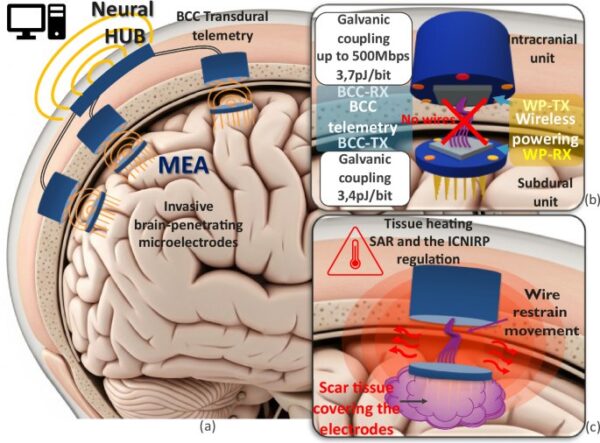
To move from lab prototypes to long-term clinical systems, implantable brain-computer interfaces must place thousands to millions of electrodes several millimeters to centimeters deep in brain tissue without heating it by more than about 1 degree Celsius. This review benchmarks inductive, mid-field, RF, ultrasonic, magnetoelectric, optical, UWB and electro-quasistatic wireless links against three clinical axes (depth, size and data rate), noting that almost every clinically relevant implant is weakly coupled, with coupling coefficients of only 10^-3 to 10^-1. Within a communication budget of about 10 mW, narrowband high-Q links suit power transfer and low-speed data, but at 1-10 nJ/b they cannot deliver the more than 10 Mbps to tens of Gbps uplinks that interfaces with a thousand or more channels require. The study is a preprint and has not been peer reviewed.

Compact Hybrid Deep Learning Model Reaches 83.89% on Four-Class Motor Imagery EEG

Researchers have proposed a compact hybrid deep learning model for classifying four-class motor imagery EEG signals. Combining spatial convolutional filtering, bidirectional temporal modeling and an attention mechanism, the end-to-end model reached a mean accuracy of 83.89% on the public BCI Competition IV Dataset 2a, outperforming conventional baselines. The authors say bidirectional temporal modeling and attention weighting make motor imagery classification more robust, which could help BCIs assist patients with motor disabilities, and that the model offers an efficient option for decoding in resource-constrained settings.

Vietnamese BCI Speller Types up to 4.95 Characters a Minute in Two-Person Pilot

Two participants typed Vietnamese at 4.95 and 3.45 characters per minute using motor imagery EEG in a pilot test of BCI-vSpeller, a speller built around a custom virtual keyboard of more than 160 selectable keys covering characters, tone marks and special symbols. Researchers from VNU University of Engineering and Technology in Hanoi, reported the findings in Technology and Disability. BCI spellers let users enter text by controlling an interface with mental signals, an approach aimed at people with severe speech and mobility impairments.

Umbrella Review Ties Post-Stroke BCI Gains to Motor Attempt and 20-60 Minute Sessions

Motor attempt, meaning a patient's effort to move a paralyzed limb, was the intent-inducing modality most consistently tied to significant therapeutic effects in an umbrella review of 17 meta-analyses of brain-computer interface systems for stroke motor recovery, published in Symmetry on September 4, 2026 with a literature search cutoff of June 30, 2026. Electrical stimulation was a consistently effective feedback type, while robot-assisted and visual feedback gave inconsistent results, and higher weekly session frequency and moderate session durations of about 20 to 60 minutes were linked to consistent recovery. Combining motor attempt with electrical stimulation may yield greater benefits, the authors suggest.

Carnegie Mellon Team Strips ECG Noise From Stentrode, Keeps Motor Signals

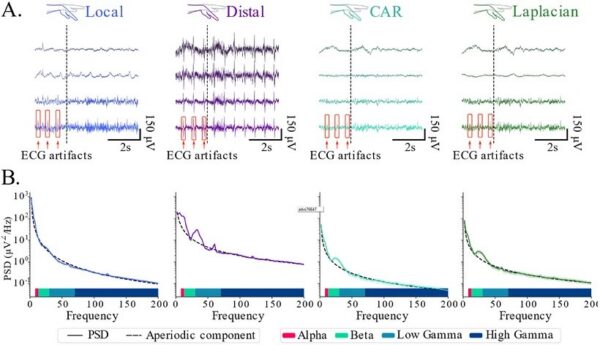
Stentrode, an endovascular brain-computer interface, often picks up electrocardiogram (ECG) artifacts. Researchers at Carnegie Mellon University and colleagues found that conventional re-referencing schemes reduce ECG artifacts but also diminish beta-band activity linked to movement. They applied band-limited independent component analysis (BL-ICA) as a spatial filter to remove ECG artifacts while preserving motor features. The study appeared in Advanced Science.

Speech Imagery BCIs May Be Overrated as Only 36% of Participants Reach Significance

Speech imagery (SI) brain-computer interface results may be hard to reproduce, a University of Essex team reports. When the researchers re-ran published decoding pipelines, classification accuracy averaged 11.25 percentage points below the original reports, with gaps ranging from 2% to 39%; in a replication analysis, only 36% of SI participants cleared the threshold for statistical significance, against 91% in motor imagery (MI) datasets. Published in the Journal of Neural Engineering on September 4, 2026, the study is the first to assess both the reproducibility and the replicability of SI decoding. Every SI study evaluated was missing methodological details, and the authors conclude that SI's feasibility as a practical BCI paradigm may have been overestimated, a warning for clinical applications and follow-up research that rely on it.

BCI Training Improves Post-Stroke Arm Function Across 35 Trials, 1,188 Patients

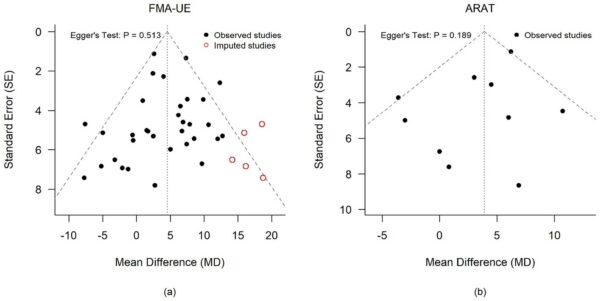
Brain-computer interface training significantly improves upper-limb motor function after stroke, according to a systematic review and meta-analysis of 35 randomized controlled trials involving 1,188 participants, published in Frontiers in Neurology on September 3, 2026. Pooled data showed mean improvements of 4.55 points on the Fugl-Meyer Assessment-Upper Extremity (FMA-UE), 3.90 points on the Action Research Arm Test (ARAT) and 8.53 points on the Wolf Motor Function Test (WMFT), but the effect depended heavily on the comparator: a mean difference of 6.70 against usual care versus only 1.97 against sham-contingent controls. Twenty-two trials reported multi-level neuroplastic changes, though the evidence was insufficient to explain the mechanisms of recovery.

Endovascular EEG Records 3.7 Times the Power of Scalp EEG in 5 Patients

Endovascular EEG recorded approximately 3.7 times the power of concurrent scalp EEG in 5 patients undergoing an intracarotid amobarbital injection, known as the Wada test, and the nearest endovascular-scalp electrode pairs showed consistently higher coupling in every participant, a mean difference of 4.9 percentage points ranging from 1.8% to 7.6% across individuals and most pronounced at separations under 30 mm. Endovascular EEG has emerged as a brain monitoring technique that balances signal fidelity against invasiveness, the authors write, matching subdural recordings in bandwidth and signal-to-noise ratio in animal studies, but its signal properties have been sparsely quantified in people. All signals were preprocessed with artifact rejection and independent component analysis, then assessed with power spectral density, imaginary coherence, phase-locking value and amplitude envelope correlation.

PNPL 2026 Challenges Teams to Adapt Speech Decoders on 10 Minutes of Data

A preprint posted to arXiv on September 3, 2026, sets out the 2026 PNPL competition, built on an extended LibriBrain100 dataset that adds 32 subjects at about 40 minutes each and roughly 80 more hours of within-subject data. The competition runs two tracks: a Deep track for within-subject word classification at scale, and a Broad track for cross-subject generalization that steps subject-specific fine-tuning data down from about 40 minutes to 20 and then 10, a clinically feasible range. Winning 2025 submissions reached F1-macro scores of 95.6% on speech detection and 73.6% on phoneme classification.

Implant-Grade BCI Preserves Epilepsy HFO Biomarkers, Maps Onset Zone at 84% Sensitivity

A wireless implantable neural interface, the Brain Interchange (BIC), paired with artifact-removal algorithms captured about 82% of the high-frequency oscillations (HFOs) that a clinical-grade amplifier detected across 24-hour intracranial EEG recordings in 10 patients with drug-resistant epilepsy, according to a preprint. Using those HFOs, the system localized the seizure onset zone with 84% sensitivity and 90% specificity, comparable to clinical equipment. The authors present the work as a translational framework for chronic tracking of epileptogenic networks and for future biomarker-guided adaptive neuromodulation.

Anti-Fouling Coating Shields Neural Electrode, Signal Stays Clear for Six Months

Researchers at the Technical Institute of Physics and Chemistry of the Chinese Academy of Sciences and collaborating institutions have developed a neural electrode interface that, they report, significantly extended electrode operational lifetime and improved signal fidelity over six months of in vivo implantation. The material, a benzyloxycarbonyl-substituted poly(ornithine-alt-glycine) coating abbreviated OGCbz, resists biofouling and immunogenic rejection without degrading electrical performance, targeting what the authors call the critical obstacle to electrodes that combine long-term recording with tunable biofunctional control: an immune-mediated foreign body response in which glial scar encapsulates implants like cement. Substituting the Cbz group with other functional moieties preserves those antifouling and biocompatibility properties while adding new ones, and as a proof of concept the peptide sequence IKVAV and the antibody cetuximab gave the interface neuron affinity and tumor cell proliferation inhibition respectively; the six-month result came from the IKVAV-functionalized version.

EEG Signal Lifts Team Decision Accuracy to 88%, but Only Under High Workload

Spatial-covariance EEG features can flag whether an operator's decision will be correct before the response is committed, and weighting group votes by that signal raised accuracy on contested trials from 57% to 88% as team size grew from 2 to 16, according to a preprint. Twenty-three participants ran a virtual reality target-detection task under high and low cognitive workload, and the gain appeared only in the high-workload condition; under low workload the weighting hurt performance. EEG-based decision-reliability signals are therefore workload-conditional rather than a general-purpose team augmentation tool, the authors write; the preprint has not been peer reviewed.

NVOL: Mid-Layer CLIP Alignment Lifts EEG Image Retrieval to 86.4%

A preprint from Minyi Wang, Zhenqin Wu and Rihui Li reports that aligning EEG signals to an intermediate CLIP layer rather than the final one raised 200-way image retrieval on the THINGS-EEG dataset to 78.1% mean Top-1 accuracy, and to 86.4% with CSLS. Layer-wise contrastive learning selects that layer, which the authors call the Neural Visibility Optimal Layer (NVOL); the same representation then drives generation, with a conditional diffusion prior reconstructing subject-specific NVOL features and mapping them into CLIP space for Stable Diffusion XL, which the authors say beats single-stage final-layer diffusion on semantic and structural metrics. The paper was posted to arXiv on September 2, 2026, and has not been peer reviewed.

OVMI Metric Puts Speech BCI Results on a Common Scale

Researchers have proposed Open-Vocabulary Mutual Information (OVMI), an information-theoretic metric that scores speech brain-computer interfaces on a common scale, and used it to show that accuracy figures computed only over a system's supported vocabulary can overstate how much of a user's intended speech actually gets through. Speech BCIs translate neural activity into language and offer a path to restoring communication for people with paralysis, but systems differ in datasets, recording methods and vocabularies, leaving their reported scores hard to compare. Choosing a vocabulary that maximizes OVMI yielded up to 16.3% relative accuracy improvement across three speech domains; the preprint has not been peer reviewed.

Transdural Link Hits 500 Mbps for Brain Implants

Researchers at imec, Eindhoven University of Technology and Erasmus MC propose a two-stage wireless architecture for intracortical BCIs: a transdural galvanic-coupled body channel link carries data from a free-floating microelectrode array to an intracranial unit, and a transcutaneous link then relays it outside the body. In phantom tests and ex vivo experiments on a human cadaveric head, the transdural link reached 500 Mbps at 20% duty cycling with bit error rates below 10⁻⁵. A built-in send-on-delta encoder (SODA) compresses data by up to 11.4x to cut thermal load, and brain-on-a-chip models showed no unintended neural activity. The study appeared in Communications Engineering on September 1, 2026.

48-Subject Study Shows 3-Channel P300 Matches 8-Channel Performance

Researchers at Guangzhou Maritime University, Guangdong University of Technology and Guangzhou University in southern China combined a genetic algorithm with Bayesian linear discriminant analysis to pick a fixed, strongly generalizable three-channel subset from a conventional eight-channel P300 BCI, avoiding per-user recalibration. In offline and online virtual reality experiments with 48 healthy subjects, the three-channel system matched the eight-channel system on accuracy and information transfer rate, while equipment preparation fell from 30 minutes to 3, a 90% cut. NASA-TLX scores showed significantly lower mental and physical workload. The study was published in Biomimetics on September 1, 2026.

SEDAT: Hybrid Tokenizer Lifts EEG Foundation Model Accuracy by up to 15.3%

Researchers at Northwestern Polytechnical University propose SEDAT, a hybrid tokenizer for large EEG foundation models that folds squeeze-and-excitation spatial aggregation, data-adaptive Gaussian average filtering, instantaneous-frequency-guided segmentation and Fourier-domain resampling into a single efficient pipeline. Evaluated on 10 heterogeneous EEG datasets with four foundation models, LaBraM, EEGFormer, EEGPT and NeuroGPT, SEDAT improved classification by up to 15.3% over fixed-length windowing and by 1.2-4.6% over the next-best tokenizer, the authors report. The study was published in the Journal of Neural Engineering on September 1, 2026.

Preprint: EEG-AS Picks One of 7 EEG Foundation Models per Recording

A research team has posted a preprint on arXiv proposing EEG-AS, an instance-level algorithm selection framework that moves the choice of an EEG foundation model down to the level of a single recording. Recent EEG foundation models perform strongly across neural decoding tasks, but none is consistently best across datasets or individual instances, and instance-level model selection has been largely unexplored. EEG-AS characterizes each instance using inference-available latent EEG embeddings, handcrafted neurophysiological features and an anchor foundation model. In training it learns to reconstruct the behaviors of models it cannot observe from privileged prediction tokens; at inference it estimates those behaviors directly, so it can choose among 7 EEG foundation models without executing the whole portfolio. In experiments on seven public EEG benchmarks the framework narrows the gap between the single best solver and the per-instance oracle upper bound, the authors say. The work is a preprint and has not been peer reviewed.

U2Multi-UDA Merges Alignment, Fusion and Fine-Tuning to Lift Motor Imagery Accuracy

Researchers have proposed U2Multi-UDA, a unified multilevel multisource unsupervised domain adaptation framework for motor imagery brain-computer interfaces that raised mean accuracy by 2.69, 1.89 and 3.83 percentage points over the best-performing baselines on two public datasets and one self-constructed dataset, with consistent gains in Kappa. It tackles two persistent obstacles, wide variation between subjects and a shortage of labeled target-domain data, which existing methods address at only one level of adaptation, whether domain alignment, feature interaction or model fine-tuning. The single pipeline aligns source and target distributions with optimal transport while mutual information estimates how relevant each source domain is to the target, fuses spatio-temporal EEG features through multisource cross-attention guided by those weights and reinforced with pseudolabels, and closes with segmented weight-decomposed low-rank adaptation for parameter-efficient fine-tuning that curbs overfitting.

One EEG Diffusion Model Decodes Motor Imagery, Hemiplegic Side and Recovery

Researchers have proposed a unified EEG-based framework that simultaneously performs motor imagery classification, hemiplegic side detection and functional recovery prediction, aimed at motor rehabilitation after stroke. Stroke remains one of the leading causes of long-term motor disability worldwide, the authors note, and motor imagery brain-computer interfaces are seen as a way to accelerate recovery. Current MI-BCI methods, however, generalize poorly across patients, lack an effective functional assessment step, and are limited by scarce patient data and a shortage of suitable augmentation approaches. The framework introduces a diffusion model tailored to the spatio-temporal characteristics of EEG, built on a decoupled neural architecture with rotary spatial encoding and autoregressive temporal fusion. To offset data scarcity, the team designed two augmentation strategies adapted to stroke EEG. Experiments across multiple MI-BCI tasks show superior performance and generalizability, the authors say, supporting the method's potential for personalized stroke rehabilitation.

Hybrid BCI Replaces Exoskeleton Crutch Controls at 95.06% SSVEP Accuracy

A hybrid brain-computer interface replaced crutch control for 10 participants walking with a custom lower-limb exoskeleton, classifying steady-state visual evoked potentials with 95.06% accuracy and reaching F1 scores of 99.80% and 99.22% for its wink- and clench-triggered asynchronous switches, researchers reported in IEEE TNSRE. Measured against crutch control, the system scored 78.25 versus 53.50 on the System Usability Scale and 3.15 versus 7.85 on NASA-TLX physical demand.

Researcher Proposes Slow-Fast Framework to Keep BCIs from Overfitting Short-Term Goals

A researcher warns that AI-assisted brain-computer interfaces may over-optimize short-term proxies of success and drift from users' durable goals, a closed-loop failure mode she names neuroadaptive overfitting. Artificial intelligence is turning BCIs from task-specific neural decoders into adaptive systems that complete language, smooth movement, regulate rehabilitation support and adjust stimulation. Her Slow-Fast framework paces AI assistance according to decoder evidence, uncertainty, clinical stakes, fatigue and user-defined goals, distinguishing fast, guarded and slow assistance across communication, motor control, neurorehabilitation and closed-loop neuromodulation.

NETBCI Dataset Pairs MEG and EEG from 19 Users across Four BCI Training Sessions

A team in France and the United States has released NETBCI, a longitudinal multimodal dataset pairing magnetoencephalography (MEG) and electroencephalography (EEG) from 19 healthy subjects across 4 sessions performed on 4 different days, built to study how brain networks reorganize during brain-computer interface training. Controlling a BCI remains a learned skill that a non-negligible proportion of users never acquire even after several sessions, the authors write, and the causes of that inter-individual variability remain an open question. Each session comprises 2 eyes-open resting-state recordings of 3 minutes each plus 6 runs in which participants either sustained right-hand motor imagery or stayed at rest to control the position of a virtual cursor, and the release also includes anonymized MRI scans and behavioral scores; the authors say they hope the sample size and range of modalities will support analyses beyond brain network reorganization.
August 2026

Same Classifier Swings From 37.50% to 60.23% Across Three Public EEG Datasets

Researchers put five machine-learning classifiers through a single preprocessing and common spatial pattern pipeline on three public EEG datasets and found the same algorithm's accuracy swinging from 37.50% to 60.23% depending on the dataset. Linear discriminant analysis reached 60.23% on the PhysioNet EEG Motor Movement/Imagery set, while random forest managed 55.36% on BCI Competition IV Dataset 2a under five-fold cross-validation. The authors attribute the spread to dataset characteristics, subject differences and evaluation parameters, and say it exposes a persistent comparability gap in BCI decoding research; the study appeared in the Journal of Computers, Mechanical and Management on August 31, 2026.

Roadmap Counts More Than 150 Children Worldwide With Implanted BCIs

Researchers report that more than 150 children worldwide have received implanted brain-computer interfaces, a number expected to grow quickly as the devices reach the market. A 2026 paper in Neurorehabilitation and Neural Repair spells out a roadmap for pediatric iBCI development, including work from the first International Virtual Summit on Implanted BCIs for Children with Complex Needs and workshops at the 11th International BCI Society Meeting. It highlights unresolved questions about early-life implantation and pediatric indications that must be answered before the technology is deployed widely in children.

Review Charts the Shift From Rigid Silicon to Soft Brain Implant Electrodes

Implantable brain-computer interfaces are shifting from rigid silicon architectures to soft, structurally adaptive systems built for seamless, long-term integration with neural tissue, according to a review of flexible electrode materials and structural design published in SmartMat on August 31, 2026. Breakthroughs in materials science and micro/nanofabrication have given this generation of devices mechanical compliance, robust interfacial adhesion and high-fidelity signal acquisition that earlier designs could not reach, the review says. Long-term stability at the electrode-tissue interface remains one of the core bottlenecks for invasive BCI.

Liquid Gallium in 3D Microneedles Cuts Impedance 1,000-Fold, Records Spikes

A team from the University of Utah, Kangwon National University and the University of Georgia describes a silicon-free route to neural microelectrode arrays: soft polymeric 3D microneedles are printed by two-photon polymerization, then turned into electrodes by injecting liquid gallium into the hollow channels. A newly defined retention number predicts whether the gallium stays put under physiological conditions. Coating the surface with gold nanoparticles and PEDOT doped with tetrafluoroborate cut impedance by roughly 3 orders of magnitude, and in vivo recordings in an invertebrate model captured neural spikes with no gallium leakage. The study was published in ACS Sensors on August 31, 2026.

Memory Prosthetics Near First-in-Human Trials

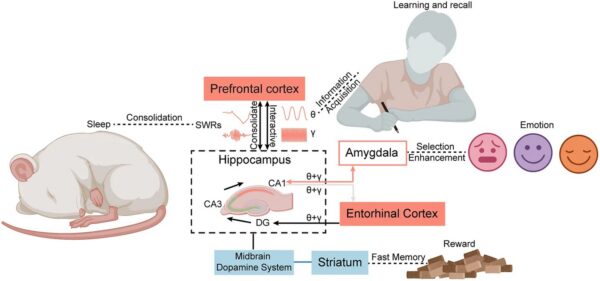
Memory prosthetics — closed-loop brain-computer interfaces that decode hippocampal activity and deliver adaptive stimulation — are moving from animal proof-of-concept toward first-in-human trials, according to a review in iScience. The authors argue that chronically implantable systems require co-design of three subsystems that have been treated in isolation: biocompatible electrode interfaces, on-chip neuromorphic computation, and closed-loop control hardware. The review maps neuroscientific findings such as theta-phase tracking, theta-gamma coupling and sharp-wave ripple detection onto engineering specifications for latency, sampling and charge injection, and onto materials requirements for impedance, switching endurance and chronic stability. It also flags where small-cohort clinical results have been over-generalized.

UT Dallas Team Quantifies How Overlapping ICMS Activation Volumes Erode Discrimination

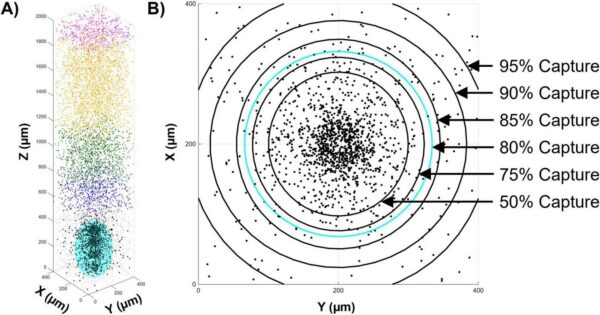
Researchers at the University of Texas at Dallas paired a biophysically realistic computational model with rat behavioral data and found that discrimination accuracy falls off exponentially as the neuronal activation volumes evoked by intracortical microstimulation (ICMS) overlap (R² = 0.88). With minimal overlap, an intersection-over-union below 1%, rats averaged 85% accuracy, while IoU above 20% left them near chance. The work, published in Frontiers in Computational Neuroscience, gives a mechanistic basis for setting electrode spacing in sensory neuroprosthetics.
© 2026 BCIwiki.com Digest Topics Tips Subscribe Revisions About