
中 / EN
July 2026

EEG Decodes Picture Categories More Reliably Than Word Categories

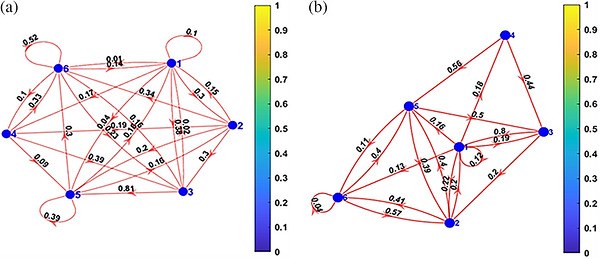
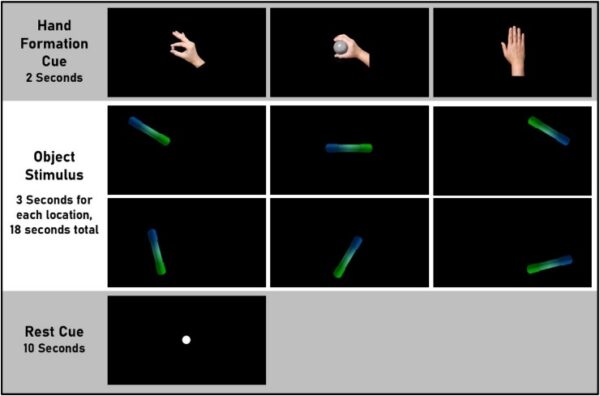
UC Irvine researchers tested an EEG category-decoding task in 30 participants viewing pictures and words from five semantic groups. All picture-category pairs were statistically separable, but only one word-category pair was; parietal and left-temporal electrodes contributed more to picture decoding than frontal and right-temporal sites. The bioRxiv preprint has not been peer reviewed.
BCI Decoder Rankings Change When Accuracy Is Not the Only Metric

University of British Columbia researchers released BEND-BCI, an open benchmark comparing 23 neural decoders across 16 real or synthetic recordings in motor, visual, speech and spatial tasks. Rankings often changed when robustness, computational cost and cross-recording representation consistency were considered alongside held-out accuracy, and simpler baselines sometimes matched or beat much larger deep networks. The bioRxiv preprint has not been peer reviewed.

ATCNet-CIAM Hits 87.96% on BCI IV-2b in Multi-Session Motor Imagery Decoding

ATCNet-CIAM, a decoder pairing temporal convolution and channel attention with a CIAM module, reached 86.32% accuracy on BCI IV-2a and 87.96% on BCI IV-2b under the standard protocol, its authors report, along with 89.46% and 83.64% on the within-session two-class and three-class WBCIC-MI tasks. Motor imagery EEG is the workhorse signal for non-invasive brain-computer interfaces, but decoding it robustly across sessions and subjects remains the central obstacle. The manuscript was posted to arXiv on July 26, 2026 and has not been peer reviewed; it has been accepted for the International Conference on Intelligence Systems and Robotics for Sustainable Development (ISRSD) 2026.

Preprint: Position-Adaptive Time Scheduling for EEG Generation

A preprint proposes an adaptive EEG generation framework based on conditional flow matching to ease data scarcity in brain-computer interfaces and support large-scale neural modeling. Noting that existing flow methods assume one global time course across all channels and time segments, the framework adds position-adaptive time scheduling that tracks per-position reconstruction error to modulate each position's time course, plus decomposed spatiotemporal attention and a frequency-aligned multi-resolution spectral consistency loss to model cross-channel dependencies and compensate for EEG's power-law spectral bias. Across three EEG datasets with different acquisition protocols and task semantics, it consistently beat the strongest baselines, cutting TS-FID by up to 62.2% and lifting downstream classification accuracy by up to 6.77 percentage points. The study has not been peer reviewed.

Bayesian pooling: 13x energy, no practical gain

Researchers report a preprint, posted to arXiv on July 25, 2026 and not yet peer reviewed, that contrasts Bayesian complete-pooling models against frequentist baselines for cross-subject, left-hand versus right-hand motor imagery EEG classification across 20 datasets. Six frequentist pipelines were each paired with an analogous Bayesian pipeline sharing identical feature engineering and fit via Markov chain Monte Carlo posterior sampling. Bayesian complete-pooling produced statistically but not practically significant improvements in reliability and increased predictive uncertainty, with no significant differences in Brier score, resolution, or discrimination. Bayesian pipelines consumed roughly 13 times more energy than their frequentist counterparts, and the authors conclude that complete pooling alone offers limited practical benefit, pointing to partial pooling as a more promising direction.

Only 11 pediatric BCI trials worldwide, children may be underrepresented

A registry-based cross-sectional analysis found only 11 pediatric brain-computer interface (pBCI) clinical trials worldwide, spanning 7 countries. Eight evaluated non-implanted devices and 3 evaluated implanted systems. Non-implanted trials had a median enrollment of 29 participants and median duration of 56.0 days; implanted trials had a median enrollment of 8 and median duration of 365.3 days. Only 4 studies enrolled exclusively pediatric participants; the rest recruited both children and adults. The authors conclude that current pBCI research is limited in scope and that children may be inadequately prioritized.

Deep Learning Localizes Epileptogenic Zones

The researchers developed a deep learning architecture that analyzes multichannel interictal intracranial EEG to localize epileptogenic zones without requiring seizure-period recordings or manual annotation. The model combines a Morlet-wavelet temporal Transformer with a spatial attention encoder. It was evaluated with 50.5 hours of recordings from 161 patients and 17,012 channels at 7 independent centers. Leave-one-center-out validation produced a pooled AUROC of 0.778 with a 95% confidence interval of 0.748 to 0.808, and discrimination remained above chance at every held-out center. The results indicate performance comparable to established electrophysiological baselines across centers and implantation modalities, but prospective clinical validation is still needed. This medRxiv preprint has not been peer reviewed.
BCI Paradigm Measures Auditory Frequency Discrimination Without Behavioral Reports

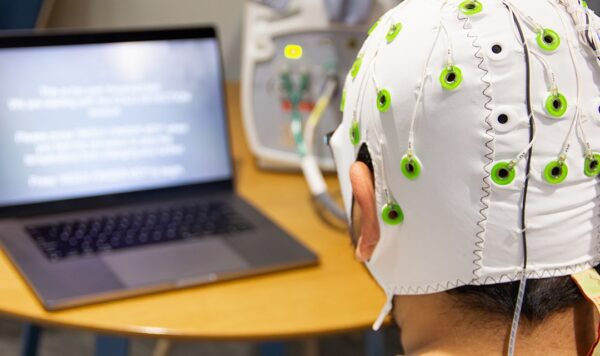
Researchers ran 11 healthy participants through a personalized rapid serial auditory presentation paradigm and decoded the resulting weak auditory evoked responses trial by trial with a new model, the Multi-Scale Spatial-Temporal Dual Attention Network (MS-STAMNet), reaching an unweighted average recall of 69.67±6.12% and an AUC of 0.7618±0.07, ahead of the EEGNet and PLNet baselines. Conventional measurement of the auditory frequency difference limen (FDL) depends on participants actively reporting what they hear, which leaves it open to subjective bias. Regression analysis found that neural decoding and behavioral performance came apart, suggesting the model picks up frequency deviations too small to reach conscious report.

Real-Time fMRI Pipeline Decodes Single-Trial Visual Perception Within Seconds

An arXiv preprint adapts the computationally intensive MindEye2 pipeline for real-time reconstruction of perceived natural images from fMRI. Using the open-source RT-Cloud platform, the researchers decoded single-trial visual perception within seconds of image presentation and analyzed the factors behind performance changes from offline to real-time processing. The work has not been peer reviewed.

Tianyou Hospital Review Finds Gains on Some Upper Limb Measures After BCI Training

A team at Tianyou Hospital, Wuhan University of Science and Technology conducted a systematic review and meta-analysis of motor imagery-based BCI training for upper limb dysfunction in people with post-stroke hemiplegia. The review included 27 studies; 24 studies involving 846 participants contributed to the meta-analyses. Compared with the respective study controls, training produced statistically significant improvements on upper limb motor assessments reflecting isolated movement and fine motor control. Effects on complex functional activities, activities of daily living and spasticity were not statistically significant. Because control conditions varied and included sham interventions, the evidence does not establish superiority over standardised traditional rehabilitation.

Preprint: Interpretable Metrics Quantify Event-Related (De)Synchronization Variability for BCI

A preprint proposes interpretable metrics that separately quantify temporal, spatial, and frequency variability in BCI-related brain activity, tested across two motor-imagery BCI datasets totaling 133 participants and validated through within-subject and cross-subject classification experiments. The researchers report negative correlations of -0.2 to -0.4 under most conditions, indicating lower variability tracks higher BCI performance, and note the metrics show deep-learning and Riemannian classifiers differ in robustness to variability, with weaker correlations for the former. The work has not been peer reviewed.

Sigmoidal Decoding of Locomotion Speed in Mouse M1

The study shows mouse primary motor cortex encodes locomotion speed through a sigmoidal state-transition mechanism carried by two functionally distinct spiking populations, a framework that also extends to local field potential (LFP) band power. Using chronic 32-channel laminar arrays in 8 mice, the team recorded 5,889 single units across 384 channels and clustered them into speed-positively related (70.8%) and speed-inversely related (29.2%) groups sharing a speed threshold of about 2.3 m/min. The minority speed-inversely related population decoded speed more accurately via inverse-sigmoid transformation, generalizing across animals. The authors say the findings point toward stable, calibration-light brain-machine interface design.

MCSS Framework Tops 98% Motor Imagery Accuracy While Resisting EEG Reconstruction

A new study proposes a hybrid Markov chain-spatial statistical (MCSS) machine learning framework for classifying motor imagery EEG, reporting classification accuracy above 98% for every subject on BCI Competition III datasets IVa and IVb when paired with a support vector machine. Because the method discretizes signals into symbolic states and works from transition probability matrices rather than raw traces, the original neural waveforms are hard to reconstruct; the authors report that membership inference attacks stayed near chance level and that feature inversion attacks produced low reconstruction similarity.

Adding EMG to Hybrid BCI Expands Command Space from 15 to 60 Targets

Researchers have paired steady-state motion visual evoked potentials (SSMVEP) with electromyography (EMG) in a hybrid brain-computer interface, using a parallel architecture to expand the command space from 15 targets to 60. The multimodal setup reached an information transfer rate of 62.33 bits/min, against 42.49 bits/min for the best single-modality condition. Deep-learning decoding of the two signal streams held classification accuracy steady while lowering the effort required of users with severe motor impairment.

SpikeGadgets Headstage Records 1,024 Channels Across 10 Brain Regions

A post from SpikeGadgets surveys how far multichannel electrophysiology has scaled: its Modular Stacking Headstage supports chronic recording of 1,024 channels across 10 brain regions; the University of Pittsburgh's MePhys platform uses 992 electrode contacts to cover an entire macaque hemisphere; and a Rice University preprint describes a custom ASIC that supports 5,376 simultaneous recording channels.

Preprint: Differentiable Logic Gate Networks for Low-Latency EEG Classification on Edge Devices

A preprint evaluates differentiable logic gate networks (Diff-Logic), compiled into pure boolean circuits, as a low-latency EEG classification option for resource-constrained BCIs. Across four EEG datasets and two task types — binary dementia screening and three-class emotion recognition — Diff-Logic reached 80.2% Macro F1 on dementia screening, 6.8 points above the multilayer perceptron baseline, and on power-constrained devices the MLP ran 2.3× slower and occupied 14× more memory, while Diff-Logic's inference time stayed nearly flat as model size grew 10×. The study has not been peer reviewed.

Targeting Grasp-Related Cortical Areas for Intracortical Brain-Machine Interfaces

For a C5 tetraplegic participant, the study integrated anatomical, functional and vascular imaging with preoperative 3D modeling to optimize placement of intracortical microelectrode arrays for grasp-related motor decoding. Anatomical MRI, diffusion-weighted imaging and task-based fMRI identified grasp-related cortex while avoiding vasculature and speech-critical regions; Quicktome software refined target selection using structural connectivity and functional activation data, and 3D-printed skull and cortex models supported surgical planning. Functional imaging highlighted the anterior intraparietal sulcus (AIP), ventral premotor cortex (PMv) and inferior frontal gyrus (IFG); arrays placed in AIP and PMv subregions 6v and 6r reached a combined classification accuracy of 96%.

Ghost-LENet Tops 80% on Motor Imagery EEG Using a Few Thousand Parameters

Researchers have built Ghost-LENet, a lightweight convolutional network that classifies motor imagery EEG at 82.18% on the BCI Competition IV-2a dataset and 83.05% on IV-2b using only a few thousand trainable parameters. The design combines dilated temporal convolutions, a stationary wavelet transform, dynamic residual fusion and Ghost modules, holding accuracy while cutting model complexity for BCI hardware with little compute to spare.

UCL Workshop Syncs EEG, Eye Tracking, ECG and GSR in a Flight Simulator

Researchers demonstrated synchronized EEG, ECG, GSR and eye tracking during a flight-simulation experiment at a workshop held with Professor Tom Carlson at University College London. A g.Nautilus 28-channel wireless EEG headset, ECG and GSR sensors and Tobii Pro Glasses 3 captured the signals in real time, tracking mental workload, engagement and heart rate variability (HRV) across two complete flight cycles of take-off, free flight and landing. The rig can be set up in 30 minutes and leaves participants free to move throughout.

Brain-Computer Interface for Smart Home Design Based on Machine Learning and Deep Learning Techniques

Researchers built an EEG-based brain-computer interface for smart-home control using a motor imagery dataset from 25 subjects collected with a 64-channel BCI2000 system. Features extracted from a CNN's convolutional layers trained SVM, CNN and LDA classifiers that remove the noise and overlap behind misclassifications and map selected features onto categories an Arduino UNO can act on; the three models reached overall accuracies of 99%, 96% and 99%. The authors say the scheme could let users control smart-home devices with brainwaves, potentially helping older adults and people with limited mobility.

Miniscope Enables Real-Time Neural Decoding

Beijing Normal University researchers developed a low-cost structured-illumination miniscope weighing less than 3 g. The system uses a Ronchi grating and time-multiplexed excitation for HiLo imaging, providing optical sectioning in freely behaving mice. It suppresses out-of-focus background fluorescence while retaining the speed, field of view, and accessibility of widefield miniscopes, and it supports optically sectioned multiplane imaging to increase neuronal yield. In hippocampal recordings, the researchers observed better region-of-interest signal quality and spatial-information readout. They also demonstrated a proof-of-principle closed-loop brain-machine interface supported by rapid online signal extraction and real-time neural decoding. The work is a bioRxiv preprint and has not been peer reviewed.

Preprint: Cross-Subject Learning Cuts BCI Calibration for Children With Cerebral Palsy

A preprint reports that cross-subject cumulative learning and transfer learning can sharply cut the calibration burden of brain-computer interfaces based on movement-related cortical potentials (MRCP) in children with cerebral palsy. Testing a bidirectional long short-term memory network across 27 training sessions in four children, the authors found cross-subject cumulative learning reached 91% accuracy with no within-session calibration, rising to 93% when transfer learning was added — both better than conventional calibration strategies.

Cognitive BCIs Need Closed-Loop Neuromodulation

Brain-computer interfaces already help restore movement and communication, but attention and memory are a different problem: motor and language control rest on relatively localized, stable neural representations, while cognition is spread across brain networks and changes quickly. The review argues that neuromodulation, long used in neurological and psychiatric therapy and now applied causally to cognitive circuits, can complement decoding. Fold signal acquisition, algorithmic analysis and stimulation feedback into an adaptive closed loop, it suggests, and cognitive BCIs might restore mental function and become the basis for neurotherapeutics that monitor and shape cognition in real time. The article reports no new trial data.

N400 Window Shapes Semantic Decoding

Aalto University researchers connected the classic N400 evoked response with semantic-vector decoding in a controlled MEG word-priming experiment. The study involved 25 native Finnish speakers who read word groups with different levels of semantic relatedness. Unrelated primes produced larger N400 responses and supplied the most useful training examples for a decoder mapping distributed MEG activity to semantic vectors. The researchers report that semantic information could be decoded from about 100 to 500 ms after stimulus onset. After the N400 peak, however, neural responses no longer mapped reliably to context-invariant semantic vectors. The result suggests that the end of the N400 window may mark a transition from word-specific representation toward broader contextual meaning. This bioRxiv preprint has not been peer reviewed.

Preprint: Dendrite, a Real-Time Python Application for Online BCI Research and Development

A preprint introduces Dendrite, an open-source (GPL-3.0) Python application that bundles multimodal physiological signal acquisition, decoder training and real-time inference into a single modifiable application. It records multiple signal streams concurrently at their native sample rates, fits decoders either from a trained model or live during the pipeline, and tracks every recording, decoder and training run in a database so deployed decoders can be traced to their configuration and training source. The system was validated end-to-end on in-house and public BCI datasets, training and updating decoders in real time; the study has not been peer reviewed.

UW Team Maps Uneven Reach Coding in Monkey Motor Cortex to Guide BCI Implant Placement

Researchers at the Center for Neurotechnology at the University of Washington recorded from two male monkeys with high-density laminar microelectrode arrays and found that reaching-related activity in frontal motor cortex is unevenly distributed both across the cortical surface and with depth. Target-direction information varied sharply between neural populations, but the amount of task information a population carried predicted which populations shared similar temporal dynamics. The authors say the pattern should inform where electrodes are placed in future brain-computer interface implants.

CMU Trains User and Decoder Together, Letting BCI Novices Reach 86% Cursor Accuracy

People with no brain-computer interface experience learned to move an on-screen cursor by imagined movement alone when the user and the algorithm were trained together. Carnegie Mellon University researchers led by Bin He used vibrations under the wrists to guide participants' mental strategies while an adaptive decoder reweighted the most informative brain signals. Across 31 untrained, able-bodied participants, average discrete accuracy reached 86% for one-dimensional and 77.5% for two-dimensional cursor control. Such non-surgical BCIs are cheaper and lower-risk than implants, but this one has so far been tested only in healthy volunteers on lab tasks.

Successful Single-Session Neural Self-Regulation Through Neurofeedback Varies Between Features

A study of 20 healthy participants who trained self-regulation of four cortical rhythms — frontal midline theta, occipital alpha, unilateral central-temporal sensorimotor rhythm, and central beta — across four neurofeedback sessions found that all could regulate at least two features, but none could regulate frontal midline theta. The authors argue this shows 'non-learners' is not a personal trait that generalizes across features, informing future neurofeedback and BCI training protocol design.

© 2026 BCIwiki.com Digest Topics Tips Subscribe Revisions About