

August 2026
BCI Clinic Cohort: 1,641 Motor Patients
A prospective cohort of 1,641 motor dysfunction patients, 66.24% chronic stroke, provides the first clinical profile for personalised BCI system design.
Preprint Proposes EEG-Language Model BLPM
A new preprint introduces BLPM, an EEG-language foundation model that reframes EEG decoding as continuous semantic embedding prediction.
SpikeGadgets Hardware Closes the Loop on Rat Hippocampus in Milliseconds
SpikeGadgets says its hardware, using low-latency Ethernet and the TrodesNetwork API, lets researchers detect a neural activity pattern and trigger a perturbation within milliseconds. Two UCSF studies show it in use: one continuously decoded hippocampal population activity in rats to run a neurofeedback system, training the animals to volitionally generate specific memory representations for reward; the other triggered theta-phase-specific optogenetic stimulation in real time and showed that theta rhythm and replay are mechanistically separable.
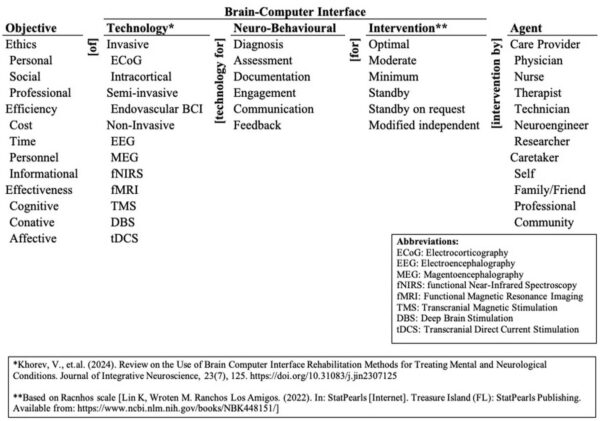
BCI Ethics Ontology for Mental Healthcare
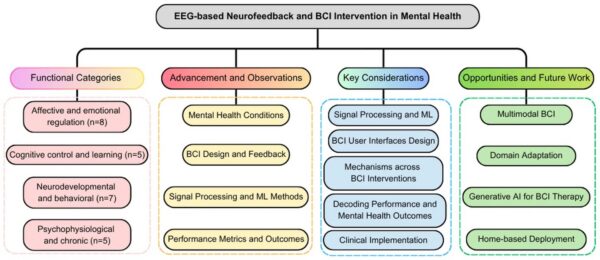
Review: Closed-Loop EEG BCI for Mental Health
DWT and Chirplet Transform Boost MI-EEG Classification to 94.8%
Researchers propose combining discrete wavelet transform and chirplet transform for motor imagery EEG classification, achieving 94.8% accuracy on CBCIC with 1.03-second response time.
Unifying Consent for Implantable BCIs
Researchers address the challenge of unifying consent standards for implantable brain-computer interfaces.
BrainGate2: Preparatory Motor Cortex Activity Encodes Movement Direction
Intracortical recordings from 3 BrainGate2 participants show preparatory motor cortex activity encodes movement direction, curvature, and distance, enabling preparatory-activity-based online cursor control.
Review: BCI in Neurorehab and Nursing for Paraplegia
A review systematically examines stratified BCI rehabilitation strategies and comprehensive nursing models for paraplegic patients, showing BCIs can activate neuroplasticity and relieve spasticity.
Review: SSVEP-BCI Application Bottlenecks and Solutions
A review analyses technical, hardware, and user-level bottlenecks facing SSVEP-BCI systems in real-world deployment, summarising solutions including EMG fusion denoising, novel sponge electrodes, and hybrid paradigms.
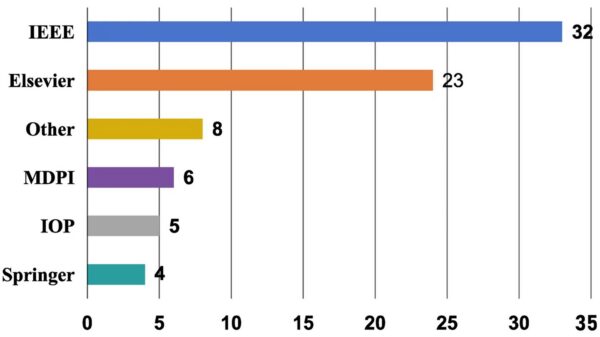
Review Maps Deep Learning for Motor Imagery BCIs
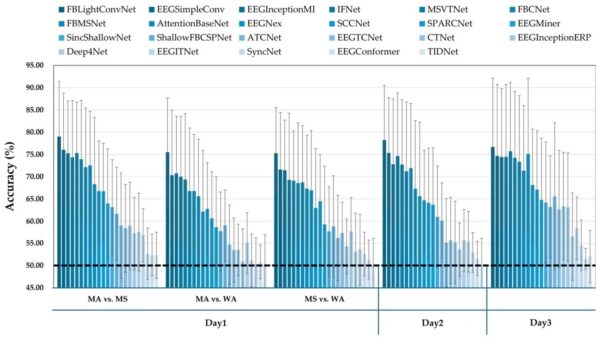
CLMT-Net Decodes Fine-Grained Within-Limb Motor Imagery EEG
Researchers propose CLMT-Net, a contrastive learning network based on a multi-scale Transformer, for fine-grained within-limb MI decoding, achieving 76.13% accuracy on the MI-2 dataset.
SSVEP-BCI Dataset for Children Released
Researchers release a steady-state visual evoked potential-based BCI dataset collected from children and adolescents.
Review: BCI in Ophthalmology for Diagnosis and Visual Restoration
Game Theory-Based Joint Learning Boosts Online MI-BCI Decoding
A game theory-based adaptive human-machine joint learning method for online MI-BCI decoding improves accuracy by 9.7% and 5.6% in 14-subject online experiments (both p < 0.01).
Crossmodal Congruency Test Tells Sensory Feedback Types Apart at the Knee but Not the Foot
A University of Pittsburgh team (Bose et al.) tested the crossmodal congruency effect (CCE) task in 15 able-bodied volunteers to see whether it can quantify how intuitive lower-limb sensory feedback feels. At the knee, the task distinguished more natural pneumatic stimulation from less natural electrical stimulation; at the foot, it could not tell the same stimuli apart. The study was posted to bioRxiv on August 10, 2026. Lower-limb amputees often have balance and gait problems because their prostheses give no somatosensory feedback; electrical-stimulation neuroprostheses can partly restore sensation, but there has been no way to quantify how intuitive that sensation is. The authors stress that external factors affecting the CCE must be identified before it can be used with amputees.
BLCU Team's Falsifiable Substitution Test Keeps 0.968 AUC After Target Events Are Removed
Brain-computer interface decoders can guess the right label using information unrelated to the target mental state. A team at the School of Psychology, Beijing Language and Culture University (BLCU), proposes a falsifiable substitution-test standard: candidate evidence must persist in disjoint data, survive capacity-matched substitutions of physical organization or listener templates, and remain testable after target events are excluded. Across six EEG datasets (41 participants), averaging four neural-speech margin metrics brought 5-second decoding to what the authors call a leading level; in two hierarchical interfaces, parent-stream error scores kept AUCs of 0.968 and 0.965 after all target-command events were excluded. The framework offers a test for attributing evidence in neuroscience and BCI.
Integrated BCI System Enables Robotic Control
Researchers from Southwest State University developed an integrated brain-computer interface system supporting both synchronous and asynchronous paradigms, achieving 60-65% recognition accuracy in EEG-based robotic device control tasks.
Researchers Say BCIs for Locked-In Patients Must Preserve Dignity, Not Just Speed
A phenomenological analysis argues that brain-computer interfaces for people with locked-in syndrome should be judged not only on communication speed and accuracy but on whether they preserve the user's dignity and relational personhood. The authors offer the argument as an ethical frame for clinical BCI design.
Medial wall ECoG signals aid finger motor decoding
Published in Journal of Neural Engineering on August 7, 2026, the study analyzed human electrocorticography data from four subjects to investigate medial wall contributions to finger movement decoding. Significantly above-chance finger movement detection was observed across multiple medial wall subregions, with local motor potentials and oscillatory power in the 8-12 Hz and 12-34 Hz bands contributing most strongly. Feature dynamics shared key properties with primary motor cortex, including pre-movement desynchronization, while also exhibiting region-specific positive or negative LMP modulations. Medial wall channels in two subjects enabled significant differentiation between individual fingers, and one subject showed decoding of both contralateral and ipsilateral finger movements, though this is a single case and preliminary.
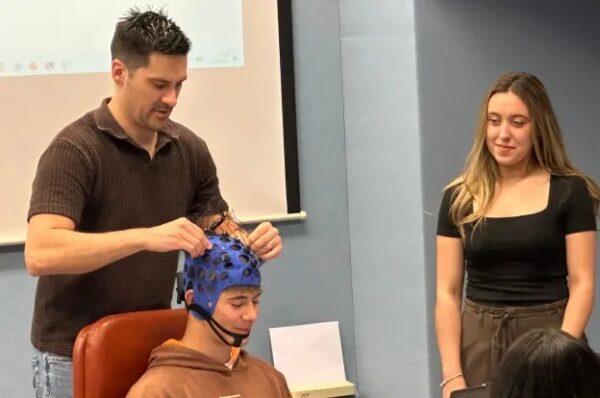
P300 BCI Reads Silently Chosen Digits in a Granada Classroom
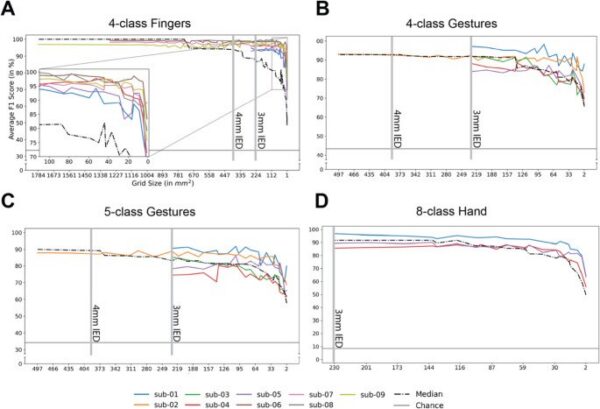
Utrecht Team Finds ECoG Grids Can Shrink up to 94% without Losing Decoding Accuracy
ReCIL: Rehearsal-Based Class Incremental Learning for Cross-Subject Motor Imagery Classification
Researchers propose ReCIL, a rehearsal-based class incremental learning method for cross-subject motor imagery classification that lets a model learn new MI classes sequentially without retraining from scratch. Using Euclidean alignment to reduce cross-subject EEG distribution shift and global-local replay to preserve earlier-task knowledge, ReCIL achieved a good balance between plasticity and stability across three public MI datasets. The authors report it as the first study of cross-subject class incremental learning for MI classification.
Air Force Medical University Releases Multi-Day fNIRS Stroop Dataset from 55 Adults
Researchers at Air Force Medical University have published a functional near-infrared spectroscopy (fNIRS) dataset in Scientific Data: frontal hemoglobin responses from 55 young adults, each recorded across three color-word Stroop sessions spread over about two weeks, with more than 30 trials per condition. The authors offer it for work on conflict inhibition, for building decoders for neurofeedback training, and for training large-scale cross-subject fNIRS models.
BiGSTF-Net: Inter-Modal Mutual Guidance and Intra-Modal Spatio-Temporal Fusion for EEG-fNIRS Cognitive Classification
The study proposes BiGSTF-Net, a multimodal architecture that exploits the complementary properties of EEG and functional near-infrared spectroscopy (fNIRS) for cognitive-state decoding: heterogeneous spatio-temporal extractors capture each modality's representations, a modal residual interaction unit provides bidirectional cross-modal guidance, and a spatio-temporal gating unit fuses intra-modal features. Under cross-session evaluation on multiple BCI datasets, BiGSTF-Net consistently outperformed representative multimodal fusion baselines; ablations validated each component and visualizations matched the known neurophysiological features of the two signals.
Preprint: NeuroPB Scales Neural Decoding with Pretrained Behavioral Representations
A preprint introduces NeuroPB, a framework that scales neural decoding by transferring pretrained behavioral representations: a motion encoder is first pretrained on large-scale motor behavior data, then limited paired neural-behavior recordings align neural activity to the behavioral representation space, and a neural encoder with a lightweight motor decoder reconstructs continuous movement. The researchers report that behavioral pretraining lifted center-out trajectory decoding R² by 11% and random-target task performance by 8%, that pretraining on robotic trajectories matched macaque-trajectory performance, and that only 10% calibration was needed to match training from scratch. The study is a preprint and has not been peer-reviewed.
Preprint: OSPDIM Online Source-Free Adaptation for Class-Imbalanced EEG
A preprint introduces OSPDIM, a source-free online unsupervised domain adaptation framework for class-imbalanced label shift in online EEG brain-computer interfaces. The study argues that Riemannian alignment methods such as the Riemannian centering transform handle covariate shift but implicitly assume balanced class priors, so shifting label distributions in real online use geometrically misalign the target data; OSPDIM adds a manifold-constrained bias parameter in the Riemannian tangent-space mapping, optimized by information maximization, and estimates and corrects the geometric bias online rather than relying on global batch statistics. 2D SPD matrix simulations showed OSPDIM correcting misalignment that standard centering fails on, and across multiple motor imagery datasets it significantly outperformed standard Riemannian baselines, especially online. The study is a preprint and has not been peer-reviewed.
Synergistic EEG Signal Processing for BCIs Using Hybrid MothCray Optimization and Deep Learning
The study presents an EEG brain-computer interface signal-processing framework that combines hybrid MothCray channel-selection optimization — fusing moth-flame and crayfish optimization — with deep learning. After notch filtering, independent component analysis (ICA) and time-window segmentation, the MothCray algorithm identifies the most informative channels and a deep neural network adapted to EEG spatio-temporal features classifies. The model reached 93.92% accuracy on BCI Competition IV dataset IIa, ahead of existing methods.
AutoMI: Hands-Free Motor Imagery EEG Classification via LLM Multi-Agents
The study presents AutoMI, a framework that uses LLM multi-agents to automatically and rapidly iterate on motor imagery EEG classification models, combining a Q-learning policy with deterministic rules and integrating planning, execution and output agents with predefined tools, plus experience tracking and rollback. Models built by AutoMI reached 77.62%, 78.08% and 83.02% accuracy on the IV2a, OpenBMI and ECUST-MI datasets — up 18.42%, 9.27% and 19.25% over automated optimization algorithms.