/ EN

Papers

257 entries
July 2026

BCI Paradigm Measures Auditory Frequency Discrimination Without Behavioral Reports

Researchers ran 11 healthy participants through a personalized rapid serial auditory presentation paradigm and decoded the resulting weak auditory evoked responses trial by trial with a new model, the Multi-Scale Spatial-Temporal Dual Attention Network (MS-STAMNet), reaching an unweighted average recall of 69.67±6.12% and an AUC of 0.7618±0.07, ahead of the EEGNet and PLNet baselines. Conventional measurement of the auditory frequency difference limen (FDL) depends on participants actively reporting what they hear, which leaves it open to subjective bias. Regression analysis found that neural decoding and behavioral performance came apart, suggesting the model picks up frequency deviations too small to reach conscious report.

Real-Time fMRI Pipeline Decodes Single-Trial Visual Perception Within Seconds

An arXiv preprint adapts the computationally intensive MindEye2 pipeline for real-time reconstruction of perceived natural images from fMRI. Using the open-source RT-Cloud platform, the researchers decoded single-trial visual perception within seconds of image presentation and analyzed the factors behind performance changes from offline to real-time processing. The work has not been peer reviewed.
Preprint: Interpretable Metrics Quantify Event-Related (De)Synchronization Variability for BCI

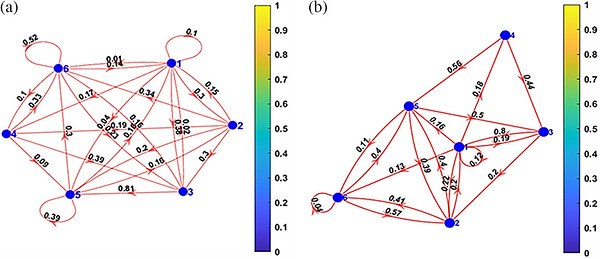
A preprint proposes interpretable metrics that separately quantify temporal, spatial, and frequency variability in BCI-related brain activity, tested across two motor-imagery BCI datasets totaling 133 participants and validated through within-subject and cross-subject classification experiments. The researchers report negative correlations of -0.2 to -0.4 under most conditions, indicating lower variability tracks higher BCI performance, and note the metrics show deep-learning and Riemannian classifiers differ in robustness to variability, with weaker correlations for the former. The work has not been peer reviewed.

Sigmoidal Decoding of Locomotion Speed in Mouse M1

The study shows mouse primary motor cortex encodes locomotion speed through a sigmoidal state-transition mechanism carried by two functionally distinct spiking populations, a framework that also extends to local field potential (LFP) band power. Using chronic 32-channel laminar arrays in 8 mice, the team recorded 5,889 single units across 384 channels and clustered them into speed-positively related (70.8%) and speed-inversely related (29.2%) groups sharing a speed threshold of about 2.3 m/min. The minority speed-inversely related population decoded speed more accurately via inverse-sigmoid transformation, generalizing across animals. The authors say the findings point toward stable, calibration-light brain-machine interface design.

MCSS Framework Tops 98% Motor Imagery Accuracy While Resisting EEG Reconstruction

A new study proposes a hybrid Markov chain-spatial statistical (MCSS) machine learning framework for classifying motor imagery EEG, reporting classification accuracy above 98% for every subject on BCI Competition III datasets IVa and IVb when paired with a support vector machine. Because the method discretizes signals into symbolic states and works from transition probability matrices rather than raw traces, the original neural waveforms are hard to reconstruct; the authors report that membership inference attacks stayed near chance level and that feature inversion attacks produced low reconstruction similarity.

Adding EMG to Hybrid BCI Expands Command Space from 15 to 60 Targets

Researchers have paired steady-state motion visual evoked potentials (SSMVEP) with electromyography (EMG) in a hybrid brain-computer interface, using a parallel architecture to expand the command space from 15 targets to 60. The multimodal setup reached an information transfer rate of 62.33 bits/min, against 42.49 bits/min for the best single-modality condition. Deep-learning decoding of the two signal streams held classification accuracy steady while lowering the effort required of users with severe motor impairment.

SpikeGadgets Headstage Records 1,024 Channels Across 10 Brain Regions

A post from SpikeGadgets surveys how far multichannel electrophysiology has scaled: its Modular Stacking Headstage supports chronic recording of 1,024 channels across 10 brain regions; the University of Pittsburgh's MePhys platform uses 992 electrode contacts to cover an entire macaque hemisphere; and a Rice University preprint describes a custom ASIC that supports 5,376 simultaneous recording channels.

Case Report: 3 Stroke Patients Gain Arm Function After 24 BCI-FES Sessions

Three stroke patients with hemiplegia improved on upper-limb motor scores and daily-living measures after 24 sessions of visually guided brain-computer interface training paired with functional electrical stimulation, according to a case report. The patients trained five times a week, and stimulation fired only when the system detected motor imagery-related EEG patterns; gains appeared on Brunnstrom stages, the Fugl-Meyer Assessment and the Barthel Index, most clearly in wrist and hand control. The report cautions that the findings are preliminary and require validation in larger randomized controlled trials.

Preprint: Differentiable Logic Gate Networks for Low-Latency EEG Classification on Edge Devices

A preprint evaluates differentiable logic gate networks (Diff-Logic), compiled into pure boolean circuits, as a low-latency EEG classification option for resource-constrained BCIs. Across four EEG datasets and two task types — binary dementia screening and three-class emotion recognition — Diff-Logic reached 80.2% Macro F1 on dementia screening, 6.8 points above the multilayer perceptron baseline, and on power-constrained devices the MLP ran 2.3× slower and occupied 14× more memory, while Diff-Logic's inference time stayed nearly flat as model size grew 10×. The study has not been peer reviewed.

Targeting Grasp-Related Cortical Areas for Intracortical Brain-Machine Interfaces

For a C5 tetraplegic participant, the study integrated anatomical, functional and vascular imaging with preoperative 3D modeling to optimize placement of intracortical microelectrode arrays for grasp-related motor decoding. Anatomical MRI, diffusion-weighted imaging and task-based fMRI identified grasp-related cortex while avoiding vasculature and speech-critical regions; Quicktome software refined target selection using structural connectivity and functional activation data, and 3D-printed skull and cortex models supported surgical planning. Functional imaging highlighted the anterior intraparietal sulcus (AIP), ventral premotor cortex (PMv) and inferior frontal gyrus (IFG); arrays placed in AIP and PMv subregions 6v and 6r reached a combined classification accuracy of 96%.

Ghost-LENet Tops 80% on Motor Imagery EEG Using a Few Thousand Parameters

Researchers have built Ghost-LENet, a lightweight convolutional network that classifies motor imagery EEG at 82.18% on the BCI Competition IV-2a dataset and 83.05% on IV-2b using only a few thousand trainable parameters. The design combines dilated temporal convolutions, a stationary wavelet transform, dynamic residual fusion and Ghost modules, holding accuracy while cutting model complexity for BCI hardware with little compute to spare.

UCL Workshop Syncs EEG, Eye Tracking, ECG and GSR in a Flight Simulator

Researchers demonstrated synchronized EEG, ECG, GSR and eye tracking during a flight-simulation experiment at a workshop held with Professor Tom Carlson at University College London. A g.Nautilus 28-channel wireless EEG headset, ECG and GSR sensors and Tobii Pro Glasses 3 captured the signals in real time, tracking mental workload, engagement and heart rate variability (HRV) across two complete flight cycles of take-off, free flight and landing. The rig can be set up in 30 minutes and leaves participants free to move throughout.

Brain-Computer Interface for Smart Home Design Based on Machine Learning and Deep Learning Techniques

Researchers built an EEG-based brain-computer interface for smart-home control using a motor imagery dataset from 25 subjects collected with a 64-channel BCI2000 system. Features extracted from a CNN's convolutional layers trained SVM, CNN and LDA classifiers that remove the noise and overlap behind misclassifications and map selected features onto categories an Arduino UNO can act on; the three models reached overall accuracies of 99%, 96% and 99%. The authors say the scheme could let users control smart-home devices with brainwaves, potentially helping older adults and people with limited mobility.

Miniscope Enables Real-Time Neural Decoding

Beijing Normal University researchers developed a low-cost structured-illumination miniscope weighing less than 3 g. The system uses a Ronchi grating and time-multiplexed excitation for HiLo imaging, providing optical sectioning in freely behaving mice. It suppresses out-of-focus background fluorescence while retaining the speed, field of view, and accessibility of widefield miniscopes, and it supports optically sectioned multiplane imaging to increase neuronal yield. In hippocampal recordings, the researchers observed better region-of-interest signal quality and spatial-information readout. They also demonstrated a proof-of-principle closed-loop brain-machine interface supported by rapid online signal extraction and real-time neural decoding. The work is a bioRxiv preprint and has not been peer reviewed.

Preprint: Cross-Subject Learning Cuts BCI Calibration for Children With Cerebral Palsy

A preprint reports that cross-subject cumulative learning and transfer learning can sharply cut the calibration burden of brain-computer interfaces based on movement-related cortical potentials (MRCP) in children with cerebral palsy. Testing a bidirectional long short-term memory network across 27 training sessions in four children, the authors found cross-subject cumulative learning reached 91% accuracy with no within-session calibration, rising to 93% when transfer learning was added — both better than conventional calibration strategies.

N400 Window Shapes Semantic Decoding

Aalto University researchers connected the classic N400 evoked response with semantic-vector decoding in a controlled MEG word-priming experiment. The study involved 25 native Finnish speakers who read word groups with different levels of semantic relatedness. Unrelated primes produced larger N400 responses and supplied the most useful training examples for a decoder mapping distributed MEG activity to semantic vectors. The researchers report that semantic information could be decoded from about 100 to 500 ms after stimulus onset. After the N400 peak, however, neural responses no longer mapped reliably to context-invariant semantic vectors. The result suggests that the end of the N400 window may mark a transition from word-specific representation toward broader contextual meaning. This bioRxiv preprint has not been peer reviewed.

Preprint: Dendrite, a Real-Time Python Application for Online BCI Research and Development

A preprint introduces Dendrite, an open-source (GPL-3.0) Python application that bundles multimodal physiological signal acquisition, decoder training and real-time inference into a single modifiable application. It records multiple signal streams concurrently at their native sample rates, fits decoders either from a trained model or live during the pipeline, and tracks every recording, decoder and training run in a database so deployed decoders can be traced to their configuration and training source. The system was validated end-to-end on in-house and public BCI datasets, training and updating decoders in real time; the study has not been peer reviewed.

UW Team Maps Uneven Reach Coding in Monkey Motor Cortex to Guide BCI Implant Placement

Researchers at the Center for Neurotechnology at the University of Washington recorded from two male monkeys with high-density laminar microelectrode arrays and found that reaching-related activity in frontal motor cortex is unevenly distributed both across the cortical surface and with depth. Target-direction information varied sharply between neural populations, but the amount of task information a population carried predicted which populations shared similar temporal dynamics. The authors say the pattern should inform where electrodes are placed in future brain-computer interface implants.

Successful Single-Session Neural Self-Regulation Through Neurofeedback Varies Between Features

A study of 20 healthy participants who trained self-regulation of four cortical rhythms — frontal midline theta, occipital alpha, unilateral central-temporal sensorimotor rhythm, and central beta — across four neurofeedback sessions found that all could regulate at least two features, but none could regulate frontal midline theta. The authors argue this shows 'non-learners' is not a personal trait that generalizes across features, informing future neurofeedback and BCI training protocol design.

Blackrock NeuroPort Arrays Deliver Touch Feedback for Up to 10 Years

An early feasibility study followed five people with spinal cord injury, each implanted with two Blackrock NeuroPort arrays in somatosensory cortex. Across two to 10 years of implantation, more than 168 million intracortical stimulation pulses were delivered over 27 combined implant-years without a serious adverse event or direct harm to electrode health. An average of 64% ± 13% of electrodes still evoked touch, including 60% after 10 years in one participant.

Carnegie Mellon's Sensory-Guided Training Speeds Motor Imagery BCI Learning

Carnegie Mellon University researchers report a sensory-guided joint learning framework that pairs human motor learning with adaptive machine learning to train motor imagery BCI users. Across 31 BCI-naive participants, average online discrete accuracy was 86.0% in one dimension and 77.5% in two, with continuous control accuracy at 77.5% and 66.9% respectively; tactile guidance reduced how much users had to explore and accelerated neural adaptation, while sample reweighting kept decoder updates aligned with the learner's own trajectory. The authors frame the approach as a shift from passive calibration to active human-machine joint learning; the study appears in Nature Communications.

MOJO Framework Boosts Neural Decoder Accuracy When Labels Are Scarce

Researchers have proposed MOJO, a training scheme that pairs masked autoencoding with a supervised objective for decoders that tokenize spiking activity. Tested on monkey motor cortex, multi-region mouse recordings and human electrocorticography during speech, MOJO beat purely supervised models, with the widest margins in few-shot finetuning where labels were limited, and produced more interpretable neuronal representations. The paper, posted to arXiv on July 15, 2026, has not been peer reviewed.

Multi-Layer Brain-Mimicking Phantom for Neural Interface Implantation Testing

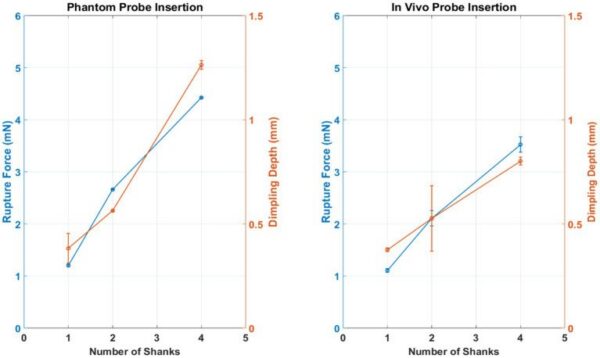
Researchers developed a reproducible multi-layer brain-mimicking phantom that replicates the dimpling and rupture forces of rodent pia mater and dura mater during neural interface implantation, built from a 0.5% agarose skin layer, a 1.01% agarose pia layer and a pre-stretched PVC dura layer assembled in a simple benchtop process. Tested with a cantilever force system on microwires of 12–100 µm diameter (tungsten and stainless steel, various tip geometries) and segmented silicon probes, the phantom produced results within the range of in vivo Sprague-Dawley rat data with significantly lower insertion variability than in vivo testing. The authors say its modular design — layer thickness and stiffness can be tuned for different species or devices — makes it a low-cost early screening platform that can accelerate neural implant development while reducing animal use.

32-Channel Event-Based Analog Front End Compresses Neural Signals Adaptively

Researchers have built a 32-channel event-based analog front-end chip in 180 nm CMOS that encodes biosignals in two modes, pulse frequency modulation and adaptive asynchronous delta modulation. The chip retunes its output data rate in real time to the envelope of the incoming signal, giving high compression and, the authors argue, a route to wireless transmission and online processing of neural signals in brain-computer interfaces.
© 2026 BCIwiki.com Digest Topics Tips Subscribe Revisions About