/ EN

Papers

257 entries
July 2026

Federated Graph Framework Fuses EEG and EMG to Decode Motor Intent

A team writing in Computing and Informatics has proposed FSDFGL, a federated graph learning framework that folds EMG into EEG when the graph is built and then shares only structural information between clients, avoiding the accuracy loss that comes with exchanging heterogeneous features. The design targets three problems in hybrid BCI work at once: the low spatial resolution of EEG, datasets that are small and privacy-sensitive, and the uneven data distributions federated learning has to cope with. Experiments on the TAN dataset show an advantage in identifying complex motor intentions.
Preprint: Event-Based Neural Decoding for Neuroprosthetic Motor Control

A preprint proposes an event-based neural decoding method for neuroprosthetic motor control, arguing that deep-network-driven prostheses are limited by high latency, energy use and space — wired links restrict mobility and wireless links restrict information throughput, while spiking networks trade off task performance for low-power inference. The authors' event-based gated recurrent unit generates a sparse communication pattern with graded spikes, outperforming classical spiking neural networks on task performance, and pairs with efficient training and sparse inference to enable on-device neural decoding under latency, energy and space constraints. The study has not been peer reviewed.

Preprint: Learning Residual Kinematic Corrections for Continuous Neural Decoding via Reinforcement Learning

A preprint proposes a two-stage CNN-LSTM-RL framework that uses reinforcement learning to apply residual kinematic corrections to the output of a CNN-LSTM continuous motor imagery decoder. The RL agent is trained offline, without direct EEG input, to optimize motion accuracy against a target trajectory. Compared with CNN-LSTM alone, CNN-LSTM-RL lifted the 2D mean correlation from 0.5076 to 0.7181 and the VR-scene correlation from 0.6420 to 0.7780, cutting RMSE by 40.2% and 38.2% respectively. The authors say correcting kinematic error through offline residual RL strengthens 3D BCI motor imagery decoding without additional neural data; the study has not been peer reviewed.

A Novel Deep Learning Approach for Privacy-Preserving Encoded EEG-Based BCIs with Clinical LLM Applications

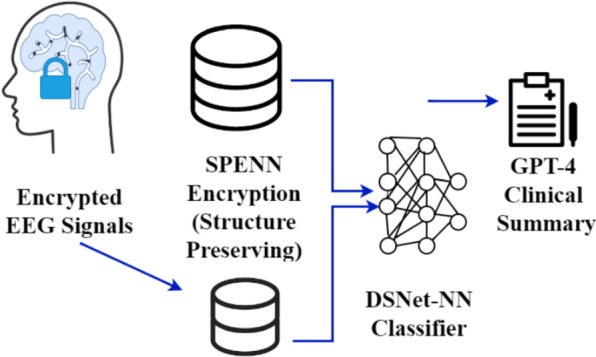
The study presents DSNet, a deep denoising structure-preserving neural encoding network that classifies privacy-preserving encoded EEG without decryption. Common spatial pattern (CSP) features are converted to irreversible neural codes — an irreversible neural transformation designed for privacy rather than a formal cryptographic guarantee — and two deep-learning architectures (a feedforward network and a recurrent RNN) classify in the encoded feature space. On public datasets, DSNet-NN exceeded 87% accuracy for every subject, outperforming the RNN variant and baselines while staying resilient to simulated privacy attacks; the study also integrated GPT-4 to generate clinical-style summaries from model outputs.

BIOSerenity Trains EEG Models on Jean Zay, Finds Scaling Diverges From Language AI

French neurotech company BIOSerenity ran three months of large-scale EEG AI training experiments on Jean Zay, France's most powerful supercomputer for research, including a 300-million-parameter model trained on 110,000 hours of EEG data across 64 GPUs. It also fully trained two model families, Mercury and Neptune, in three sizes each, from about 13 million to 100 million parameters and on about 5,000 to 40,000 hours of data. Neptune improved as it scaled up while Mercury did the opposite, its smallest version performing best, a sign that brain-signal AI does not scale the way language models do; the results have not been peer-reviewed.

Nuclear Electromagnetic Pulse Inhibits Rat Primary Motor Cortex LFP Bands

A study examining the potential brain risk of BCI electrodes exposed to strong electromagnetic fields applied nuclear electromagnetic pulse (NEMP) irradiation to rats with implanted brain electrodes and recorded local field potentials (LFPs) in the primary motor cortex (M1). At 200 kV/m, NEMP inhibited the alpha and delta LFP bands in resting rats, an effect linked to front-gate coupling between the pulse and the electrode, with the coupled current stimulating the brain and affecting its state of consciousness; the authors frame the work as early animal data for BCI electromagnetic protection.

Implanted Neural Interfaces Track Glioma Progression in Mice

Researchers at Coherence Neuro Global, Inc. and other institutions have used implanted neural interfaces to track glioma growth in freely behaving mice over time. Across several mouse strains and glioma models, tumor progression went with elevated gamma-band activity in the tumor microenvironment, and machine learning models read tumor burden off the chronic recordings, with gamma trajectories predicting individual growth rates. The work was posted to bioRxiv on July 9, 2026, and has not been peer reviewed.

Preprint: Functional Ultrasound Imaging Through a Human Cranial Window Maps Motor Effector Encoding

A preprint shows that functional ultrasound imaging (fUSI), read through an acoustically transparent cranial-window implant, reliably resolved multi-body-part and single-digit movement encoding in one participant's primary sensorimotor cortex, with maps consistent with classical somatotopy and single-trial decoding supported across sessions; analysis of key decoding voxels suggested different Brodmann areas encode single-digit movement differently. The researchers argue fUSI can map motor representations at submillimeter resolution, filling a key gap in humans between invasive electrophysiology and non-invasive blood-flow imaging; the work has not been peer reviewed.

Preprint: Effects of EEG Preprocessing on Channel-Wise Attention in Visual EEG Decoding

A preprint uses the Adaptive Thinking Mapper (ATM) model to empirically assess how EEG preprocessing strategies — a baseline MVNN-only pipeline versus a full cleaning pipeline integrating ICA and notch filtering — affect channel-attention representations in visual EEG decoding, using cross-generalization, noise-robustness, and spectro-temporal ablation analyses and examining the structural correspondence between data-driven attention weights and neurophysiological reference networks (GPDC, PDC, DTF). The researchers report the full pipeline suppressed non-neural artifacts such as frontal noise while maintaining comparable decoding accuracy and baseline robustness, and the learned attention spatial organization stayed stable across pipelines. The work has not been peer reviewed.

Deep Learning Decodes Imagined Sounds and Images From MEG, Topping 70% for Visual Imagery

Researchers recorded magnetoencephalography (MEG) from 18 right-handed participants as they imagined sounds and pictures, then compared two decoders: a convolutional neural network (CNN) and a linear logistic regression model. The CNN decoded both tasks above chance and exceeded 70% accuracy for visual imagery. It still decoded significantly when trained only on cortical regions unrelated to the task, suggesting imagined content is spread across partially overlapping networks rather than confined to a single sensory area, an experimental basis for feeding auditory and visual information into BCI decoders together.

Beihang and Tsinghua Team Fuses EEG, Video and Motion to Flag VR Cybersickness

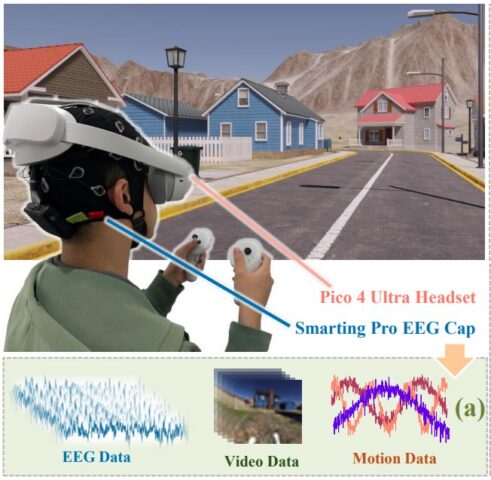
Researchers at Beihang University and Tsinghua University in Beijing built a multimodal contrastive learning framework that pairs EEG with synchronized video and motion data to detect cybersickness in virtual reality, representing the EEG as a connectivity graph and using an attention-based encoder to map the video and motion streams onto the same structure. Fusing all three signals separated cybersick from non-cybersick states more cleanly than any single modality or pair, and the model automatically pruned prefrontal connections unrelated to cybersickness. The setup used mBrainTrain's Smarting PRO 32-channel wireless EEG system and a Pico 4 Ultra headset, with 29 healthy adults navigating a VR scene under their own control.

Preprint: MRI Grey Matter Loss May Predict Who Can Control an ECoG BCI in ALS

A preprint from the Utrecht-BCI Lab at the UMC Utrecht Brain Center in the Netherlands, the invasive-BCI group led by Nick Ramsey, asks why some people with ALS control an implanted brain-computer interface (BCI) better than others. It found that preservation of grey matter in the motor cortex is associated with higher-quality brain signals, suggesting an MRI-based measure could help identify who is a suitable candidate for implantation. The preprint was posted to medRxiv on June 23, 2026 (DOI 10.64898/2026.06.23.26355654).

BIOSerenity's E1 Foundation Model Posts Strong Results on Four Clinical EEG Tasks

French medtech company BIOSerenity has built an EEG foundation model, BIOSerenity-E1, pre-trained self-supervised on more than 4,000 hours of recordings, and reports strong results on four clinical tasks: normal/abnormal classification, Alzheimer's disease detection, pediatric sleep staging and seizure detection. The normal/abnormal algorithm is already built into a CE-marked medical device, and the seizure-detection algorithm is in clinical evaluation. The work will be shown as a poster at the 8th Journées de Neurophysiologie Clinique in Grenoble, France.

Bio-Inspired Methods Target EEG Robustness

A perspective review published in Computers in biology and medicine examines EEG non-stationarity across sessions, people, and recording conditions. It asks whether mechanisms that help the brain maintain functional stability can improve the robustness of brain-computer interface models. The review covers synaptic plasticity, homeostatic regulation, neural oscillations, and spiking representations, comparing bio-inspired approaches with conventional machine learning and transfer learning. It also considers hybrid designs that combine biologically grounded mechanisms with artificial neural networks. The author proposes operational definitions for bio-inspired, bio-plausible, and bio-realistic modeling, together with a minimum specification for continual EEG benchmarks. Because direct EEG evidence remains limited for several proposed mechanisms, the review stresses the need to distinguish empirical findings from hypotheses and future research directions.
June 2026

Injectable Antifouling Adhesive Hydrogel Enables Robust Neural Interfaces for Stable ECoG Recording

Researchers propose an injectable, in-situ-gelling multifunctional hydrogel to address the failure modes of micro-ECoG cortical recording — dural barrier disruption, cortical micromotion that weakens device-tissue coupling, and biofouling that triggers a foreign-body response. Combining dopamine-grafted sodium alginate with branched polyethyleneimine, the hydrogel forms a quasi-zwitterionic network that resists nonspecific protein adsorption and provides catechol-mediated wet adhesion, gelling rapidly under surgical-compatible conditions through dual macromolecular crosslinking without diffusible small-molecule monomers. Integrated with a 128-channel flexible micro-ECoG mesh array, the platform reduced glial activation and fibrotic encapsulation and preserved stable, high-fidelity cortical recording over the 3-week early chronic period. The authors say co-designing barrier repair, interface adhesion and antifouling in a single material can improve long-term function.

Nanostructured Coatings on Soft-Polymer Neural Probes for Addressing Neuroinflammation

Researchers transferred dexamethasone-loaded titania nanotube arrays (TNA) onto a mechanically adaptive polymer nanocomposite (NC) substrate and, in a mouse model, compared four implants — silicon, NC, TNA-NC Empty and TNA-NC DEX (10 mice per group) — for neuroinflammation around intracortical microelectrodes at 2 and 4 weeks. At 2 weeks the gene-expression profiles were broadly similar, reflecting an early acute injury response; by 4 weeks the patterns diverged, with NC-based implants showing fewer differentially expressed neuroinflammatory genes than rigid silicon, led by TNA-NC Empty, while the dexamethasone group showed no additional benefit, suggesting drug delivery still needs optimization. The authors conclude that adding a TNA layer to flexible materials promotes resolution of the neuroinflammatory response at 4 weeks.

Multi-View Contrastive Learning Improves Cross-Subject ERP Classification

MVCLDG combines raw EEG and Hilbert-derived phase information with domain-alignment and contrastive-learning constraints to improve classification across unseen users. It outperformed baseline and representative domain-generalization methods on a public error-related-negativity dataset and a semantic-syntactic-violation dataset without target-domain adaptation; ablation and activation-map analyses supported the contribution and neurophysiological plausibility of its components.

LEGEND Decodes Tri-Modal Signals for SCI

A study published in Computers in biology and medicine introduces LEGEND, a neural-decoding architecture that jointly models cortical EEG, spinal ESG, and peripheral-muscle EMG for a neural bypass in spinal cord injury rehabilitation. The model encodes the three signal modalities in Lorentz hyperbolic space, connects 51 channel nodes through a signed tri-layer phase-locking-value graph, and refines the representation with graph attention. Under strict leave-one-subject-out evaluation on the Steele dataset, LEGEND achieved 56.51%±12.27% accuracy, 23.4 percentage points above EEGNet. The researchers argue that hyperbolic representations can capture complex relationships across the motor hierarchy, providing a computational foundation for rehabilitation decoding that links brain, spinal, and muscle activity.

Exploring Synergies in Brain-Machine Interfaces: Compression vs. Performance

Using implantable brain-machine interface (iBMI) data from a non-human primate two-dimensional finger task, the study tests whether brain-muscle synergies improve decoding performance and generalization. Principal component analysis (PCA), demixed PCA (dPCA) and non-negative matrix factorization (NMF) all compressed brain-muscle data effectively with minimal decoding-accuracy loss, but none improved performance through denoising or enhanced cross-task generalization. The authors conclude that extracting synergies alone does not yield a better or cleaner control space for linear decoding, and call for larger samples and more muscle channels.

Brain-to-Image Framework Splits Shared and Personal Features to Cut Calibration Data

Researchers at Lanzhou University, Zhejiang University, the University of Hong Kong and Sun Yat-sen University have built MindShow, a unified generative framework that reconstructs images from fMRI at cohort level rather than one subject at a time. A hierarchically conditioned mixture-of-experts encoder separates population-shared latent representations from subject-specific neural traits, so a new subject can be adapted with limited calibration data; a gated Perceiver bottleneck maps fMRI features into fixed-size image and text tokens, an optimal transport loss aligns them with a pretrained vision-language model, and a frozen diffusion model renders the image. The authors report better high-level reconstruction metrics with competitive structural fidelity, in a study published in Medical Image Analysis on June 20, 2026.

Dynamic Wavelets Boost Imagined-Speech EEG

A study published in Computers in biology and medicine proposes dynamic wavelet-basis selection to improve non-invasive EEG imagined-speech classification. For each EEG epoch, the method minimizes wavelet entropy to select an informative basis and then injects Gaussian noise into the corresponding coefficients. A convolutional neural network with channel-wise excitation classifies the augmented signals. The dataset contains 32 channels, 8 stimuli, and recordings from 10 participants. The words-vowels combination reached a highest classification accuracy of 98% with a Cohen's kappa of 0.95, although performance was lower for the full class set. The researchers report that the method outperformed conventional augmentation strategies and static wavelet approaches, offering an adaptive way to address noise and non-stationarity in EEG decoding.

Hybrid micro-ECoG for multi-scale neural recording

Published in Cell Reports Methods on June 12, 2026, the study presents high-density micro-electrocorticography arrays that integrate silicone elastomers (optical transparency, repeated penetration with intracortical arrays) and polyimide films (fine photolithographic feature definition) for multi-scale studies of brain activity. The combination facilitates high-throughput functional mapping to identify targets and insertion of intracortical arrays for dense local sampling. The authors demonstrated functional mapping in rats, cats and marmosets, guiding multi-area laminar recordings, and demonstrated local and feedforward optogenetic stimulation to investigate cortico-cortical interactions.

Bispectral EEG Separates Grasping Stages

A study published in Computers in biology and medicine applies cross-frequency bispectral analysis to nonlinear EEG activity during the planning and execution of natural reach-to-grasp movements. The researchers extracted magnitude- and phase-based features from complex bicoherence matrices and assessed them through classification, permutation-based feature selection, and within-subject statistics. Execution showed stronger nonlinear coupling than planning, led mainly by beta- and gamma-driven interactions. Decoding precision versus power grasps performed similarly across the two stages, suggesting that grasp-type representations emerge during planning and persist into execution. Compared with conventional analytical baselines, bispectral features provided consistent advantages for grasp-type discrimination and multiclass classification. The findings offer a new set of motor-decoding features for future brain-computer interface and neuroprosthetic research.
May 2026

Enhancing Brain Signal Generation Through a Hybrid Approach Integrating Reinforcement Learning and Diffusion Models

The study introduces RLED, a reinforcement learning-enhanced EEG diffusion framework for adaptive data augmentation in endogenous EEG tasks such as motor imagery and emotion recognition. Reinforcement learning dynamically regulates the diffusion training process to balance temporal, spectral and category-related features. Across four datasets, the high-quality synthetic EEG signals it generated consistently improved classification performance.

sEEG Study Finds Motor Imagery Activity Shifts by Task Stage and Frequency Band

Intracranial recordings from ten epilepsy patients show that neural activity during cued limb motor imagery changes with the phase of the task: low-frequency (8-30 Hz) activity was mostly suppressed during preparation and switched to activation once imagery began, while high-frequency (60-115 Hz) responses were stronger, more widely distributed, and at some contacts followed an activation-then-suppression sequence. The stereoelectroencephalography (sEEG) data indicate that responses are not uniform but shift with task stage and brain region, which the authors tie to stage-aware feature design for BCIs and to neurorehabilitation.
© 2026 BCIwiki.com Digest Topics Tips Subscribe Revisions About