/ EN

Feed

38 entries
September 2026

ANT Neuro, optohive to Build Hybrid EEG-fNIRS Cap

ANT Neuro, the Dutch EEG equipment maker headquartered in Hengelo, announced a strategic collaboration on September 1, 2026 with optohive AG, the Swiss developer of the HiveOne functional near-infrared spectroscopy system. Under the agreement, HiveOne will be sold and supported through ANT Neuro's regional sales and technical teams, reaching the research customers the company says it has served for nearly 30 years. The two will also co-develop a hybrid cap that holds ANT Neuro's eego EEG technology and HiveOne together and synchronizes both data streams through Lab Streaming Layer; optohive was founded in 2025 as an ETH Zurich spin-off, the announcement said.
August 2026

FDA Clears FIND Neuro CN-Suite Localization Tool

The US Food and Drug Administration cleared CN-Suite, source localization software from FIND Surgical Sciences Inc., doing business as FIND Neuro, on August 16, 2026, finding it substantially equivalent under submission number K260563 via the Traditional 510(k) pathway. FDA lists the device as Source Localization Software for Electroencephalograph or Magnetoencephalograph, a Class II device under regulation number 882.1400, reviewed by the agency's neurology advisory committee. Such software works back from electrical or magnetic fields recorded at the scalp to the intracranial origin of the signal, supporting presurgical planning such as locating epileptic foci.

MIT Microscope Captures Whole-Brain Voltage in Zebrafish 200 Times a Second

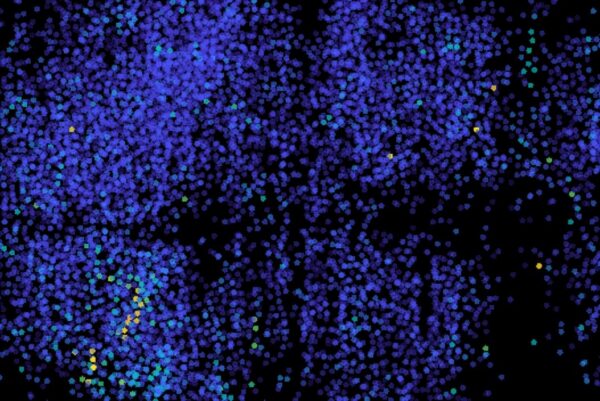
MIT engineers have adapted a light-sheet microscope to image the electrical activity of neurons across a zebrafish's entire brain, scanning the whole brain 200 times a second — once every five milliseconds. Calcium imaging, the usual proxy for neural activity, resolves activity only on the order of seconds and cannot capture single spikes, while genetically encoded voltage indicators report membrane potential directly but had previously been limited to small, localized populations. Faster camera acquisition and remote refocusing pushed volumetric imaging to rates that resolve individual neuronal impulses, revealing brain-wide activity patterns evoked by ultraviolet light; the study appears in Nature Methods.

WABO Appoints Speech-Cognition Researcher Jianwu Dang as Joint Scientist

WABO appointed Jianwu Dang to its Scientific Advisory Board and named him joint scientist. Dang, a researcher at the Shenzhen Institutes of Advanced Technology and a distinguished professor at Shenzhen University of Advanced Technology, will support task-conditioned intent models that combine EEG, EMG, speech, text and task context; WABO said the work is not aimed at context-free mind reading.

Wearable Devices Patents User Authentication From Gesture and Neural Signals

Israel's Wearable Devices said the U.S. Patent and Trademark Office has granted it a continuation patent covering user authentication that combines gesture input with biopotential sensors recording neural signals. The technology could be applied to secure payments, user detection and authorization of sensitive actions, adding a biometric layer to gesture-controlled devices.

WABO EEG Art Demo Yields 100+ Works at ChinaJoy

WABO (瓦博科技) says it ran a four-day neural art experience at the Snapdragon Pavilion during ChinaJoy 2026, held from July 31, 2026 to August 3, 2026 in Shanghai, producing more than 100 AI artworks with participants. Visitors wore a non-invasive EEG headband and viewed feedback derived from their signal state, with task-specific features feeding the artwork-generation process; the company says no private thoughts were read. The setup paired WABO's acquisition hardware with a Snapdragon X Elite laptop, keeping signal processing, model inference and image generation on the endpoint, which the company describes as a practical test of a neural-intent workflow outside a controlled development setting.

Haidian Hosts Nearly 60% of China's Key BCI Firms

Beijing's Haidian district is accelerating its push to become a hub for brain-computer interface development, with nearly 60% of China's key BCI companies based in the district, CCTV.com reported on August 6, 2026. According to the report, the Zhongguancun (Haidian) BCI Industry Cluster was formally unveiled at the 2026 Zhongguancun Forum annual meeting and now hosts more than 20 BCI projects, and an AI-plus-BCI standards testing and validation laboratory has been completed. The report did not disclose a list of the cluster's projects, the methodology behind the company figure, or further construction plans.

BrainPatch Wins FCC Certification for US Market

BrainPatch, which makes non-invasive neurotechnology, says it has secured FCC certification, a step the company needed before it could sell its products in the US. In a blog update dated August 3, 2026, the firm said the approval confirms its technology meets US regulatory requirements and marks a milestone in its international expansion; it also brings the technology closer to buyers, partners and backers in the country it calls the largest consumer market.
July 2026

Center for Neurotechnology Highlights Nine New Papers

The Center for Neurotechnology listed nine new papers spanning experimental and computational neuroscience, neural interfaces and neuroethics. The selection includes Smart Dura for multimodal neural recording and modulation, work on transcutaneous spinal-stimulation trials, primate optogenetics, co-adaptive interfaces, motor-cortex activity and participatory neuroethics research.

Nanjing Builds Full BCI Industry Chain

Nanjing has built end-to-end competitiveness across the brain-computer interface industry chain, People's Daily Online reported on July 28, 2026. According to the report, the city earlier issued an action plan to become a national hub for BCI industry innovation and has set up a 3+3+3 BCI industry innovation system, drawing on universities including Southeast University and Nanjing University of Aeronautics and Astronautics to build 3 provincial- and ministerial-level key laboratories, and landing three core platforms covering neural signal coding and decoding, dedicated chips and brain imaging. The 2026 national BCI conference was also held in Nanjing. The report summed up the city's strengths as research, medical resources, application scenarios and capital ecosystem.

Neurotech Leaders Forum Returns to imec With Europe at an Inflection Point

The second annual Neurotech Leaders Forum drew executives, investors, researchers and regulators from Europe and the United States to imec's campus in Leuven, Belgium, on June 23-24, 2026, for sessions on clinical translation, capital formation, regulatory strategy and emerging frontiers. Thomas Stieglitz of the University of Freiburg gave the Day 1 keynote, arguing for perseverance and functionalist design, and later sessions covered women's health, European BCI ventures and the region's capital and regulatory challenges. Companies showing new work included WISE SpA, with its Heron spinal cord stimulation lead, and Melora Medical, with a transcutaneous auricular vagus nerve stimulation (taVNS) device for dermatology.

BrainAccess Rebuilds Its Board App Interface and Adds AI Assistant Jena

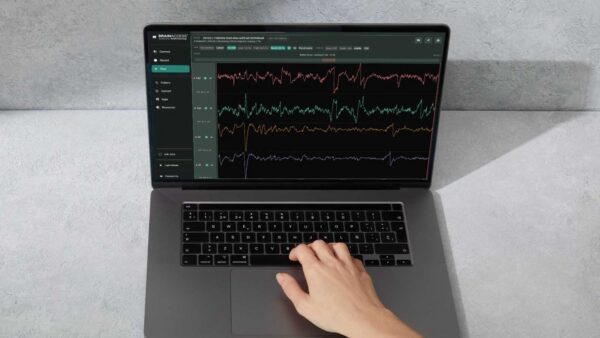
BrainAccess released a major update to its desktop application BrainAccess Board on July 27, 2026, featuring a rebuilt interface, improved functionality and a new AI assistant called Jena that monitors device and signal quality in real time. The company, which supplies EEG devices and software for neuroscience research and clinical use, said the update is aimed at ease of use and data management during EEG acquisition and analysis.

BrainAccess Releases MATLAB API for Direct EEG Data Acquisition

BrainAccess, the EEG system line from Neurotechnology, has released a MATLAB API that lets users connect its wireless dry-electrode headsets over Bluetooth, configure channels and sampling rate, start and stop data streams and pull data straight into MATLAB arrays, work that previously required Python, C or the LSL MATLAB toolbox. The toolbox installs as a single .mltbx package for desktop MATLAB R2025b or newer, mirrors the structure of the existing Python API and supports session annotations and saving directly to .mat files, so recordings can go straight into tools such as Signal Processing Toolbox and EEGLAB. BrainAccess devices, sold in MINI, MIDI, MAXI and HALO models, are widely used in neuroscience research and engineering.

Case Report: 3 Stroke Patients Gain Arm Function After 24 BCI-FES Sessions

Three stroke patients with hemiplegia improved on upper-limb motor scores and daily-living measures after 24 sessions of visually guided brain-computer interface training paired with functional electrical stimulation, according to a case report. The patients trained five times a week, and stimulation fired only when the system detected motor imagery-related EEG patterns; gains appeared on Brunnstrom stages, the Fugl-Meyer Assessment and the Barthel Index, most clearly in wrist and hand control. The report cautions that the findings are preliminary and require validation in larger randomized controlled trials.

Inner Mongolia Opens First BCI Hospital Ward

The first brain-computer interface hospital ward in China's Inner Mongolia autonomous region was unveiled in Hohhot, CCTV.com reported on July 17, 2026. At the unveiling ceremony, Hurile, head of the rehabilitation medicine department at Inner Mongolia Medical University, delivered a briefing introducing the ward's construction, technical strengths and development plans, framing the ward as a starting point for building a new clinical rehabilitation ecosystem in the autonomous region. The report did not disclose the ward's bed capacity, equipment, patient scope or opening date, nor the full name of the hospital housing the ward.

BIOSerenity Trains EEG Models on Jean Zay, Finds Scaling Diverges From Language AI

French neurotech company BIOSerenity ran three months of large-scale EEG AI training experiments on Jean Zay, France's most powerful supercomputer for research, including a 300-million-parameter model trained on 110,000 hours of EEG data across 64 GPUs. It also fully trained two model families, Mercury and Neptune, in three sizes each, from about 13 million to 100 million parameters and on about 5,000 to 40,000 hours of data. Neptune improved as it scaled up while Mercury did the opposite, its smallest version performing best, a sign that brain-signal AI does not scale the way language models do; the results have not been peer-reviewed.

Neurosom Wins US Patent for Bayesian EEG Source Mapping and Stimulation Targeting

Neurosom announced it has been granted a patent for a method that combines Bayesian statistical modeling with personalized EEG data and brain atlas models to achieve "super-resolution" in locating the origins of brain electrical activity, potentially improving the guidance of transcranial electrical stimulation (TES). The patent, titled "Method for Bayesian Super-Resolution of Electroencephalographic Source Analysis and Transcranial Electrical Stimulation" (US Pat. No. 12,663,866), was announced on July 9, 2026.

NIRx and Artinis Form fNIRS Partnership Backed by Gilde Healthcare

NIRx Medical Technologies and Artinis Medical Systems, the Dutch fNIRS pioneer, have formed a strategic partnership backed by healthcare investor Gilde Healthcare to speed innovation and broader adoption of functional near-infrared spectroscopy (fNIRS) brain imaging. Both companies keep their own brands and operating locations while combining R&D and commercial scale, and leadership is unchanged, with Dr. Patrick Britz remaining chief executive of NIRx and Dr. Willy Colier chief executive of Artinis.

Paradromics Names William Marks Chief Clinical Officer as Connexus Study Advances

Paradromics has named William J. Marks chief clinical officer; he brings nearly three decades of experience in clinical neuroscience and implantable devices. The appointment comes as the company advances Connect-One, an early feasibility study of its Connexus BCI system, which is intended to restore communication for people who have lost it to spinal cord injury, stroke or ALS.

Divergence Neuro Adds BrainBit's 19-Channel DragonEEG to Its Platform

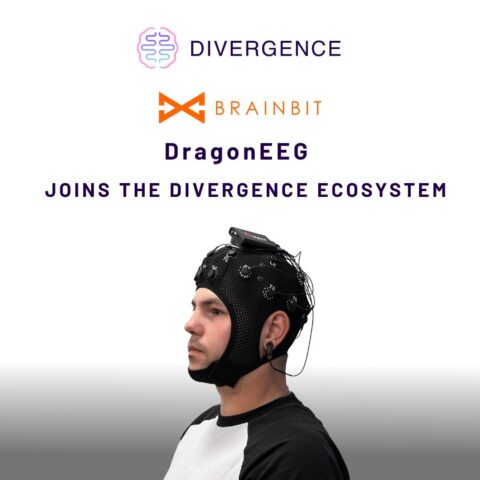
Divergence Neuro has added support for BrainBit's DragonEEG to its platform, bringing in a system with 19 EEG channels laid out on the international 10-20 system plus dedicated EMG, ECG and EOG poly channels. The integration gives clinicians, researchers, educators and developers research-grade EEG acquisition inside the Divergence ecosystem for qEEG brain mapping, neuroscience research and professional neurotechnology development, as qEEG use spreads through neurofeedback, mental health and cognitive performance work.

INBRAIN and Microsoft Partner on AI for Real-Time BCI Adaptation

INBRAIN Neuroelectronics has announced a partnership with Microsoft to apply the software company's large language models and data analytics tools to make its brain-computer interfaces adapt in real time. INBRAIN builds graphene-electrode BCIs for neurological disorders, spanning invasive and non-invasive applications, and recently partnered with the Mayo Clinic to speed clinical development and commercialization of its BCI therapies, with investigator-led clinical research under way.
June 2026

FDA Clears Ceribell Monitor for Bedside EEG Recording

The FDA cleared the Ceribell Monitor on June 30, 2026, finding it substantially equivalent under submission number K261101 through the traditional 510(k) pathway. The agency classifies it as a Reduced-Montage Standard Electroencephalograph, a Class II device under regulation 882.1400, with neurology as the assigned review panel. It is one of several Ceribell clearances in the same period; the product line is built around rapid reduced-montage setup for bedside recording in emergency and critical care.

FDA Clears Universal Brain UB ERP System

The FDA cleared Universal Brain's UB ERP System on June 30, 2026, finding it substantially equivalent under submission number K253767 through the traditional 510(k) pathway. The agency classifies it as Non-Normalizing Quantitative Electroencephalograph Software, a Class II device under regulation 882.1400, with neurology as the assigned review panel. Event-related potentials are obtained by averaging EEG time-locked to stimuli; components such as P300 serve both clinical assessment and the classic paradigms behind noninvasive BCI spellers.

FDA Clears Ceribell Neurology Review Software

The FDA cleared the Ceribell Neurology Review Software on June 24, 2026, finding it substantially equivalent under submission number K260998 through the traditional 510(k) pathway. The agency classifies it as Automatic Event Detection Software for Full-Montage Electroencephalograph, a Class II device under regulation 882.1400, with neurology as the assigned review panel. The category covers software that automatically flags events within full-montage EEG recordings, surfacing candidate segments from long records for clinician review.

FDA Clears Neuroelectrics Enobio Dx EEG Systems

The FDA cleared Neuroelectrics Barcelona's Enobio Dx line, in 8-, 20- and 32-channel models, on June 13, 2026, finding it substantially equivalent under submission number K261604 through the special 510(k) pathway. The agency classifies it as a Full-Montage Standard Electroencephalograph, a Class II device under regulation 882.1400, with neurology as the assigned review panel. Neuroelectrics is known in neuromodulation and BCI research for noninvasive EEG acquisition and transcranial electrical stimulation hardware.

NeuroXess Says Two Paralyzed Patients Played Brain-Controlled Chess 800 km Apart

NeuroXess said two people with high-level paralysis played chess against each other across about 800 kilometers, between Shanghai and Nanchang in eastern China, using its "Triple-Full" (三全) brain-computer interface: one selected and placed pieces on a virtual board by thought, with the commands relayed in real time to a robot stand-in that moved the pieces at the other end, where the second participant gripped physical pieces through a brain-controlled exoskeleton glove. The company said the first participant was implanted at Huashan Hospital, Fudan University, in October 2025, moved a cursor by thought on the fifth day after surgery and reached 5.2 bits per second after 17 days of training, while the second was implanted at the First Affiliated Hospital of Nanchang University in December 2025 and was eating, drinking and writing with a brain-controlled exoskeleton one month after surgery. The outcomes come from the vendor's own account and have not been validated in peer-reviewed publication.

FDA Clears VoxNeuro Cognitive EEG Software

The FDA cleared VoxNeuro's Cognitive Function Neuroimaging (cfNI) Software, version 1.0.0, on June 12, 2026, finding it substantially equivalent under submission number K253015 through the traditional 510(k) pathway. The agency classifies it as Normalizing Quantitative Electroencephalograph Software, a Class II device under regulation 882.1400, with neurology as the assigned review panel. Normalizing quantitative EEG software compares an individual's EEG metrics against a reference population database before reporting, supporting objective assessment of cognitive function.
March 2026

FDA Clears Zeto New Wave EEG System

The FDA cleared Zeto's New Wave System on March 13, 2026, finding it substantially equivalent under submission number K260455 through the special 510(k) pathway. The agency classifies it as a Full-Montage Standard Electroencephalograph, a Class II device under regulation 882.1400, with neurology as the assigned review panel. That category covers standard electroencephalograph hardware acquiring a complete montage of scalp channels.
February 2026

FDA Clears PreOp v3 Source Localization Tool

The FDA cleared Clouds of Care's PreOp v3 on February 13, 2026, finding it substantially equivalent under submission number K252565 through the special 510(k) pathway. The agency classifies it as Source Localization Software for Electroencephalograph or Magnetoencephalograph, a Class II device under regulation 882.1400, with neurology as the assigned review panel. Source localization software infers the intracranial origin of signals from scalp-recorded electric or magnetic fields, a step in neurosurgical planning such as presurgical localization of epileptic foci.
January 2026

NeuroXess Breaks Ground on BCI Factory Targeting 10,000-Unit Supply

NeuroXess broke ground on a roughly 14,300-square-meter BCI manufacturing project in Jiangxi province in eastern China. The company said the facility would produce flexible implantable electrodes, neural recording equipment, surgical robots and fully implanted wireless BCI systems, with a target of stable supply at the 10,000-unit scale. NeuroXess expects the factory to begin operating in the second half of 2026, but the capacity and timeline remain company projections.
© 2026 BCIwiki.com Digest Topics Tips Subscribe Revisions About