中 / EN
August 2026

BCIs Move into Orthopedic Rehab, Targeting Muscle Inhibition after Surgery

Brain-computer interfaces are moving out of neurology and into orthopedic rehabilitation, according to a review arguing that BCIs can raise corticospinal excitability and induce neuroplasticity by decoding movement-related neural signals and closing a feedback loop between central and peripheral systems. The target is postoperative muscle inhibition caused by insufficient central motor drive; available evidence suggests motor imagery-based BCI training improves quadriceps voluntary activation and limits strength loss after ACL reconstruction, though the authors cite thin mechanistic evidence, patient heterogeneity and a lack of standardized protocols as barriers to translation. The review, by researchers at the First Affiliated Hospital of Jinan University in southern China's Guangzhou and other institutions, was published on August 25, 2026, in the Chinese Journal of Reparative and Reconstructive Surgery.
Wireless EEG Use Climbs in Children With Developmental Disabilities, BCI at 28.1%

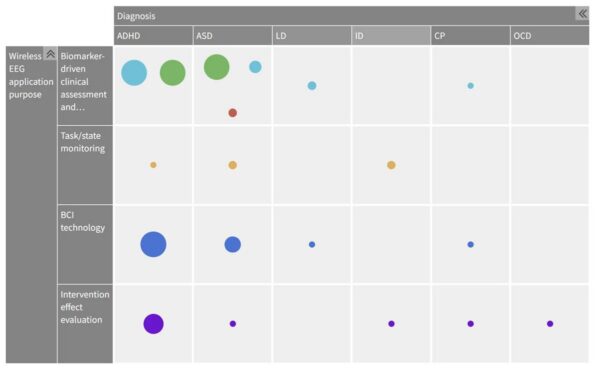
Researchers at Yonsei University in South Korea and the University of Toronto reviewed 64 studies covering 3,103 participants and found wireless EEG increasingly used in research on children with developmental disabilities, with brain-computer interfaces accounting for 28.1% of the included studies. BCI work favored low-channel, dry-electrode, consumer-grade devices, while biomarker-driven studies used higher channel counts and signal fidelity; reporting on data quality was thin, with 85.9% of studies giving no validation against wired EEG and 79.7% not specifying impedance thresholds. Published August 25, 2026 in the Journal of Medical Internet Research, it is the first scoping review to map wireless EEG use across a broad spectrum of developmental disabilities in children.

Language Models Changed 4.4% of P300 Speller Choices in Data From 47 ALS Patients

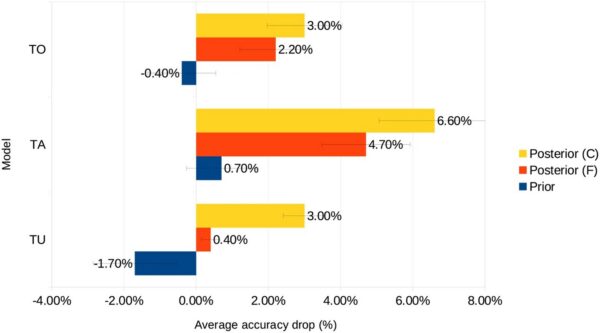
P300 spellers are a common brain-computer interface communication tool for people with ALS, and researchers have begun adding large language models as language priors to raise spelling accuracy. But accuracy alone cannot show whether an output came from the patient's brain signals or the model's prediction. A retrospective study re-decoded 3,373 P300 speller selections from 47 people with ALS, fusing reconstructed neural posteriors with 25 language priors ranging from 5-gram models to a 46.7-billion-parameter model. The prior accounted for a participant-weighted mean of 8.6% of posterior displacement, a neural contribution fraction of 0.914. In 4.4% of selections, the fused system produced the intended character where neural evidence alone would not have. Results were similar across 21 neural language models. The work is a preprint and has not been peer reviewed.

Interpretable BCI Framework Pairs Emotion Recognition With Thought-to-Speech Decoding

A new study proposes an interpretable brain-computer interface framework that combines affective state recognition with EEG decoding to enable emotion-aware thought-to-speech. Tested on public imagined-speech EEG datasets in subject-independent settings and scored on accuracy, precision, recall, F1-score, inference speed and interpretability, the framework improved decoding reliability over conventional opaque models and produced clinically meaningful explanations, the authors report. They present it as a practical basis for assistive communication tools for people with paralysis, amyotrophic lateral sclerosis, locked-in syndrome and other conditions that disrupt natural speech.

Tianjin University Team Cuts EEG Channels Without Losing Decoding Accuracy

A team at Tianjin University in northern China has built a graph neural network framework that jointly optimizes EEG channel selection and classification, picking a small subset of channels for motor imagery decoding while holding accuracy close to that of the full electrode set. Reported in the journal Chaos, the method was validated on three datasets — BCI Competition IV 2a, High Gamma and a newly collected set — and could cut system complexity for uses such as neurorehabilitation.

Tsinghua's LAND Decodes Movement at Unseen Speeds Without Recalibration

BCI decoders often fail outside their calibration conditions, when movement speed, limb or user changes. Tsinghua University researchers propose LAND (Latent Aligned Neural-behavioral Dynamics), which uses flow matching to align neural and behavioral dynamics in a latent space and uses unpaired kinematic priors to constrain the geometry of the neural manifold. Tested on synthetic data, epidural BCI recordings from one tetraplegic participant and multi-electrode array recordings from nonhuman primates, LAND generalized zero-shot to unseen movement speeds and improved cross-limb and cross-subject transfer with limited fine-tuning. The work is a preprint and has not been peer reviewed.

Preprint: Quantum-Inspired Circuits Lift Neural Decoding Accuracy in 3 of 4 Seeds

A preprint bolts parameterized quantum circuits onto a ResNet-50 backbone as residual sidecar modules and tests them on 31-class decoding of neural population activity from imagined handwriting. The backbone-gradient variant improved accuracy in three of four seeds and consistently lowered linear CKA similarity to the baseline features, which the authors read as a structural reorganization of the learned representation. They claim no quantum advantage.

Arctop Unveils RLbF, Which Trains LLMs on Real-Time EEG Feedback

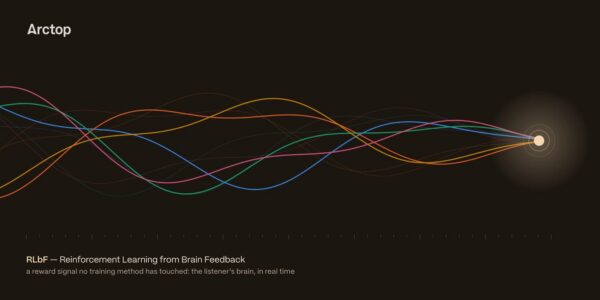
Arctop has published a companion article to its paper introducing Reinforcement Learning from Brain Feedback (RLbF), a framework that decodes real-time EEG into cognitive states such as workload and stress and uses them as reward signals to train large language models. Unlike RLHF, which depends on sparse, subjective feedback given after the fact, RLbF supplies continuous, involuntary signals that let a model sense in real time how its words land in a listener's brain, which the article says improves communication. It is the first use of brain signals to train a language model and is already running in Arctop's Isaac app, though it adapts on a single dimension, cognitive workload, and technical details are not fully public.

CMU Intracortical BCI Helps Animals Steady Prefrontal Activity Within Hundreds of Milliseconds

Carnegie Mellon University researchers built an intracortical brain-computer interface that lets animals use visual neurofeedback to hold prefrontal cortex population activity near a preset target. Arousal drifts during tasks, with low arousal linked to drowsiness and high arousal to stress, and these departures from optimal performance show up as fluctuations in neural activity. With moment-by-moment feedback, the animals reduced those fluctuations on timescales from seconds down to hundreds of milliseconds, and arousal-related regulation of neural activity was associated with BCI use. The team says neurofeedback could help strengthen or restore regulation of neural activity in clinical conditions where arousal control is impaired. The work is a preprint, has not been peer reviewed and has been done only in animals.

German Team Decodes Hand Motor Imagery From EEG Microstate Sequences at 89% Accuracy

German researchers tested whether sequences of EEG microstates, a handful of brief, stable patterns of brain activity, can serve as on/off switches for a brain-computer interface. Participants imagined moving the left or right hand, and a deep learning model read the microstate sequences to tell which hand, using the result as a trigger command. With transfer learning across sessions or participants, peak accuracy reached about 89%, though reaching 80% took about 400 seconds of calibration on average. The researchers say the approach could ease the calibration burden before use. The work is a preprint and has not been peer reviewed.

Gaze-Plus-Motor-Imagery BCI Reaches 100% Accuracy With 16-Channel EEG

Motor imagery BCIs have long faced two problems: wide variation between users and only a small number of distinguishable commands. In this study, users first select a target by looking at it, then confirm the choice with imagined movement, merging the two steps into one. In tests with 15 healthy participants using 16-channel EEG, the hybrid paradigm outperformed motor imagery alone in every channel configuration, reaching up to 100% accuracy. The researchers also found that fixating on the target made EEG responses more stable, which supports using fewer electrodes and lowering the hardware barrier.

Phase-sliding oscillation lifts async BCI to 94.2%

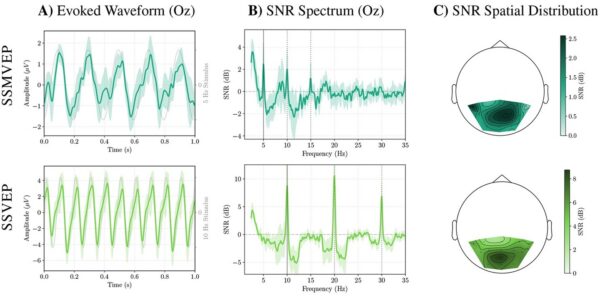
Phase mismatch between live EEG and fixed templates has long been the weak point of asynchronous steady-state visual evoked potential (SSVEP) brain-computer interfaces, which are seen as a promising route to real-world control. A new method, PSO-AC, exploits a phase-sliding oscillation phenomenon the authors observed and validated. Offline, 22 participants produced a mean control/non-control accuracy of 94.2% from just two seconds of EEG data, a result the authors say outperforms a state-of-the-art baseline; 9-class decoding also kept its edge across different time delays. Online, in robotic-arm experiments, the method delivered more stable command triggering and higher control efficiency, with the command cost per successful trial falling from 4.30 to 1.14. The paper was published in the International Journal of Neural Systems on August 21, 2026.

Teacher Support Was the Strongest Predictor of Student BCI Adoption

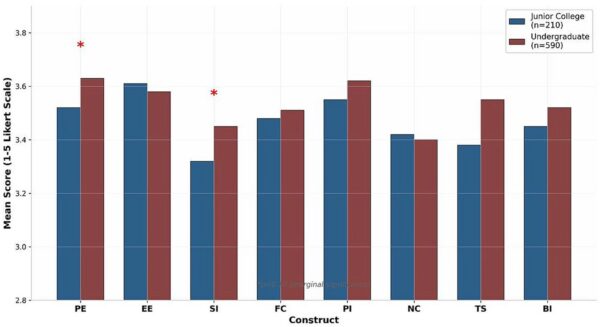
A survey of 800 students at 10 Chinese universities found teacher support was the strongest predictor of willingness to use BCI technology (beta=0.337), while performance expectancy was not significant (beta=0.059). Neuroethical concern was also non-significant in the structural model, yet 28 of 40 interviewees named privacy as their leading worry, suggesting concern may reflect engagement rather than rejection before adoption.

BELT Runs Motor-Imagery BCI Decoding on an ARM Chip in 6.75 Milliseconds

Researchers proposed BELT, a modular Bayesian edge-cloud architecture that combines user-specific adaptation, lightweight classification and compressed data transfer. BELT-lite achieved 87.9% and 80.6% mean accuracy on the BCI Competition IV-2b and IV-2a datasets, respectively, and processed each sample in 6.75 milliseconds on an ARM Cortex-A7—21% faster than EEGNet but about 2.7 percentage points less accurate.

Motion-Based Visual BCI Reaches 85.67% Accuracy Without Flicker

A code-modulated motion visual-evoked-potential paradigm replaced flickering targets with pseudo-random motion sequences. In a four-target online BCI, it achieved 85.67% mean accuracy with a 2.61-second selection time—below c-VEP and SSVEP, but above steady-state motion VEP—while participants reported no clear comfort preference between motion and flicker.

Subject-Specific Frequency Bands Improve Motor-Imagery EEG Decoding

Researchers at United International University in Bangladesh proposed SSLFF, a framework that selects frequency sub-bands for each user, fuses complementary spectral information and extracts time-localized features. The paper reports statistically significant accuracy gains over conventional methods and stable performance across parameter changes, although the abstract does not provide absolute accuracy figures.

Review Proposes 'Brain-Inspired BCIs' for Low-Power, Closed-Loop Neurotech

A review published on August 20, 2026 in npj Biomedical Innovations proposes brain-inspired brain-computer interfaces (BI-BCIs), a framework that unifies neuromorphic computing with BCI design to make neurotechnology lower-power, smaller and capable of closed-loop operation. The authors, from Aarhus University, Stanford University, the University of Southern Denmark, the University of Genoa, Forschungszentrum Jülich and RWTH Aachen University, say the approach could advance neuroprosthetics and neuromodulation for neurological disorders.

Chinese Academy of Sciences Team Releases BCIJelly Toolchain Unifying 18 BCI Datasets

BCI research has long been slowed by inconsistent data formats, divergent decoder implementations and incompatible deployment toolchains. BCIJelly standardizes 18 BCI datasets into inputs ready for AI training and integrates 15 benchmark decoders and 80 reusable modules. Its automated architecture search generates task-specific decoders without manual design and can extend into a large language model-driven closed-loop mode that supports single-task, multitask and cross-species decoder design; the system also offers interactive visualization software that requires no coding. A single-command pipeline compiles trained decoders onto neuromorphic hardware, cutting power consumption 30- to 50-fold while maintaining decoding performance. The work has been validated in humans, macaques and mice across five paradigms: motor, visual, speech, emotion and auditory. It is a preprint that has not been peer reviewed.

Review Identifies Three Shared Bottlenecks Across DBS and BCIs

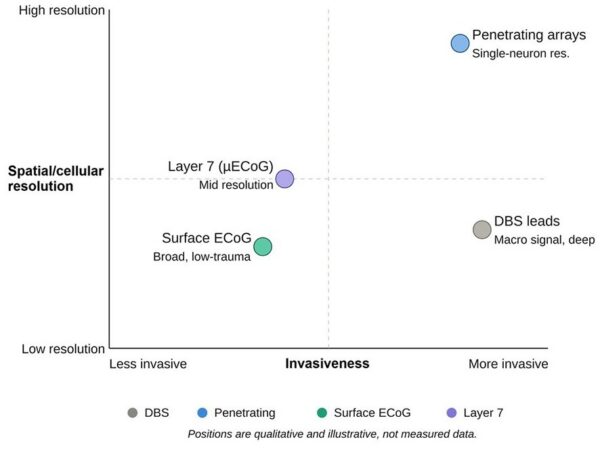
A mini-review places deep-brain stimulation, brain-computer interfaces and speech neuroprostheses within a shared closed-loop architecture of sensing, decoding, stimulation or output, power, telemetry and chronic validation. It identifies long-term stability, neural coding and equitable access as recurring constraints across all three fields and argues that governance must advance alongside engineering.

Study reviews invasive and non-invasive BCI use

A systematic review of BCI medical applications published on August 17, 2026 in Theoretical and Natural Science covers literature review, comparative case analysis of invasive vs non-invasive techniques, and interdisciplinary assessment. It reports that invasive BCIs reach 80% to 100% task success rates in robotic arm control but are limited by surgical hazards, progressive signal deterioration and costs above $250,000, while non-invasive BCIs are safer and more widely deployed in community neurorehabilitation with about 70% effectiveness for post-stroke upper-limb recovery, yet suffer poor signal-to-noise ratios, a BCI illiteracy rate near 30% and low information transfer speeds. The review also addresses neural data privacy, autonomy paradoxes and inequitable access.

MRieHy Framework for Online MI-BCI Adaptation

Researchers propose MRieHy, a multi-feature Riemannian hypergraph framework for online test-time adaptation of motor imagery BCI decoding. It aligns multi-day distributions via Riemannian means of covariance matrices, builds one hypergraph with Riemannian distance and a second with cosine similarity, fuses them with adaptively learned weights, and decodes buffered online samples after Riemannian alignment. On a private four-class ECoG dataset and two public four-class EEG datasets, MRieHy shows notable gains over state-of-the-art baselines, targeting the cross-day transferability and online operation that clinical MI-BCI still lacks.

Southern Federal University Releases Directional-Word EEG Data From 22 Volunteers

Southern Federal University recorded directional-word EEG from 22 healthy volunteers: 12 native Russian speakers and 10 native Spanish speakers. Both groups performed six directional words, with an additional “next” command in Russian. Recordings used 38 electrodes at 500 Hz, with concurrent articulation-related EMG in six participants. Random Forest accuracy of 78 ± 4% came from per-participant five-fold cross-validation distinguishing rest, overt speech and inner speech—not six-word recognition. Keypress, muscle and task-order effects require consideration in subsequent analyses.

Implantable Motor BCIs Need a Unified Clinical Outcomes Framework

A paper in *Neurorehabilitation and Neural Repair* examines the outcome measures needed as implantable motor BCIs move from safety and feasibility studies toward regulatory approval, reimbursement and sustained clinical use. It calls for valid and reliable assessments that satisfy regulators and payers while reflecting activities that matter to people with severe motor impairment.

EEG2MOTION: Full-Body Motion From Brain Signals

Researchers debut EEG2MOTION, billed as the first EEG-motion-text dataset for human motion synthesis, with nearly 20,000 paired samples across thousands of motions, plus a generative framework (EMMM) that couples an EEG encoder with a motion decoder to synthesize coherent full-body motions from non-invasive brain activity. Multimodal contrastive learning aligns non-invasive EEG embeddings with text, video and motion representations to decode high-level semantics. The team says it is the first work to generate diverse whole-body motions from non-invasive brain signals.

CNN bi-LSTM Hybrid Decodes Motor-Imagery EEG

The preprint was posted to arXiv on August 13, 2026, proposing a hybrid deep-learning architecture that combines a convolutional neural network with a bidirectional long short-term memory network to decode motor-imagery EEG. The author notes that motor-imagery brain-computer interfaces are seen as a promising route to flexible communication between the brain and external devices, particularly for people affected by stroke or neurodegenerative disorders, but that reliable decoding remains difficult because EEG recordings carry substantial noise and relate to underlying brain activity in complex, weakly informative ways. In the proposed architecture, the CNN learns high-level spatial and temporal representations directly from raw MI-EEG recordings, while the bi-LSTM models temporal dependencies among the extracted features. The approach was evaluated on both a publicly available dataset and a privately acquired dataset collected with an EEG acquisition system, with robust performance reported on two- and three-class motor-imagery classification and promising subject-independent decoding across the methods compared. The work is a preprint and has not been peer reviewed.

Few-Shot Calibration Raises EEG Emotion Decoding Accuracy to 0.77

Researchers at Walailak University in Thailand tested EEG-based emotion recognition under auditory stimulation, scoring valence and arousal. Discrete wavelet transform features reached 0.88 accuracy when classifiers were trained and tested on the same subject, but leave-one-subject-out evaluation fell to near chance, exposing how far EEG emotion signatures differ between people. Few-shot adaptation closed part of that gap: with 75% of a new subject's calibration data, functional connectivity features reached 0.77.
© 2026 BCIwiki.com Digest Topics Tips Subscribe Revisions About