
/ EN
July 2026

Preprint: Differentiable Logic Gate Networks for Low-Latency EEG Classification on Edge Devices

A preprint evaluates differentiable logic gate networks (Diff-Logic), compiled into pure boolean circuits, as a low-latency EEG classification option for resource-constrained BCIs. Across four EEG datasets and two task types — binary dementia screening and three-class emotion recognition — Diff-Logic reached 80.2% Macro F1 on dementia screening, 6.8 points above the multilayer perceptron baseline, and on power-constrained devices the MLP ran 2.3× slower and occupied 14× more memory, while Diff-Logic's inference time stayed nearly flat as model size grew 10×. The study has not been peer reviewed.

Targeting Grasp-Related Cortical Areas for Intracortical Brain-Machine Interfaces

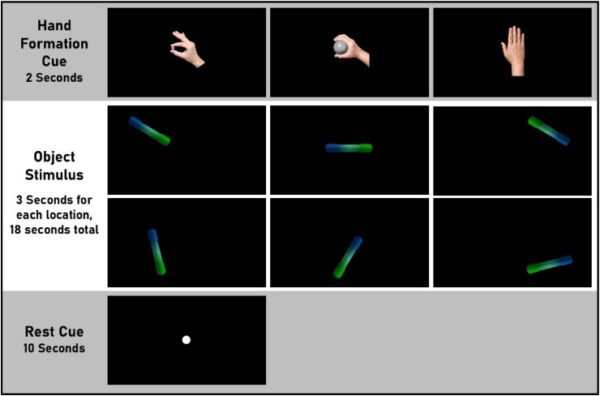
For a C5 tetraplegic participant, the study integrated anatomical, functional and vascular imaging with preoperative 3D modeling to optimize placement of intracortical microelectrode arrays for grasp-related motor decoding. Anatomical MRI, diffusion-weighted imaging and task-based fMRI identified grasp-related cortex while avoiding vasculature and speech-critical regions; Quicktome software refined target selection using structural connectivity and functional activation data, and 3D-printed skull and cortex models supported surgical planning. Functional imaging highlighted the anterior intraparietal sulcus (AIP), ventral premotor cortex (PMv) and inferior frontal gyrus (IFG); arrays placed in AIP and PMv subregions 6v and 6r reached a combined classification accuracy of 96%.

Ghost-LENet Tops 80% on Motor Imagery EEG Using a Few Thousand Parameters

Researchers have built Ghost-LENet, a lightweight convolutional network that classifies motor imagery EEG at 82.18% on the BCI Competition IV-2a dataset and 83.05% on IV-2b using only a few thousand trainable parameters. The design combines dilated temporal convolutions, a stationary wavelet transform, dynamic residual fusion and Ghost modules, holding accuracy while cutting model complexity for BCI hardware with little compute to spare.

UCL Workshop Syncs EEG, Eye Tracking, ECG and GSR in a Flight Simulator

Researchers demonstrated synchronized EEG, ECG, GSR and eye tracking during a flight-simulation experiment at a workshop held with Professor Tom Carlson at University College London. A g.Nautilus 28-channel wireless EEG headset, ECG and GSR sensors and Tobii Pro Glasses 3 captured the signals in real time, tracking mental workload, engagement and heart rate variability (HRV) across two complete flight cycles of take-off, free flight and landing. The rig can be set up in 30 minutes and leaves participants free to move throughout.

Brain-Computer Interface for Smart Home Design Based on Machine Learning and Deep Learning Techniques

Researchers built an EEG-based brain-computer interface for smart-home control using a motor imagery dataset from 25 subjects collected with a 64-channel BCI2000 system. Features extracted from a CNN's convolutional layers trained SVM, CNN and LDA classifiers that remove the noise and overlap behind misclassifications and map selected features onto categories an Arduino UNO can act on; the three models reached overall accuracies of 99%, 96% and 99%. The authors say the scheme could let users control smart-home devices with brainwaves, potentially helping older adults and people with limited mobility.

Miniscope Enables Real-Time Neural Decoding

Beijing Normal University researchers developed a low-cost structured-illumination miniscope weighing less than 3 g. The system uses a Ronchi grating and time-multiplexed excitation for HiLo imaging, providing optical sectioning in freely behaving mice. It suppresses out-of-focus background fluorescence while retaining the speed, field of view, and accessibility of widefield miniscopes, and it supports optically sectioned multiplane imaging to increase neuronal yield. In hippocampal recordings, the researchers observed better region-of-interest signal quality and spatial-information readout. They also demonstrated a proof-of-principle closed-loop brain-machine interface supported by rapid online signal extraction and real-time neural decoding. The work is a bioRxiv preprint and has not been peer reviewed.

Preprint: Cross-Subject Learning Cuts BCI Calibration for Children With Cerebral Palsy

A preprint reports that cross-subject cumulative learning and transfer learning can sharply cut the calibration burden of brain-computer interfaces based on movement-related cortical potentials (MRCP) in children with cerebral palsy. Testing a bidirectional long short-term memory network across 27 training sessions in four children, the authors found cross-subject cumulative learning reached 91% accuracy with no within-session calibration, rising to 93% when transfer learning was added — both better than conventional calibration strategies.

Preprint: Dendrite, a Real-Time Python Application for Online BCI Research and Development

A preprint introduces Dendrite, an open-source (GPL-3.0) Python application that bundles multimodal physiological signal acquisition, decoder training and real-time inference into a single modifiable application. It records multiple signal streams concurrently at their native sample rates, fits decoders either from a trained model or live during the pipeline, and tracks every recording, decoder and training run in a database so deployed decoders can be traced to their configuration and training source. The system was validated end-to-end on in-house and public BCI datasets, training and updating decoders in real time; the study has not been peer reviewed.

UW Team Maps Uneven Reach Coding in Monkey Motor Cortex to Guide BCI Implant Placement

Researchers at the Center for Neurotechnology at the University of Washington recorded from two male monkeys with high-density laminar microelectrode arrays and found that reaching-related activity in frontal motor cortex is unevenly distributed both across the cortical surface and with depth. Target-direction information varied sharply between neural populations, but the amount of task information a population carried predicted which populations shared similar temporal dynamics. The authors say the pattern should inform where electrodes are placed in future brain-computer interface implants.

Successful Single-Session Neural Self-Regulation Through Neurofeedback Varies Between Features

A study of 20 healthy participants who trained self-regulation of four cortical rhythms — frontal midline theta, occipital alpha, unilateral central-temporal sensorimotor rhythm, and central beta — across four neurofeedback sessions found that all could regulate at least two features, but none could regulate frontal midline theta. The authors argue this shows 'non-learners' is not a personal trait that generalizes across features, informing future neurofeedback and BCI training protocol design.

Carnegie Mellon's Sensory-Guided Training Speeds Motor Imagery BCI Learning

Carnegie Mellon University researchers report a sensory-guided joint learning framework that pairs human motor learning with adaptive machine learning to train motor imagery BCI users. Across 31 BCI-naive participants, average online discrete accuracy was 86.0% in one dimension and 77.5% in two, with continuous control accuracy at 77.5% and 66.9% respectively; tactile guidance reduced how much users had to explore and accelerated neural adaptation, while sample reweighting kept decoder updates aligned with the learner's own trajectory. The authors frame the approach as a shift from passive calibration to active human-machine joint learning; the study appears in Nature Communications.

MOJO Framework Boosts Neural Decoder Accuracy When Labels Are Scarce

Researchers have proposed MOJO, a training scheme that pairs masked autoencoding with a supervised objective for decoders that tokenize spiking activity. Tested on monkey motor cortex, multi-region mouse recordings and human electrocorticography during speech, MOJO beat purely supervised models, with the widest margins in few-shot finetuning where labels were limited, and produced more interpretable neuronal representations. The paper, posted to arXiv on July 15, 2026, has not been peer reviewed.

Multi-Layer Brain-Mimicking Phantom for Neural Interface Implantation Testing

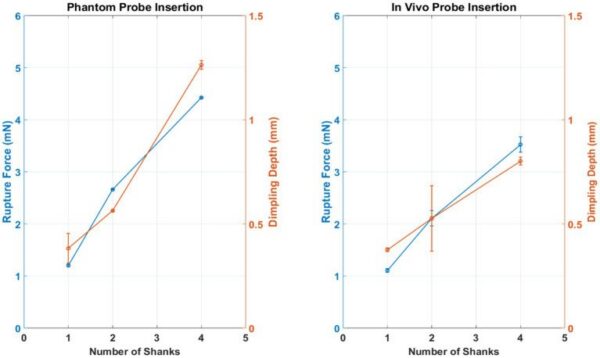
Researchers developed a reproducible multi-layer brain-mimicking phantom that replicates the dimpling and rupture forces of rodent pia mater and dura mater during neural interface implantation, built from a 0.5% agarose skin layer, a 1.01% agarose pia layer and a pre-stretched PVC dura layer assembled in a simple benchtop process. Tested with a cantilever force system on microwires of 12–100 µm diameter (tungsten and stainless steel, various tip geometries) and segmented silicon probes, the phantom produced results within the range of in vivo Sprague-Dawley rat data with significantly lower insertion variability than in vivo testing. The authors say its modular design — layer thickness and stiffness can be tuned for different species or devices — makes it a low-cost early screening platform that can accelerate neural implant development while reducing animal use.

32-Channel Event-Based Analog Front End Compresses Neural Signals Adaptively

Researchers have built a 32-channel event-based analog front-end chip in 180 nm CMOS that encodes biosignals in two modes, pulse frequency modulation and adaptive asynchronous delta modulation. The chip retunes its output data rate in real time to the envelope of the incoming signal, giving high compression and, the authors argue, a route to wireless transmission and online processing of neural signals in brain-computer interfaces.

Federated Graph Framework Fuses EEG and EMG to Decode Motor Intent

A team writing in Computing and Informatics has proposed FSDFGL, a federated graph learning framework that folds EMG into EEG when the graph is built and then shares only structural information between clients, avoiding the accuracy loss that comes with exchanging heterogeneous features. The design targets three problems in hybrid BCI work at once: the low spatial resolution of EEG, datasets that are small and privacy-sensitive, and the uneven data distributions federated learning has to cope with. Experiments on the TAN dataset show an advantage in identifying complex motor intentions.

Preprint: Event-Based Neural Decoding for Neuroprosthetic Motor Control

A preprint proposes an event-based neural decoding method for neuroprosthetic motor control, arguing that deep-network-driven prostheses are limited by high latency, energy use and space — wired links restrict mobility and wireless links restrict information throughput, while spiking networks trade off task performance for low-power inference. The authors' event-based gated recurrent unit generates a sparse communication pattern with graded spikes, outperforming classical spiking neural networks on task performance, and pairs with efficient training and sparse inference to enable on-device neural decoding under latency, energy and space constraints. The study has not been peer reviewed.
Preprint: Learning Residual Kinematic Corrections for Continuous Neural Decoding via Reinforcement Learning

A preprint proposes a two-stage CNN-LSTM-RL framework that uses reinforcement learning to apply residual kinematic corrections to the output of a CNN-LSTM continuous motor imagery decoder. The RL agent is trained offline, without direct EEG input, to optimize motion accuracy against a target trajectory. Compared with CNN-LSTM alone, CNN-LSTM-RL lifted the 2D mean correlation from 0.5076 to 0.7181 and the VR-scene correlation from 0.6420 to 0.7780, cutting RMSE by 40.2% and 38.2% respectively. The authors say correcting kinematic error through offline residual RL strengthens 3D BCI motor imagery decoding without additional neural data; the study has not been peer reviewed.
A Novel Deep Learning Approach for Privacy-Preserving Encoded EEG-Based BCIs with Clinical LLM Applications

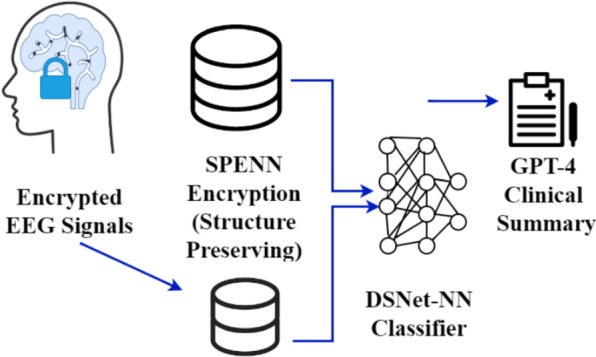
The study presents DSNet, a deep denoising structure-preserving neural encoding network that classifies privacy-preserving encoded EEG without decryption. Common spatial pattern (CSP) features are converted to irreversible neural codes — an irreversible neural transformation designed for privacy rather than a formal cryptographic guarantee — and two deep-learning architectures (a feedforward network and a recurrent RNN) classify in the encoded feature space. On public datasets, DSNet-NN exceeded 87% accuracy for every subject, outperforming the RNN variant and baselines while staying resilient to simulated privacy attacks; the study also integrated GPT-4 to generate clinical-style summaries from model outputs.

Nuclear Electromagnetic Pulse Inhibits Rat Primary Motor Cortex LFP Bands

A study examining the potential brain risk of BCI electrodes exposed to strong electromagnetic fields applied nuclear electromagnetic pulse (NEMP) irradiation to rats with implanted brain electrodes and recorded local field potentials (LFPs) in the primary motor cortex (M1). At 200 kV/m, NEMP inhibited the alpha and delta LFP bands in resting rats, an effect linked to front-gate coupling between the pulse and the electrode, with the coupled current stimulating the brain and affecting its state of consciousness; the authors frame the work as early animal data for BCI electromagnetic protection.

Implanted Neural Interfaces Track Glioma Progression in Mice

Researchers at Coherence Neuro Global, Inc. and other institutions have used implanted neural interfaces to track glioma growth in freely behaving mice over time. Across several mouse strains and glioma models, tumor progression went with elevated gamma-band activity in the tumor microenvironment, and machine learning models read tumor burden off the chronic recordings, with gamma trajectories predicting individual growth rates. The work was posted to bioRxiv on July 9, 2026, and has not been peer reviewed.

Preprint: Functional Ultrasound Imaging Through a Human Cranial Window Maps Motor Effector Encoding

A preprint shows that functional ultrasound imaging (fUSI), read through an acoustically transparent cranial-window implant, reliably resolved multi-body-part and single-digit movement encoding in one participant's primary sensorimotor cortex, with maps consistent with classical somatotopy and single-trial decoding supported across sessions; analysis of key decoding voxels suggested different Brodmann areas encode single-digit movement differently. The researchers argue fUSI can map motor representations at submillimeter resolution, filling a key gap in humans between invasive electrophysiology and non-invasive blood-flow imaging; the work has not been peer reviewed.

Preprint: Effects of EEG Preprocessing on Channel-Wise Attention in Visual EEG Decoding

A preprint uses the Adaptive Thinking Mapper (ATM) model to empirically assess how EEG preprocessing strategies — a baseline MVNN-only pipeline versus a full cleaning pipeline integrating ICA and notch filtering — affect channel-attention representations in visual EEG decoding, using cross-generalization, noise-robustness, and spectro-temporal ablation analyses and examining the structural correspondence between data-driven attention weights and neurophysiological reference networks (GPDC, PDC, DTF). The researchers report the full pipeline suppressed non-neural artifacts such as frontal noise while maintaining comparable decoding accuracy and baseline robustness, and the learned attention spatial organization stayed stable across pipelines. The work has not been peer reviewed.
© 2026 BCIwiki.com Digest Topics Tips Subscribe Revisions About