

Motor decoding translates neural signals from the motor cortex into limb movement intentions, one of the most mature BCI applications. This topic tracks decoding research from fine finger movements to whole-body actions, including online cursor control, robotic arm operation, and gait restoration.
July 2026
Ghost-LENet Tops 80% on Motor Imagery EEG Using a Few Thousand Parameters
Researchers have built Ghost-LENet, a lightweight convolutional network that classifies motor imagery EEG at 82.18% on the BCI Competition IV-2a dataset and 83.05% on IV-2b using only a few thousand trainable parameters. The design combines dilated temporal convolutions, a stationary wavelet transform, dynamic residual fusion and Ghost modules, holding accuracy while cutting model complexity for BCI hardware with little compute to spare.
Brain-Computer Interface for Smart Home Design Based on Machine Learning and Deep Learning Techniques
Researchers built an EEG-based brain-computer interface for smart-home control using a motor imagery dataset from 25 subjects collected with a 64-channel BCI2000 system. Features extracted from a CNN's convolutional layers trained SVM, CNN and LDA classifiers that remove the noise and overlap behind misclassifications and map selected features onto categories an Arduino UNO can act on; the three models reached overall accuracies of 99%, 96% and 99%. The authors say the scheme could let users control smart-home devices with brainwaves, potentially helping older adults and people with limited mobility.
UW Team Maps Uneven Reach Coding in Monkey Motor Cortex to Guide BCI Implant Placement
Researchers at the Center for Neurotechnology at the University of Washington recorded from two male monkeys with high-density laminar microelectrode arrays and found that reaching-related activity in frontal motor cortex is unevenly distributed both across the cortical surface and with depth. Target-direction information varied sharply between neural populations, but the amount of task information a population carried predicted which populations shared similar temporal dynamics. The authors say the pattern should inform where electrodes are placed in future brain-computer interface implants.
CMU Trains User and Decoder Together, Letting BCI Novices Reach 86% Cursor Accuracy
Carnegie Mellon's Sensory-Guided Training Speeds Motor Imagery BCI Learning
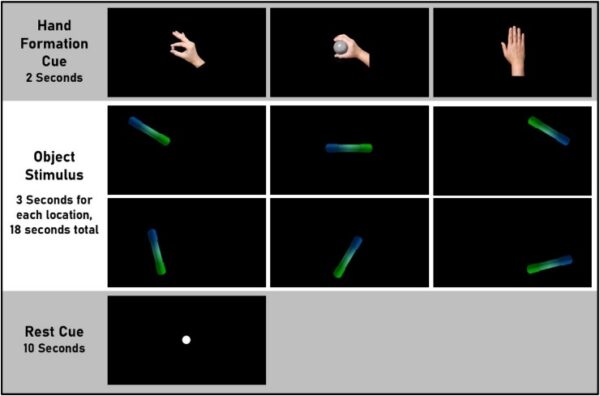
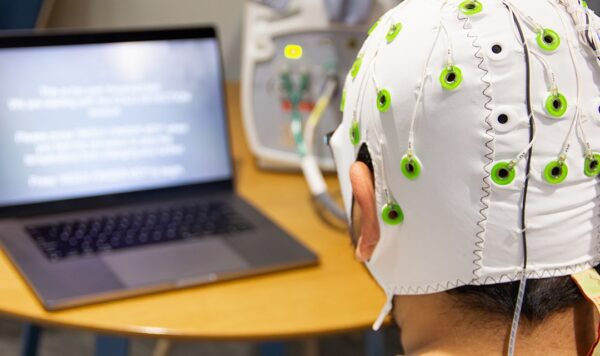
Carnegie Mellon University researchers report a sensory-guided joint learning framework that pairs human motor learning with adaptive machine learning to train motor imagery BCI users. Across 31 BCI-naive participants, average online discrete accuracy was 86.0% in one dimension and 77.5% in two, with continuous control accuracy at 77.5% and 66.9% respectively; tactile guidance reduced how much users had to explore and accelerated neural adaptation, while sample reweighting kept decoder updates aligned with the learner's own trajectory. The authors frame the approach as a shift from passive calibration to active human-machine joint learning; the study appears in Nature Communications.
Federated Graph Framework Fuses EEG and EMG to Decode Motor Intent
A team writing in Computing and Informatics has proposed FSDFGL, a federated graph learning framework that folds EMG into EEG when the graph is built and then shares only structural information between clients, avoiding the accuracy loss that comes with exchanging heterogeneous features. The design targets three problems in hybrid BCI work at once: the low spatial resolution of EEG, datasets that are small and privacy-sensitive, and the uneven data distributions federated learning has to cope with. Experiments on the TAN dataset show an advantage in identifying complex motor intentions.
Preprint: Event-Based Neural Decoding for Neuroprosthetic Motor Control
A preprint proposes an event-based neural decoding method for neuroprosthetic motor control, arguing that deep-network-driven prostheses are limited by high latency, energy use and space — wired links restrict mobility and wireless links restrict information throughput, while spiking networks trade off task performance for low-power inference. The authors' event-based gated recurrent unit generates a sparse communication pattern with graded spikes, outperforming classical spiking neural networks on task performance, and pairs with efficient training and sparse inference to enable on-device neural decoding under latency, energy and space constraints. The study has not been peer reviewed.
Preprint: Learning Residual Kinematic Corrections for Continuous Neural Decoding via Reinforcement Learning
A preprint proposes a two-stage CNN-LSTM-RL framework that uses reinforcement learning to apply residual kinematic corrections to the output of a CNN-LSTM continuous motor imagery decoder. The RL agent is trained offline, without direct EEG input, to optimize motion accuracy against a target trajectory. Compared with CNN-LSTM alone, CNN-LSTM-RL lifted the 2D mean correlation from 0.5076 to 0.7181 and the VR-scene correlation from 0.6420 to 0.7780, cutting RMSE by 40.2% and 38.2% respectively. The authors say correcting kinematic error through offline residual RL strengthens 3D BCI motor imagery decoding without additional neural data; the study has not been peer reviewed.
Lower-Limb Motor Imagery Shows Lateralized EEG
An EEG study finds that unilateral lower-limb motor imagery and motor execution elicit similar lateralized neural activity patterns, extending a lateralization pattern long known in the upper limb to the lower limb.
Preprint: Facial Movements in Rodents Predict Cortical Activity and BCI Performance
Harvard Medical School researchers report that spectral analysis of facial movements in rodents predicts both cortical activity and performance on brain-machine interface tasks, a possible biological basis for better neural prosthetic control. The work is a preprint and has not been peer reviewed.
Preprint: Functional Ultrasound Imaging Through a Human Cranial Window Maps Motor Effector Encoding
A preprint shows that functional ultrasound imaging (fUSI), read through an acoustically transparent cranial-window implant, reliably resolved multi-body-part and single-digit movement encoding in one participant's primary sensorimotor cortex, with maps consistent with classical somatotopy and single-trial decoding supported across sessions; analysis of key decoding voxels suggested different Brodmann areas encode single-digit movement differently. The researchers argue fUSI can map motor representations at submillimeter resolution, filling a key gap in humans between invasive electrophysiology and non-invasive blood-flow imaging; the work has not been peer reviewed.
June 2026
LEGEND Decodes Tri-Modal Signals for SCI
A study published in Computers in biology and medicine introduces LEGEND, a neural-decoding architecture that jointly models cortical EEG, spinal ESG, and peripheral-muscle EMG for a neural bypass in spinal cord injury rehabilitation. The model encodes the three signal modalities in Lorentz hyperbolic space, connects 51 channel nodes through a signed tri-layer phase-locking-value graph, and refines the representation with graph attention. Under strict leave-one-subject-out evaluation on the Steele dataset, LEGEND achieved 56.51%±12.27% accuracy, 23.4 percentage points above EEGNet. The researchers argue that hyperbolic representations can capture complex relationships across the motor hierarchy, providing a computational foundation for rehabilitation decoding that links brain, spinal, and muscle activity.
Anhui Hospital Registers 60-Patient BCI Trial for Post-Stroke Motor Dysfunction
The trial compares motor imagery BCI plus standard rehabilitation against standard rehabilitation alone in stroke patients with hemiplegia, tracking limb motor function and daily living ability. It planned to enroll 60 participants, 30 per arm, with the first participant enrolled on August 10, 2022; the registry now lists the study as completed. Beyond motor scales, the primary outcomes include functional connectivity and a lateralization index measured with fNIRS, probing brain-network changes rather than behavior scores alone.
Exploring Synergies in Brain-Machine Interfaces: Compression vs. Performance
Using implantable brain-machine interface (iBMI) data from a non-human primate two-dimensional finger task, the study tests whether brain-muscle synergies improve decoding performance and generalization. Principal component analysis (PCA), demixed PCA (dPCA) and non-negative matrix factorization (NMF) all compressed brain-muscle data effectively with minimal decoding-accuracy loss, but none improved performance through denoising or enhanced cross-task generalization. The authors conclude that extracting synergies alone does not yield a better or cleaner control space for linear decoding, and call for larger samples and more muscle channels.
NeuroXess Says Two Paralyzed Patients Played Brain-Controlled Chess 800 km Apart

Bispectral EEG Separates Grasping Stages
A study published in Computers in biology and medicine applies cross-frequency bispectral analysis to nonlinear EEG activity during the planning and execution of natural reach-to-grasp movements. The researchers extracted magnitude- and phase-based features from complex bicoherence matrices and assessed them through classification, permutation-based feature selection, and within-subject statistics. Execution showed stronger nonlinear coupling than planning, led mainly by beta- and gamma-driven interactions. Decoding precision versus power grasps performed similarly across the two stages, suggesting that grasp-type representations emerge during planning and persist into execution. Compared with conventional analytical baselines, bispectral features provided consistent advantages for grasp-type discrimination and multiclass classification. The findings offer a new set of motor-decoding features for future brain-computer interface and neuroprosthetic research.
ChiCTR Trial Asks If Embodied Multisensory Training Sharpens Motor-Imagery Decoding
The Chinese Clinical Trial Registry (ChiCTR) logged a new study on June 5, 2026 under the number ChiCTR2600126291, testing whether a period of multisensory embodied training beforehand alters the neural representation of imagined movement and the decoding performance of a brain-computer interface (BCI). Recruitment has not yet begun.
Northwestern Polytechnical University Registers BCI Stroke Rehabilitation Trial With 4 Arms
A newly registered trial tests a brain-computer interface in post-stroke rehabilitation across 4 parallel arms: full cross-domain (emotion-cognition-motor) adaptive training, integrated cognitive and motor task training, single-dimension motor training, and conventional rehabilitation. Each arm plans 22 participants, 88 in total. It enrolls patients aged 30 to 80 with a first cerebral infarction or hemorrhage 3 months to 1 year earlier, unilateral hemiplegia, and upper-limb Brunnstrom stage II to IV. The primary outcome is a motor function score; secondary outcomes include EEG motor imagery event-related synchronization/desynchronization, prefrontal theta/alpha power ratio, and EEG-fNIRS coupling.
May 2026
sEEG Study Finds Motor Imagery Activity Shifts by Task Stage and Frequency Band
Intracranial recordings from ten epilepsy patients show that neural activity during cued limb motor imagery changes with the phase of the task: low-frequency (8-30 Hz) activity was mostly suppressed during preparation and switched to activation once imagery began, while high-frequency (60-115 Hz) responses were stronger, more widely distributed, and at some contacts followed an activation-then-suppression sequence. The stereoelectroencephalography (sEEG) data indicate that responses are not uniform but shift with task stage and brain region, which the authors tie to stage-aware feature design for BCIs and to neurorehabilitation.
Chongqing Team's Manifold Adversarial Network Cuts Per-User Calibration in EEG BCIs
Researchers in Chongqing, a municipality in southwestern China, have proposed SPD-DANN, a method that aims to decode motor imagery, the brain signals produced when a person imagines moving a hand or foot, in new users without per-person calibration. Because EEG varies between people and drifts over time, BCIs typically need fresh data from each new user. SPD-DANN represents EEG features on a symmetric positive definite (SPD) matrix manifold, a mathematical space that better fits their nonlinear structure, and uses adversarial learning to extract features shared across individuals. Tested on 4 BCI datasets, the method outperformed several existing unsupervised domain adaptation techniques, the researchers said. The abstract gives no accuracy figures, and all tests were offline.
Xuzhou Rehabilitation Hospital Completes Stroke BCI Trial With Modified Constraint Therapy
A trial at Xuzhou Rehabilitation Hospital Affiliated to Xuzhou Medical University paired a motor imagery brain-computer interface with modified constraint-induced movement therapy to restore upper-limb function after stroke. The hospital is a rehabilitation specialty facility affiliated with Xuzhou Medical University, and the combined approach is meant to test whether a BCI adds benefit on top of established rehabilitation training. It planned 40 participants, 20 in the combined group and 20 in the control group, with the first patient enrolled on December 24, 2025; the registry now lists the study as completed. The primary endpoint is the Fugl-Meyer Assessment for Upper Extremity, with the Wolf Motor Function Test and modified Barthel Index as secondary measures. Funding comes from the New Round of Xuzhou "Pengcheng Talent Program" — High-level Healthcare Talent Recruitment and Development Project, project number 2025TD14. No results are posted, so whether the combined approach beats constraint therapy alone remains unknown.
April 2026
Dynamic Source Domain Selection: An Adaptive EEG Transfer Learning Framework
To reduce negative transfer in motor imagery BCIs, the study presents an adaptive dynamic transfer learning framework that decomposes EEG time-frequency features via wavelet convolution, matches source and target samples through a dynamic transfer attention module, and uses a joint loss to shrink marginal and class-conditional differences. On BNCI2014001, BNCI2014002 and BNCI2015001 it reached 78.78%, 82.11% and 78.19% accuracy, averaging 0.13% to 27.7% above baseline algorithms.
Enhancing the Capability and Accuracy of Motor Imagery Classification: A Deep Neural Network-Powered Multifaceted Strategy Model
Researchers propose DPMS-Net, a deep network that uses dynamic convolution to mine discriminative cues across temporal, spatial and frequency dimensions, combines channel and temporal attention, and adds a spectral-domain analysis component to surface subtle oscillatory features hidden in the EEG spectrum. On the BCI Competition IV 2a and 2b datasets it reached subject-dependent accuracies of 83.93% and 88.38%, and 67.67% on a self-collected stroke-patient dataset. The authors say its efficient decoding and robustness suit neurorehabilitation BCI systems.
March 2026
China Trial Registry Lists BCI Study for Post-Stroke Functional Recovery
A new entry in the Chinese Clinical Trial Registry covers a study using brain-computer interface technology for functional recovery after stroke. The record, ChiCTR2600120924, was posted on March 23, 2026, and lists its status as not yet recruiting. The registry listing carries only bibliographic details, so the trial design, sample size and sponsor remain undisclosed.
Brain implant restores two-handed typing at 22 words per minute
Two people with tetraplegia typed on a virtual two-handed QWERTY keyboard simply by attempting finger movements, which electrodes implanted in the brain decoded into keystrokes. Typing speed was set by the users and reached 110 characters per minute, or 22 words per minute, with a word error rate of 1.6%, which the authors say resembles able-bodied typing accuracy. Accurate decoding required as few as 30 calibration sentences, and a 5-gram language model improved sentence output. One participant has amyotrophic lateral sclerosis (ALS) and the other a spinal cord injury.
February 2026
MSARFNet Tops 84% Accuracy on Two Motor Imagery Benchmarks
Researchers have proposed MSARFNet, a multi-scale attention-based reconstruction fusion network that reached average classification accuracies of 84.64% and 87.96% on the BCI Competition IV 2a and 2b motor imagery datasets, outperforming several existing methods. The network extracts spatio-temporal features through parallel multi-scale convolutional branches and fuses them with an attention mechanism to sharpen transient motor-imagery responses, targeting the non-stationary EEG signals and inter-subject variability that make MI decoding unreliable. The study was published on February 27, 2026, in IEEE Journal of Biomedical and Health Informatics.
January 2026
Neuralink Expands Its Global BCI Trial Cohort to 21 Participants
Neuralink said its clinical trials worldwide now include 21 participants. After making surgical and postoperative changes in response to thread retraction in the first recipient, the company reported higher signal quality in 18 of the next 20 participants. The figures come from a company update rather than a peer-reviewed clinical report.
September 2024
Synchron Reports 12-Month COMMAND Results in Six U.S. Participants
Synchron reported 12-month results from the U.S. COMMAND early feasibility study in six people with severe chronic bilateral upper-limb paralysis. All participants met the primary safety endpoint of no device-related serious adverse event causing death or permanent increased disability, and motor-intent signals were converted into digital actions throughout the study. The disclosure was not a two-year pivotal-trial report.
November 2021
FDA Grants Breakthrough Status to Blackrock Neurotech's MoveAgain BCI
The FDA granted Breakthrough Device designation to Blackrock Neurotech's MoveAgain BCI System on November 16, 2021. The investigational system combines an implanted array, neural decoding and wireless output with the goal of allowing people with severe paralysis to control digital and assistive devices. The designation can expedite development and review but is not market approval.