/ EN

Motor Decoding

85 entries

Motor decoding translates neural signals from the motor cortex into limb movement intentions, one of the most mature BCI applications. This topic tracks decoding research from fine finger movements to whole-body actions, including online cursor control, robotic arm operation, and gait restoration.

August 2026

CNN bi-LSTM Hybrid Decodes Motor-Imagery EEG

The preprint was posted to arXiv on August 13, 2026, proposing a hybrid deep-learning architecture that combines a convolutional neural network with a bidirectional long short-term memory network to decode motor-imagery EEG. The author notes that motor-imagery brain-computer interfaces are seen as a promising route to flexible communication between the brain and external devices, particularly for people affected by stroke or neurodegenerative disorders, but that reliable decoding remains difficult because EEG recordings carry substantial noise and relate to underlying brain activity in complex, weakly informative ways. In the proposed architecture, the CNN learns high-level spatial and temporal representations directly from raw MI-EEG recordings, while the bi-LSTM models temporal dependencies among the extracted features. The approach was evaluated on both a publicly available dataset and a privately acquired dataset collected with an EEG acquisition system, with robust performance reported on two- and three-class motor-imagery classification and promising subject-independent decoding across the methods compared. The work is a preprint and has not been peer reviewed.
Crossmodal Congruency Test Tells Sensory Feedback Types Apart at the Knee but Not the Foot

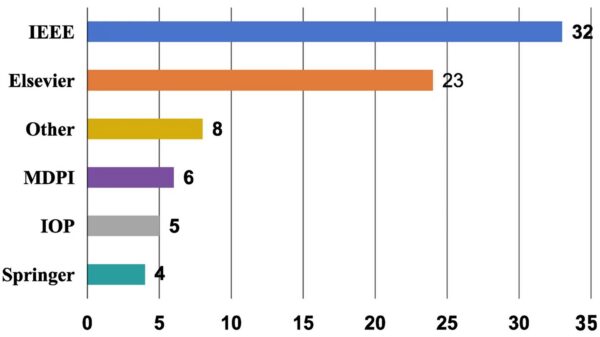
A University of Pittsburgh team (Bose et al.) tested the crossmodal congruency effect (CCE) task in 15 able-bodied volunteers to see whether it can quantify how intuitive lower-limb sensory feedback feels. At the knee, the task distinguished more natural pneumatic stimulation from less natural electrical stimulation; at the foot, it could not tell the same stimuli apart. The study was posted to bioRxiv on August 10, 2026. Lower-limb amputees often have balance and gait problems because their prostheses give no somatosensory feedback; electrical-stimulation neuroprostheses can partly restore sensation, but there has been no way to quantify how intuitive that sensation is. The authors stress that external factors affecting the CCE must be identified before it can be used with amputees.

BLCU Team's Falsifiable Substitution Test Keeps 0.968 AUC After Target Events Are Removed

Brain-computer interface decoders can guess the right label using information unrelated to the target mental state. A team at the School of Psychology, Beijing Language and Culture University (BLCU), proposes a falsifiable substitution-test standard: candidate evidence must persist in disjoint data, survive capacity-matched substitutions of physical organization or listener templates, and remain testable after target events are excluded. Across six EEG datasets (41 participants), averaging four neural-speech margin metrics brought 5-second decoding to what the authors call a leading level; in two hierarchical interfaces, parent-stream error scores kept AUCs of 0.968 and 0.965 after all target-command events were excluded. The framework offers a test for attributing evidence in neuroscience and BCI.

Medial wall ECoG signals aid finger motor decoding

Published in Journal of Neural Engineering on August 7, 2026, the study analyzed human electrocorticography data from four subjects to investigate medial wall contributions to finger movement decoding. Significantly above-chance finger movement detection was observed across multiple medial wall subregions, with local motor potentials and oscillatory power in the 8-12 Hz and 12-34 Hz bands contributing most strongly. Feature dynamics shared key properties with primary motor cortex, including pre-movement desynchronization, while also exhibiting region-specific positive or negative LMP modulations. Medial wall channels in two subjects enabled significant differentiation between individual fingers, and one subject showed decoding of both contralateral and ipsilateral finger movements, though this is a single case and preliminary.

Utrecht Team Finds ECoG Grids Can Shrink up to 94% without Losing Decoding Accuracy

Researchers at University Medical Center Utrecht's Brain Center in the Netherlands and collaborators exhaustively tested every rectangular subgrid inside 32-, 64- and 128-channel ECoG arrays recorded from nine people with epilepsy. Grid area could be cut by 75% to 94% without meaningful loss of hand-movement classification accuracy, as long as the remaining electrodes sat over informative cortex; below a critical area of about 60 mm², performance fell sharply. The study appeared in the journal Neuroinformatics on August 7, 2026.

ReCIL: Rehearsal-Based Class Incremental Learning for Cross-Subject Motor Imagery Classification

Researchers propose ReCIL, a rehearsal-based class incremental learning method for cross-subject motor imagery classification that lets a model learn new MI classes sequentially without retraining from scratch. Using Euclidean alignment to reduce cross-subject EEG distribution shift and global-local replay to preserve earlier-task knowledge, ReCIL achieved a good balance between plasticity and stability across three public MI datasets. The authors report it as the first study of cross-subject class incremental learning for MI classification.

Preprint: NeuroPB Scales Neural Decoding with Pretrained Behavioral Representations

A preprint introduces NeuroPB, a framework that scales neural decoding by transferring pretrained behavioral representations: a motion encoder is first pretrained on large-scale motor behavior data, then limited paired neural-behavior recordings align neural activity to the behavioral representation space, and a neural encoder with a lightweight motor decoder reconstructs continuous movement. The researchers report that behavioral pretraining lifted center-out trajectory decoding R² by 11% and random-target task performance by 8%, that pretraining on robotic trajectories matched macaque-trajectory performance, and that only 10% calibration was needed to match training from scratch. The study is a preprint and has not been peer-reviewed.

AutoMI: Hands-Free Motor Imagery EEG Classification via LLM Multi-Agents

The study presents AutoMI, a framework that uses LLM multi-agents to automatically and rapidly iterate on motor imagery EEG classification models, combining a Q-learning policy with deterministic rules and integrating planning, execution and output agents with predefined tools, plus experience tracking and rollback. Models built by AutoMI reached 77.62%, 78.08% and 83.02% accuracy on the IV2a, OpenBMI and ECUST-MI datasets — up 18.42%, 9.27% and 19.25% over automated optimization algorithms.

2-Block EEG Gait Decoder Reaches 70.5 ms Latency

This preprint reports a 2-block lightweight architecture for real-time EEG gait decoding that the authors say enables closed-loop lower-limb exoskeleton control. In closed-loop deployment, the study reports a 55.3% gait initiation success rate with Rex assistance and 52.7% volitionally, with a mean end-to-end processing time of 70.5 ms (±41.5). The authors add that the manuscript was accepted for publication at the 2026 IEEE International Workshop on Machine Learning for Signal Processing (MLSP 2026).

Graph Convolutional Network-Based Harmonization of EEG for Cross-Dataset Transfer in MI-BCI

The study presents a spatial harmonization framework built on a two-layer graph convolutional network (GCN) that maps heterogeneous EEG recordings onto a unified physical electrode layout while preserving motor imagery information, addressing electrode-configuration mismatches across MI-BCI datasets. Each trial is modeled as a graph so the GCN captures spatio-temporal relations, and harmonized EEG showed lower error than spherical spline interpolation while retaining the key temporal-spectral-spatial features. Combining real and harmonized EEG lifted EEGNet accuracy from 56.57% to 66.20% and FBCNet from 61.96% to 72.54% in within-session classification on Dataset A, and supported source-only cross-dataset transfer and target-domain fine-tuning.
July 2026

A Multi-Paradigm Longitudinal EEG Dataset Including 'Sixth-Finger' and 'Affected-Hand' Motor Imagery of Stroke Patients

Researchers released a multi-paradigm longitudinal EEG dataset from 24 stroke patients, covering a novel 'sixth-finger' motor imagery paradigm and affected-hand motor imagery. The dataset spans the full pre-training, post-training and follow-up stages and includes raw EEG, preprocessed data and patient clinical information. Preliminary analysis with classical classifiers (CSP+SVM, CSP+LDA) kept average cross-paradigm classification accuracy at roughly 85%–86%.

Preprint: Neural SS-DMP Decoder Holds Accuracy Longer as Recordings Drift

Brown University researchers have posted a preprint proposing Neural SS-DMP, a movement decoder that does not output hand coordinates directly: it first infers a compact set of parameters describing the motion the user intends, then hands them to a generator governed by physical dynamics that draws the full trajectory, so decoded output stays within motion a body can actually produce. The generator is tuned per person, blending general movement dynamics with the individual's own patterns estimated from training data, and the authors say that across two kinds of neural recording the model came out ahead of strong existing methods on both accuracy and trajectory smoothness while holding performance longer on recordings made after training ended. The study is a preprint, has not been peer reviewed, and its results come entirely from offline data rather than live control.

EPFL launches clinical study of brain-controlled spinal cord stimulation for lower-limb recovery

Ecole Polytechnique Fédérale de Lausanne (EPFL) has launched a clinical study evaluating the preliminary safety and effectiveness of a cortical recording device (ECoG) combined with lumbar targeted epidural electrical stimulation (EES) to restore voluntary lower-limb motor function in participants with chronic spinal cord injury and mobility impairment. The study aims to establish a direct bridge between motor intention and the spinal cord below the lesion, potentially improving or restoring voluntary leg control and promoting neurological recovery when combined with neurorehabilitation.

Hospices Civils de Lyon trial decodes motor imagery for stroke rehab

Hospices Civils de Lyon has registered a clinical study in France to decode motor imagery from non-invasive brain recordings as a prerequisite for innovative motor rehabilitation therapies. Combining MRI, MEG, and EEG, the study will design a subject-specific neurophysiological model, noting that standard BCI approaches neglect transient features such as beta bursts. The approach will first be validated in healthy subjects, then assessed for feasibility in stroke patients.

Preprint: EEGForceFusion for Subject-Independent Grasp Force Decoding

A preprint proposes EEGForceFusion, a hybrid EEG decoding framework that jointly models continuous and tokenized representations for grasp-force decoding, where continuous decoding is limited by complex temporal dynamics, high inter-subject variability and poor generalization. The framework combines convolutional-recurrent representation learning, quantized tokenization and Transformer-based temporal modeling in a unified fusion regression architecture to capture both fine-grained neural structure and long-range temporal dependencies. Under strict leave-one-subject-out cross-validation on the WAY-EEG-GAL dataset, it reached an offline R² of 0.817 and a simulated real-time R² of 0.793, with latency suited to real-time deployment. The study has not been peer reviewed.

Preprint: Simultaneous Decoding of Kinetic and Kinematic Movement Parameters by Noninvasive Brain Imaging

A preprint proposes three regression models — a partial least squares regressor, a multilayer perceptron and an attention-based regressor — to decode multiple kinematic and kinetic parameters of grasp-and-lift tasks simultaneously from EEG signals. Evaluated on the WAY EEG GAL dataset, the attention-based regressor performed best with an R² of 0.8 and 29.2 ms latency, markedly improving simultaneous multi-parameter decoding, though per-parameter decoding declined; the multilayer perceptron was more consistent across the two settings but less accurate (R² = 0.49). The study has not been peer reviewed.

ATCNet-CIAM Hits 87.96% on BCI IV-2b in Multi-Session Motor Imagery Decoding

ATCNet-CIAM, a decoder pairing temporal convolution and channel attention with a CIAM module, reached 86.32% accuracy on BCI IV-2a and 87.96% on BCI IV-2b under the standard protocol, its authors report, along with 89.46% and 83.64% on the within-session two-class and three-class WBCIC-MI tasks. Motor imagery EEG is the workhorse signal for non-invasive brain-computer interfaces, but decoding it robustly across sessions and subjects remains the central obstacle. The manuscript was posted to arXiv on July 26, 2026 and has not been peer reviewed; it has been accepted for the International Conference on Intelligence Systems and Robotics for Sustainable Development (ISRSD) 2026.

BCI Paradigm Measures Auditory Frequency Discrimination Without Behavioral Reports

Researchers ran 11 healthy participants through a personalized rapid serial auditory presentation paradigm and decoded the resulting weak auditory evoked responses trial by trial with a new model, the Multi-Scale Spatial-Temporal Dual Attention Network (MS-STAMNet), reaching an unweighted average recall of 69.67±6.12% and an AUC of 0.7618±0.07, ahead of the EEGNet and PLNet baselines. Conventional measurement of the auditory frequency difference limen (FDL) depends on participants actively reporting what they hear, which leaves it open to subjective bias. Regression analysis found that neural decoding and behavioral performance came apart, suggesting the model picks up frequency deviations too small to reach conscious report.

MCSS Framework Tops 98% Motor Imagery Accuracy While Resisting EEG Reconstruction

A new study proposes a hybrid Markov chain-spatial statistical (MCSS) machine learning framework for classifying motor imagery EEG, reporting classification accuracy above 98% for every subject on BCI Competition III datasets IVa and IVb when paired with a support vector machine. Because the method discretizes signals into symbolic states and works from transition probability matrices rather than raw traces, the original neural waveforms are hard to reconstruct; the authors report that membership inference attacks stayed near chance level and that feature inversion attacks produced low reconstruction similarity.

Sigmoidal Decoding of Locomotion Speed in Mouse M1

The study shows mouse primary motor cortex encodes locomotion speed through a sigmoidal state-transition mechanism carried by two functionally distinct spiking populations, a framework that also extends to local field potential (LFP) band power. Using chronic 32-channel laminar arrays in 8 mice, the team recorded 5,889 single units across 384 channels and clustered them into speed-positively related (70.8%) and speed-inversely related (29.2%) groups sharing a speed threshold of about 2.3 m/min. The minority speed-inversely related population decoded speed more accurately via inverse-sigmoid transformation, generalizing across animals. The authors say the findings point toward stable, calibration-light brain-machine interface design.

NeuroXess Registers Fully Implanted Wireless Functional BCI Study for Upper-Limb Functional Replacement

NeuroXess registered a prospective, multicenter, single-arm trial (NCT07720882) enrolling people with tetraplegia caused by spinal cord injury to evaluate the safety and clinical efficacy of an implantable BCI system for compensatory hand movement and upper-limb functional replacement. The study is at the registration stage with no results yet.

Adding EMG to Hybrid BCI Expands Command Space from 15 to 60 Targets

Researchers have paired steady-state motion visual evoked potentials (SSMVEP) with electromyography (EMG) in a hybrid brain-computer interface, using a parallel architecture to expand the command space from 15 targets to 60. The multimodal setup reached an information transfer rate of 62.33 bits/min, against 42.49 bits/min for the best single-modality condition. Deep-learning decoding of the two signal streams held classification accuracy steady while lowering the effort required of users with severe motor impairment.

Ghost-LENet Tops 80% on Motor Imagery EEG Using a Few Thousand Parameters

Researchers have built Ghost-LENet, a lightweight convolutional network that classifies motor imagery EEG at 82.18% on the BCI Competition IV-2a dataset and 83.05% on IV-2b using only a few thousand trainable parameters. The design combines dilated temporal convolutions, a stationary wavelet transform, dynamic residual fusion and Ghost modules, holding accuracy while cutting model complexity for BCI hardware with little compute to spare.

Targeting Grasp-Related Cortical Areas for Intracortical Brain-Machine Interfaces

For a C5 tetraplegic participant, the study integrated anatomical, functional and vascular imaging with preoperative 3D modeling to optimize placement of intracortical microelectrode arrays for grasp-related motor decoding. Anatomical MRI, diffusion-weighted imaging and task-based fMRI identified grasp-related cortex while avoiding vasculature and speech-critical regions; Quicktome software refined target selection using structural connectivity and functional activation data, and 3D-printed skull and cortex models supported surgical planning. Functional imaging highlighted the anterior intraparietal sulcus (AIP), ventral premotor cortex (PMv) and inferior frontal gyrus (IFG); arrays placed in AIP and PMv subregions 6v and 6r reached a combined classification accuracy of 96%.

Brain-Computer Interface for Smart Home Design Based on Machine Learning and Deep Learning Techniques

Researchers built an EEG-based brain-computer interface for smart-home control using a motor imagery dataset from 25 subjects collected with a 64-channel BCI2000 system. Features extracted from a CNN's convolutional layers trained SVM, CNN and LDA classifiers that remove the noise and overlap behind misclassifications and map selected features onto categories an Arduino UNO can act on; the three models reached overall accuracies of 99%, 96% and 99%. The authors say the scheme could let users control smart-home devices with brainwaves, potentially helping older adults and people with limited mobility.

UW Team Maps Uneven Reach Coding in Monkey Motor Cortex to Guide BCI Implant Placement

Researchers at the Center for Neurotechnology at the University of Washington recorded from two male monkeys with high-density laminar microelectrode arrays and found that reaching-related activity in frontal motor cortex is unevenly distributed both across the cortical surface and with depth. Target-direction information varied sharply between neural populations, but the amount of task information a population carried predicted which populations shared similar temporal dynamics. The authors say the pattern should inform where electrodes are placed in future brain-computer interface implants.
© 2026 BCIwiki.com Digest Topics Tips Subscribe Revisions About