中 / EN

Non-invasive BCI

212 entries

Non-invasive BCIs collect brain signals via scalp EEG, functional near-infrared spectroscopy, and other techniques without surgery. This topic covers EEG headsets, SSVEP spellers, motor imagery paradigms, and product and research developments in the field.
August 2026

WABO EEG Art Demo Yields 100+ Works at ChinaJoy

WABO (瓦博科技) says it ran a four-day neural art experience at the Snapdragon Pavilion during ChinaJoy 2026, held from July 31, 2026 to August 3, 2026 in Shanghai, producing more than 100 AI artworks with participants. Visitors wore a non-invasive EEG headband and viewed feedback derived from their signal state, with task-specific features feeding the artwork-generation process; the company says no private thoughts were read. The setup paired WABO's acquisition hardware with a Snapdragon X Elite laptop, keeping signal processing, model inference and image generation on the endpoint, which the company describes as a practical test of a neural-intent workflow outside a controlled development setting.

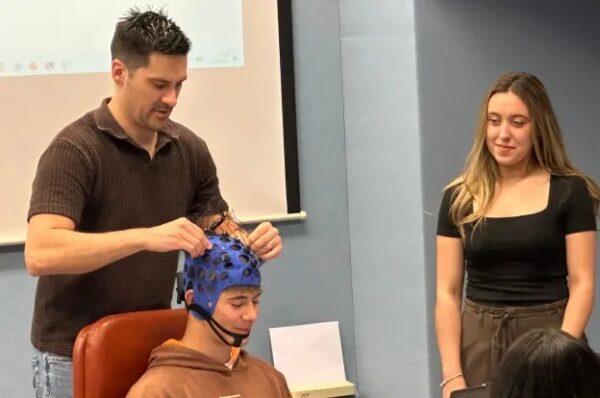
P300 BCI Reads Silently Chosen Digits in a Granada Classroom

A team from the University of Granada in Spain took a P300 brain-computer interface into a secondary school classroom, using a Bitbrain Versatile EEG system to identify a digit a volunteer had silently chosen, in front of nearly a hundred students. The demonstration grew out of a thesis by industrial electronic engineering student Marta Rodríguez Comino, supervised by Dr. Joaquín T. Valderrama and Dr. Iván López Espejo. The water-based portable EEG system decoded the attention signals using principal component analysis and a support vector machine.

2-Block EEG Gait Decoder Reaches 70.5 ms Latency

This preprint reports a 2-block lightweight architecture for real-time EEG gait decoding that the authors say enables closed-loop lower-limb exoskeleton control. In closed-loop deployment, the study reports a 55.3% gait initiation success rate with Rex assistance and 52.7% volitionally, with a mean end-to-end processing time of 70.5 ms (±41.5). The authors add that the manuscript was accepted for publication at the 2026 IEEE International Workshop on Machine Learning for Signal Processing (MLSP 2026).

BrainPatch Wins FCC Certification for US Market

BrainPatch, which makes non-invasive neurotechnology, says it has secured FCC certification, a step the company needed before it could sell its products in the US. In a blog update dated August 3, 2026, the firm said the approval confirms its technology meets US regulatory requirements and marks a milestone in its international expansion; it also brings the technology closer to buyers, partners and backers in the country it calls the largest consumer market.

CORTIVA Hits 73.5% Top-1 in EEG-to-Image Retrieval

CORTIVA, a candidate-score fusion framework for EEG- and MEG-to-image retrieval, reached 73.5% Top-1 and 95.3% Top-5 accuracy across ten participants on the 200-way THINGS-EEG2 benchmark, beating the strongest reported baseline by 10.3 and 5.4 percentage points. Instead of compressing heterogeneous visual supervision into a single embedding before ranking, the authors let separate decoding routes align to different visual targets and score the same candidate pool independently, merging only the temperature-scaled score vectors, which they say preserves complementary evidence; with a modality-specific encoder the same approach reached 42.4% Top-1 on THINGS-MEG. The work is a preprint and has not been peer reviewed.
July 2026

EasyBCI Plans BCI Preprocessing for Six Signals

This preprint introduces EasyBCI, which the authors say automates BCI preprocessing across six signal types with a two-phase large language model agent. The study is a preprint and has not been peer reviewed. On EEG with a fixed linear classifier, the authors report that all five EasyBCI backbones preserve more task-relevant separability than the manual pipeline, and that the system extends to five additional modalities spanning nearly three orders of magnitude in sampling rate.

Portugal's University of Aveiro Registers VR-Based BMI Trial in Spinal Cord Injury

The University of Aveiro in Portugal has registered a study (NCT07732868) testing a brain-machine interface protocol that pairs virtual reality with sensory feedback, visual, auditory and tactile, and/or an exoskeleton in people with spinal cord injury. Participants attend 12 monitored sessions, one a week, each lasting roughly one to two hours, moving a virtual avatar through motor imagery while non-invasive EEG records brain activity. The study focuses on changes in brain activity that track clinical improvement and on how information moves between brain regions, and it collects age, sex, injury level and type, time since injury, functional grade and neuropathic pain; it is at the registration stage with no results yet.

Researchers Build Wearable ExG Chip That Sends Data Through the Body at 10 Mbps

Researchers have designed a wearable readout chip that records EEG, EOG, EMG and ECG and transmits multichannel data at 10 Mbps using body channel communication, which uses the wearer's body as the transmission medium. The chip alternates between recording and transmitting in separate time slots, so noise from the transmitter does not contaminate faint brain signals, and dropping the bias electrode raised communication signal amplitude about 2.13-fold. Fabricated in a 180-nm process, it reached a total common-mode rejection ratio of 101.1 dB and stayed stable under 18-Vpp common-mode interference and 15% electrode mismatch. The work targets wearable human-machine interfaces such as extended reality and BCIs; the abstract reports chip test metrics, not results from BCI use.

Preprint: Simultaneous Decoding of Kinetic and Kinematic Movement Parameters by Noninvasive Brain Imaging

A preprint proposes three regression models — a partial least squares regressor, a multilayer perceptron and an attention-based regressor — to decode multiple kinematic and kinetic parameters of grasp-and-lift tasks simultaneously from EEG signals. Evaluated on the WAY EEG GAL dataset, the attention-based regressor performed best with an R² of 0.8 and 29.2 ms latency, markedly improving simultaneous multi-parameter decoding, though per-parameter decoding declined; the multilayer perceptron was more consistent across the two settings but less accurate (R² = 0.49). The study has not been peer reviewed.

BrainAccess Rebuilds Its Board App Interface and Adds AI Assistant Jena

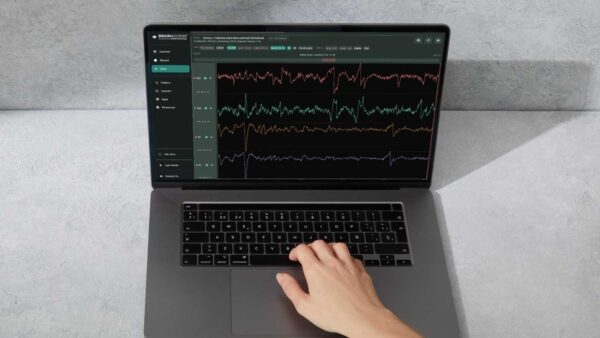
BrainAccess released a major update to its desktop application BrainAccess Board on July 27, 2026, featuring a rebuilt interface, improved functionality and a new AI assistant called Jena that monitors device and signal quality in real time. The company, which supplies EEG devices and software for neuroscience research and clinical use, said the update is aimed at ease of use and data management during EEG acquisition and analysis.

Can a BCI boost attention in older adults? UT Austin launches trial

The University of Texas at Austin has registered a study on ClinicalTrials.gov to explore whether an EEG-based brain-computer interface (BCI) decoding the P300 event-related potential in real time, combined with non-invasive interventions such as mindfulness relaxation or transcranial electrical stimulation, can enhance attention and memory neural markers—proxies for cognitive reserve—in healthy older adults and those with mild cognitive impairment (MCI). The trial is recruiting and aims to test whether targeted modulation of attention-related brain activity can support cognitive reserve.

EEG Decodes Picture Categories More Reliably Than Word Categories

UC Irvine researchers tested an EEG category-decoding task in 30 participants viewing pictures and words from five semantic groups. All picture-category pairs were statistically separable, but only one word-category pair was; parietal and left-temporal electrodes contributed more to picture decoding than frontal and right-temporal sites. The bioRxiv preprint has not been peer reviewed.

Only 11 pediatric BCI trials worldwide, children may be underrepresented

A registry-based cross-sectional analysis found only 11 pediatric brain-computer interface (pBCI) clinical trials worldwide, spanning 7 countries. Eight evaluated non-implanted devices and 3 evaluated implanted systems. Non-implanted trials had a median enrollment of 29 participants and median duration of 56.0 days; implanted trials had a median enrollment of 8 and median duration of 365.3 days. Only 4 studies enrolled exclusively pediatric participants; the rest recruited both children and adults. The authors conclude that current pBCI research is limited in scope and that children may be inadequately prioritized.

Case Report: 3 Stroke Patients Gain Arm Function After 24 BCI-FES Sessions

Three stroke patients with hemiplegia improved on upper-limb motor scores and daily-living measures after 24 sessions of visually guided brain-computer interface training paired with functional electrical stimulation, according to a case report. The patients trained five times a week, and stimulation fired only when the system detected motor imagery-related EEG patterns; gains appeared on Brunnstrom stages, the Fugl-Meyer Assessment and the Barthel Index, most clearly in wrist and hand control. The report cautions that the findings are preliminary and require validation in larger randomized controlled trials.

N400 Window Shapes Semantic Decoding

Aalto University researchers connected the classic N400 evoked response with semantic-vector decoding in a controlled MEG word-priming experiment. The study involved 25 native Finnish speakers who read word groups with different levels of semantic relatedness. Unrelated primes produced larger N400 responses and supplied the most useful training examples for a decoder mapping distributed MEG activity to semantic vectors. The researchers report that semantic information could be decoded from about 100 to 500 ms after stimulus onset. After the N400 peak, however, neural responses no longer mapped reliably to context-invariant semantic vectors. The result suggests that the end of the N400 window may mark a transition from word-specific representation toward broader contextual meaning. This bioRxiv preprint has not been peer reviewed.

CMU Trains User and Decoder Together, Letting BCI Novices Reach 86% Cursor Accuracy

People with no brain-computer interface experience learned to move an on-screen cursor by imagined movement alone when the user and the algorithm were trained together. Carnegie Mellon University researchers led by Bin He used vibrations under the wrists to guide participants' mental strategies while an adaptive decoder reweighted the most informative brain signals. Across 31 untrained, able-bodied participants, average discrete accuracy reached 86% for one-dimensional and 77.5% for two-dimensional cursor control. Such non-surgical BCIs are cheaper and lower-risk than implants, but this one has so far been tested only in healthy volunteers on lab tasks.

Passive BCI Decodes VR Intent With Eye Gaze

Researchers combined electroencephalography (EEG)-based passive brain-computer interface (BCI) with eye tracking to decode users' interaction intent in real time during dynamic VR gameplay, reaching 69.64% accuracy in the online closed-loop phase.

Divergence Neuro Adds BrainBit's 19-Channel DragonEEG to Its Platform

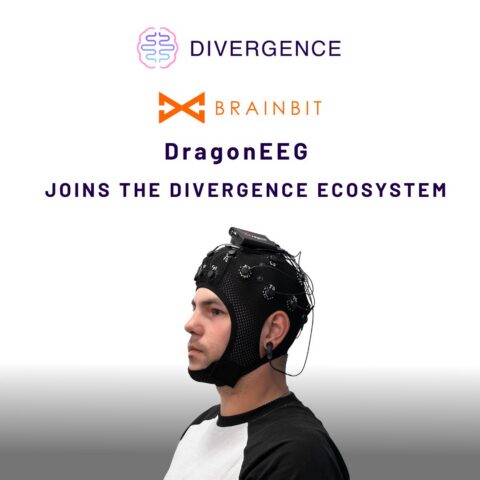
Divergence Neuro has added support for BrainBit's DragonEEG to its platform, bringing in a system with 19 EEG channels laid out on the international 10-20 system plus dedicated EMG, ECG and EOG poly channels. The integration gives clinicians, researchers, educators and developers research-grade EEG acquisition inside the Divergence ecosystem for qEEG brain mapping, neuroscience research and professional neurotechnology development, as qEEG use spreads through neurofeedback, mental health and cognitive performance work.

Bio-Inspired Methods Target EEG Robustness

A perspective review published in Computers in biology and medicine examines EEG non-stationarity across sessions, people, and recording conditions. It asks whether mechanisms that help the brain maintain functional stability can improve the robustness of brain-computer interface models. The review covers synaptic plasticity, homeostatic regulation, neural oscillations, and spiking representations, comparing bio-inspired approaches with conventional machine learning and transfer learning. It also considers hybrid designs that combine biologically grounded mechanisms with artificial neural networks. The author proposes operational definitions for bio-inspired, bio-plausible, and bio-realistic modeling, together with a minimum specification for continual EEG benchmarks. Because direct EEG evidence remains limited for several proposed mechanisms, the review stresses the need to distinguish empirical findings from hypotheses and future research directions.
June 2026

FDA Clears Universal Brain UB ERP System

The FDA cleared Universal Brain's UB ERP System on June 30, 2026, finding it substantially equivalent under submission number K253767 through the traditional 510(k) pathway. The agency classifies it as Non-Normalizing Quantitative Electroencephalograph Software, a Class II device under regulation 882.1400, with neurology as the assigned review panel. Event-related potentials are obtained by averaging EEG time-locked to stimuli; components such as P300 serve both clinical assessment and the classic paradigms behind noninvasive BCI spellers.

Meta Team Decodes Typed Sentences From MEG, With Best Character Error Rate at 18%

A research team has developed Brain2Qwerty, a deep learning model that decodes sentences people type from non-invasive brain recordings. Thirty-five healthy volunteers typed sentences they had just memorized while their magnetoencephalography (MEG, which measures the brain's magnetic fields) or EEG signals were recorded. The average character error rate was 29% with MEG and 65% with EEG; for the best-performing participants it fell to as low as 18%, and the model fully decoded a range of sentences outside its training set. The researchers say the results narrow the gap between non-invasive and implanted methods.

Dynamic Wavelets Boost Imagined-Speech EEG

A study published in Computers in biology and medicine proposes dynamic wavelet-basis selection to improve non-invasive EEG imagined-speech classification. For each EEG epoch, the method minimizes wavelet entropy to select an informative basis and then injects Gaussian noise into the corresponding coefficients. A convolutional neural network with channel-wise excitation classifies the augmented signals. The dataset contains 32 channels, 8 stimuli, and recordings from 10 participants. The words-vowels combination reached a highest classification accuracy of 98% with a Cohen's kappa of 0.95, although performance was lower for the full class set. The researchers report that the method outperformed conventional augmentation strategies and static wavelet approaches, offering an adaptive way to address noise and non-stationarity in EEG decoding.

FDA Clears Neuroelectrics Enobio Dx EEG Systems

The FDA cleared Neuroelectrics Barcelona's Enobio Dx line, in 8-, 20- and 32-channel models, on June 13, 2026, finding it substantially equivalent under submission number K261604 through the special 510(k) pathway. The agency classifies it as a Full-Montage Standard Electroencephalograph, a Class II device under regulation 882.1400, with neurology as the assigned review panel. Neuroelectrics is known in neuromodulation and BCI research for noninvasive EEG acquisition and transcranial electrical stimulation hardware.

FDA Clears VoxNeuro Cognitive EEG Software

The FDA cleared VoxNeuro's Cognitive Function Neuroimaging (cfNI) Software, version 1.0.0, on June 12, 2026, finding it substantially equivalent under submission number K253015 through the traditional 510(k) pathway. The agency classifies it as Normalizing Quantitative Electroencephalograph Software, a Class II device under regulation 882.1400, with neurology as the assigned review panel. Normalizing quantitative EEG software compares an individual's EEG metrics against a reference population database before reporting, supporting objective assessment of cognitive function.
© 2026 BCIwiki.com Digest Topics Tips Subscribe Revisions About