/ EN

Invasive BCI

92 entries

Invasive brain-computer interfaces record neural signals directly from electrode arrays implanted in the cortex, achieving the highest signal resolution and decoding accuracy of any BCI approach. This topic tracks clinical trials, device engineering, and regulatory milestones across leading players including Neuralink, Blackrock Neurotech, Paradromics, and Precision Neuroscience.

July 2026

Neurosom Wins US Patent for Bayesian EEG Source Mapping and Stimulation Targeting

Neurosom announced it has been granted a patent for a method that combines Bayesian statistical modeling with personalized EEG data and brain atlas models to achieve "super-resolution" in locating the origins of brain electrical activity, potentially improving the guidance of transcranial electrical stimulation (TES). The patent, titled "Method for Bayesian Super-Resolution of Electroencephalographic Source Analysis and Transcranial Electrical Stimulation" (US Pat. No. 12,663,866), was announced on July 9, 2026.

SpikeGadgets Takes Neuropixels Recording Wireless in Freely Moving Animals

SpikeGadgets has released wireless dataloggers compatible with Neuropixels probes, letting an animal carry the entire recording system and write high-density probe data straight to onboard storage instead of down a cable. Four studies over the past year used the setup in bats, rats and marmosets, and their findings are reshaping long-standing assumptions about hippocampal replay, prefrontal sequence coding and vocal communication.

Paradromics Names William Marks Chief Clinical Officer as Connexus Study Advances

Paradromics has named William J. Marks chief clinical officer; he brings nearly three decades of experience in clinical neuroscience and implantable devices. The appointment comes as the company advances Connect-One, an early feasibility study of its Connexus BCI system, which is intended to restore communication for people who have lost it to spinal cord injury, stroke or ALS.

INBRAIN and Microsoft Team Up on AI for Neurology and BCI

Barcelona-based INBRAIN Neuroelectronics said it will work with Microsoft on AI for neurology and brain-computer interfaces, combining INBRAIN's neuroscience, bioelectronics and AI work with Microsoft's cloud and AI infrastructure. INBRAIN's graphene-based neural interface is being developed as an adjunctive therapy for Parkinson's disease; it received FDA breakthrough device designation in 2023 and entered its first-in-human study in the fall of 2025.

INBRAIN and Microsoft Partner on AI for Real-Time BCI Adaptation

INBRAIN Neuroelectronics has announced a partnership with Microsoft to apply the software company's large language models and data analytics tools to make its brain-computer interfaces adapt in real time. INBRAIN builds graphene-electrode BCIs for neurological disorders, spanning invasive and non-invasive applications, and recently partnered with the Mayo Clinic to speed clinical development and commercialization of its BCI therapies, with investigator-led clinical research under way.

Microsoft and INBRAIN Neuroelectronics Partner on AI-Driven BCI Therapeutics

Microsoft and INBRAIN Neuroelectronics said they will work together on AI-driven brain-computer interface therapeutics, pairing INBRAIN's graphene-based neural interfaces with Microsoft's cloud computing and data infrastructure to speed development of treatments for neurological disorders. INBRAIN, a Spanish neurotechnology company, says its system combines graphene electrodes with AI algorithms to read and modulate brain signals with high precision, on a platform it describes as bringing together neuroscience, bioelectronics and AI.

Beihang and Tsinghua Team Fuses EEG, Video and Motion to Flag VR Cybersickness

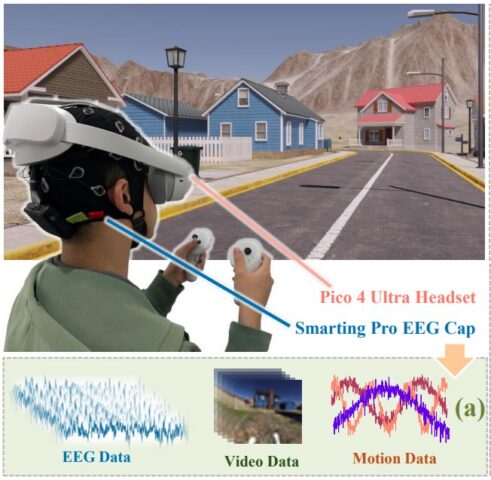
Researchers at Beihang University and Tsinghua University in Beijing built a multimodal contrastive learning framework that pairs EEG with synchronized video and motion data to detect cybersickness in virtual reality, representing the EEG as a connectivity graph and using an attention-based encoder to map the video and motion streams onto the same structure. Fusing all three signals separated cybersick from non-cybersick states more cleanly than any single modality or pair, and the model automatically pruned prefrontal connections unrelated to cybersickness. The setup used mBrainTrain's Smarting PRO 32-channel wireless EEG system and a Pico 4 Ultra headset, with 29 healthy adults navigating a VR scene under their own control.

Preprint: MRI Grey Matter Loss May Predict Who Can Control an ECoG BCI in ALS

A preprint from the Utrecht-BCI Lab at the UMC Utrecht Brain Center in the Netherlands, the invasive-BCI group led by Nick Ramsey, asks why some people with ALS control an implanted brain-computer interface (BCI) better than others. It found that preservation of grey matter in the motor cortex is associated with higher-quality brain signals, suggesting an MRI-based measure could help identify who is a suitable candidate for implantation. The preprint was posted to medRxiv on June 23, 2026 (DOI 10.64898/2026.06.23.26355654).
June 2026

OYMotion and MicroPort NeuroScientific Partner on Endovascular BCI Rehab System

OYMotion and MicroPort NeuroScientific signed a strategic cooperation agreement on May 28, 2026 to jointly develop an interventional brain-computer interface rehabilitation system. The first product will be a multi-channel endovascular BCI that threads a signal-recording stent through the blood vessels to a target brain region, capturing intracranial electrical activity without opening the skull. MicroPort NeuroScientific will build the BCI system as a whole and OYMotion the limb side, with the pair targeting medical rehabilitation and human-machine interaction.

NeuroXess Says Two Paralyzed Patients Played Brain-Controlled Chess 800 km Apart

NeuroXess said two people with high-level paralysis played chess against each other across about 800 kilometers, between Shanghai and Nanchang in eastern China, using its "Triple-Full" (三全) brain-computer interface: one selected and placed pieces on a virtual board by thought, with the commands relayed in real time to a robot stand-in that moved the pieces at the other end, where the second participant gripped physical pieces through a brain-controlled exoskeleton glove. The company said the first participant was implanted at Huashan Hospital, Fudan University, in October 2025, moved a cursor by thought on the fifth day after surgery and reached 5.2 bits per second after 17 days of training, while the second was implanted at the First Affiliated Hospital of Nanchang University in December 2025 and was eating, drinking and writing with a brain-controlled exoskeleton one month after surgery. The outcomes come from the vendor's own account and have not been validated in peer-reviewed publication.

China's Neuracle Files for Shanghai IPO, Seeking RMB 2.5 Billion

The Shanghai Stock Exchange accepted an IPO application from Neuracle, which is seeking RMB 2.5 billion for BCI product development, industrialization and working capital. The filing shows an established non-invasive neurophysiology equipment business alongside invasive products that still require clinical, regulatory and commercialization spending. Acceptance starts the review process and is not approval to list.
May 2026

ChiCTR Registers Trial of Motor Imagery BCI for Lower-Limb Stroke Rehab

The Chinese Clinical Trial Registry (ChiCTR) has logged a study of how brain-computer interface training built on a motor imagery paradigm affects lower-limb motor function in stroke patients. Registered on May 28, 2026 as ChiCTR2600125562, the trial is recruiting; design, sample size and sponsor are absent from the record carried by the WHO International Clinical Trials Registry Platform (ICTRP) and must be read from the original ChiCTR entry.

China Registers Trial of Multimodal BCI for Early Alzheimer's Screening

A Chinese team has registered a clinical trial of a multimodal brain-computer interface system for intelligent diagnosis and treatment, aimed at early screening and non-invasive modulation of Alzheimer's disease. The entry, ChiCTR2600125240, was filed with the Chinese Clinical Trial Registry on May 22, 2026 and is carried by the WHO International Clinical Trials Registry Platform; recruitment has not begun.

sEEG Study Finds Motor Imagery Activity Shifts by Task Stage and Frequency Band

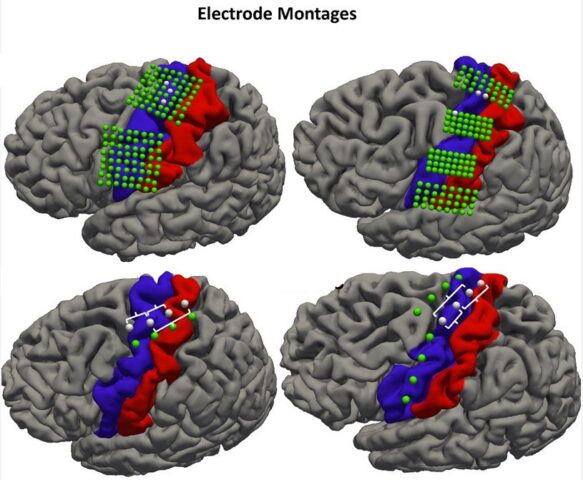
Intracranial recordings from ten epilepsy patients show that neural activity during cued limb motor imagery changes with the phase of the task: low-frequency (8-30 Hz) activity was mostly suppressed during preparation and switched to activation once imagery began, while high-frequency (60-115 Hz) responses were stronger, more widely distributed, and at some contacts followed an activation-then-suppression sequence. The stereoelectroencephalography (sEEG) data indicate that responses are not uniform but shift with task stage and brain region, which the authors tie to stage-aware feature design for BCIs and to neurorehabilitation.

Chinese Trial Pairs Tactile-Feedback BCI With Motor Imagery for Stroke Arm Recovery

A trial combining tactile-feedback brain-computer interface training with motor imagery for upper-limb rehabilitation after stroke is recruiting in China. Registered with the Chinese Clinical Trial Registry as ChiCTR2600124911 on May 19, 2026 and carried by the WHO International Clinical Trials Registry Platform, the trial record is available through the WHO International Clinical Trials Registry Platform.
April 2026

Dual-Task BCI and VR Enter Trial for Shoulder Recovery After Rotator Cuff Repair

A trial of a dual-task brain-computer interface (BCI) combining motor-intention detection with virtual reality training is recruiting patients to measure how it affects shoulder function after rotator cuff repair surgery, following its registration with the Chinese Clinical Trial Registry (ChiCTR) on April 20, 2026. The record has been reposted by the WHO International Clinical Trials Registry Platform (ICTRP).

Johns Hopkins launches INTENT trial of implant that reads and stimulates brain to help paralyzed control devices

Johns Hopkins University has launched the INTENT clinical trial to evaluate the safety and preliminary efficacy of an implantable device that records and stimulates different brain areas, enabling adults with disabling paralysis to control assistive devices and receive feedback. The trial is now recruiting participants with conditions including tetraplegia, ALS, brain stem stroke, and spinal cord injury. Johns Hopkins is a leading U.S. research university whose medical school is renowned in neuroscience. The trial was first posted on ClinicalTrials.gov on April 13, 2026, and is currently recruiting.
March 2026

Combined BCI and Gait-Robot Training Beats Either Alone in Stroke Trial

A randomized controlled trial in 120 patients with post-stroke hemiplegia found that pairing brain-computer interface (BCI) rehabilitation training with a gait robot accelerated lower-limb recovery and improved muscle activation patterns more than either intervention on its own. After eight weeks, BCI training, gait-robot training and the combination all improved lower-limb motor function, muscle activity and gait compared with routine training, but the combined group showed the largest increases in integrated electromyography of the tibialis anterior and gastrocnemius, along with a greater gain in step frequency and a greater reduction in step width.
January 2026
December 2025

China Bills a Brain Implant Under a State-Set Price for the First Time

Tongji Hospital in Wuhan implanted a 64-channel high-throughput flexible electrode array made by Wuhan Neuracom into a 31-year-old man paralysed by a spinal cord injury on 26 November 2025. The procedure was charged under the country's first BCI medical service price schedule, issued by Hubei's healthcare security bureau in March 2025, which sets implantation at 6,552 yuan. China's National Healthcare Security Administration calls it the first BCI operation in the country carried out under a state-set price. This patient's costs were covered by research funding.
May 2025

Neuracle Completes Trial of Its Wireless NEO Implant in Tetraplegia

Neuracle Medical Technology (Shanghai) Co., Ltd. ran a clinical trial in China evaluating the safety and efficacy of its implantable wireless brain-computer interface, NEO, in patients with tetraplegia caused by spinal cord injury. The trial is registered on ClinicalTrials.gov as NCT06990412 and is listed as completed; its stated primary purpose was to provide the basis for product registration. NEO is designed to let patients control external devices with brain signals.

Sichuan Targets 3,000 Brain Implant Ops a Year

Eight Sichuan provincial departments in southwestern China led by the Department of Economy and Information Technology issued the Action Plan for Breakthroughs in the Brain-Computer Interface and Human-Machine Interaction Industry in Sichuan (2025-2030) on May 12, 2025. The plan is unusual in making surgical volume a headline metric, targeting 3,000 invasive BCI procedures a year by 2030, along with services for more than 100,000 patients a year with neurodegenerative disease, psychiatric conditions and drug or digital addiction, and rehabilitation device use exceeding 20,000 sessions a year. By 2027 it aims to complete development and medical device registration of three invasive and five non-invasive products, carry out the province's first invasive BCI operation, serve more than 50,000 patients a year, and cultivate 10 chain-leading firms, 100 specialised SMEs and 200 innovative smaller enterprises. Chengdu, Mianyang, Deyang and Nanchong are named as host cities.
August 2024

Neuralink Details Thread Retraction and Surgical Changes in PRIME Study

Neuralink said thread retraction in its first PRIME participant temporarily reduced BCI performance before the threads stabilized and performance recovered. For the second implant, the team reduced brain motion during surgery and narrowed the gap between the implant and the brain surface. The company reported no thread retraction in the second participant at the time, but it did not publish channel-attrition rates or a formal interim safety report.

University of Miami Launches Trial Using BCI to Trigger Spinal Cord Stimulation

The University of Miami has opened a clinical trial testing whether a brain-computer interface can decode upper-limb motor intention from EEG or ECoG and use it both to trigger epidural spinal cord stimulation (ESCS) and to control assistive devices in people with spinal cord injury. The study was first posted on August 1, 2024, and is recruiting.
May 2024
February 2024

China's Neuracle Registers 96-Patient Trial of Closed-Loop Epilepsy Implant

Chinese registry ChiCTR2400081380 describes a 96-patient trial of an implantable closed-loop recording and stimulation system for focal drug-resistant epilepsy in people aged 6 to 70. All participants are to receive the implant and then be randomized one month later to active or sham stimulation, 48 per group. The registry provides no evidence that enrollment had passed 50%.
July 2023

At-home BCI rehab system shows upper-limb gains in completed stroke trial

A randomized clinical trial called BCI-REHAB compared an at-home brain-computer interface (BCI) therapy system with a home exercise program for upper-extremity rehabilitation in chronic stroke survivors. The trial, conducted in the United States, was first posted on July 28, 2023, last updated on August 12, 2026, and has a status of completed. The study used Neurolutions' IpsiHand Upper Extremity Rehabilitation System, which reads motor intentions via scalp electrodes and drives an exoskeleton hand device to facilitate repetitive hand movement training. The trial aimed to evaluate the efficacy of BCI-based therapy versus standard exercise therapy and assess the potential for meaningful motor improvement in a home setting. The trial covered conditions including stroke, hemiparesis, spasticity as a sequela of stroke, and chronic stroke survivors with a plegic hand, but results have not yet been published.
© 2026 BCIwiki.com Digest Topics Tips Subscribe Revisions About