

Invasive brain-computer interfaces record neural signals directly from electrode arrays implanted in the cortex, achieving the highest signal resolution and decoding accuracy of any BCI approach. This topic tracks clinical trials, device engineering, and regulatory milestones across leading players including Neuralink, Blackrock Neurotech, Paradromics, and Precision Neuroscience.
August 2026

Vivani Merges Cortigent Into Nasdaq-Listed ClearOne, Giving Orion Implant a New Parent
The Orion visual neuroprosthetic system, originally developed by Second Sight Medical Products, is changing parent companies again, Neurotech Reports said. Vivani Medical has agreed a reverse merger with Nasdaq-listed ClearOne under which its Cortigent unit becomes a wholly owned ClearOne subsidiary; ClearOne will be renamed Cortigent Holdings Inc. and is expected to trade as CRGT. ClearOne agreed as part of the transaction to file a Form S-1 registration statement to raise $10 million to $15 million, and Cortigent plans a pivotal trial of Orion in about 60 patients, though funding remains a challenge.
Study reviews invasive and non-invasive BCI use
A systematic review of BCI medical applications published on August 17, 2026 in Theoretical and Natural Science covers literature review, comparative case analysis of invasive vs non-invasive techniques, and interdisciplinary assessment. It reports that invasive BCIs reach 80% to 100% task success rates in robotic arm control but are limited by surgical hazards, progressive signal deterioration and costs above $250,000, while non-invasive BCIs are safer and more widely deployed in community neurorehabilitation with about 70% effectiveness for post-stroke upper-limb recovery, yet suffer poor signal-to-noise ratios, a BCI illiteracy rate near 30% and low information transfer speeds. The review also addresses neural data privacy, autonomy paradoxes and inequitable access.
BCI-guided FES trial targets gait in spinal cord injury
A new clinical trial at Brazil's Santos Dumont Institute will test whether brain-computer interface (BCI)-guided functional electrical stimulation (FES) can improve muscle activation and gait in people with spinal cord injury. The institute is a well-known Brazilian center for neurorehabilitation research. Registered on ClinicalTrials.gov as NCT07768930 and first posted on August 17, 2026, the study is active but not yet recruiting. The intervention involves ankle dorsiflexion rehabilitation: patients wear an EEG cap, the system detects motor-imagery-related brain signals in real time, and when an intention is detected, it triggers FES to stimulate the tibialis anterior muscle to assist ankle dorsiflexion. Primary outcomes are improvements in muscle activation patterns and gait kinematics. The trial is at an early stage, with enrollment details not yet disclosed.
Stanford's Palanker Wins Defense Health Agency Award for PRIMA Retinal Implant

BCI Pricing in Eleven Chinese Jurisdictions: Implantation RMB 4,389-7,980, Insurance Coverage in Two
Eleven Chinese provincial-level jurisdictions had published prices for brain-computer interface medical services. The invasive implantation fee runs from RMB 4,389 at the lowest hospital tier in Sichuan to RMB 7,980 in Beijing (approx. $650 to $1,180 at RMB 6.74 to the dollar, the mid-August 2026 rate), and the non-invasive fitting fee from RMB 643 to 990. Sichuan, Hainan, Qinghai and Xinjiang tier prices by hospital grade, Shanghai leaves the amount to each hospital, and Jiangsu's three figures appear only in a July 2025 draft. Beijing lists all three fees as Class A at four named hospitals; Zhejiang covers the fitting fee as Class B, limited to prosthetic fitting. Sichuan, Jiangxi, Hainan, Qinghai and Xinjiang assign Class C, Shanghai excludes the fees, and Hubei and Guangdong have prices without a coverage decision.
Implantable Motor BCIs Need a Unified Clinical Outcomes Framework
A paper in *Neurorehabilitation and Neural Repair* examines the outcome measures needed as implantable motor BCIs move from safety and feasibility studies toward regulatory approval, reimbursement and sustained clinical use. It calls for valid and reliable assessments that satisfy regulators and payers while reflecting activities that matter to people with severe motor impairment.
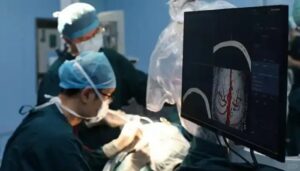
Tongji Hospital Performs Central China's First Fully Invasive BCI Implant
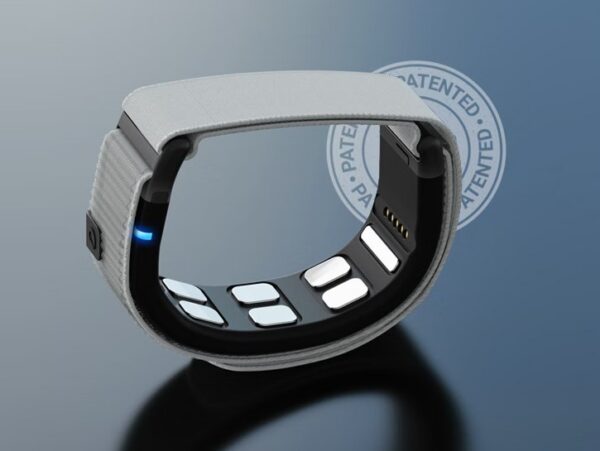
Wearable Devices Patents User Authentication From Gesture and Neural Signals
Shanghai's Neuro Space Hits One-Year Mark: 52 Firms, World's First Invasive BCI Approved

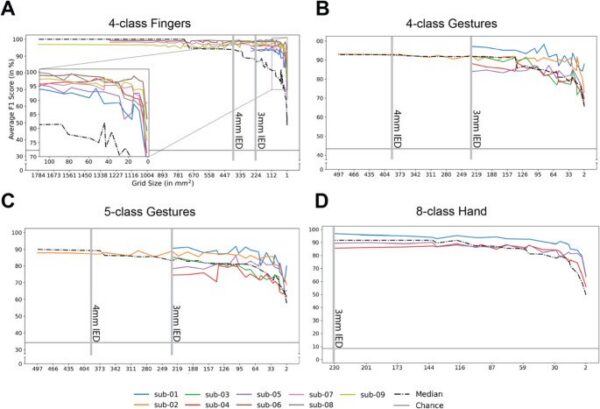
Utrecht Team Finds ECoG Grids Can Shrink up to 94% without Losing Decoding Accuracy
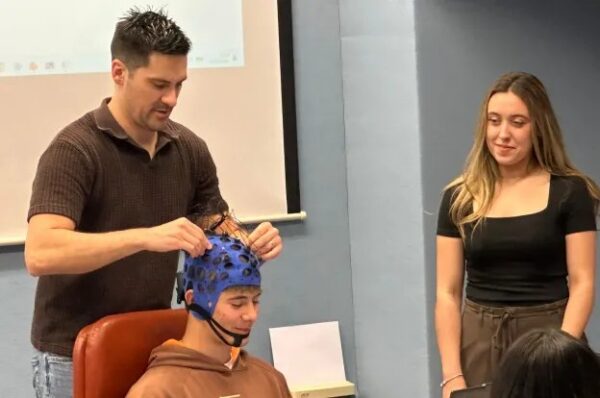
P300 BCI Reads Silently Chosen Digits in a Granada Classroom
July 2026
Eastern China's Shandong Performs Its First Invasive Brain-Computer Interface Implant
Surgeons in eastern China have implanted a brain-computer interface in a man who has been unable to move his limbs for more than two years. Eight ultraflexible electrodes sit 4 mm into his cortex, wired to a chip mounted on the skull. It is the first invasive BCI operation performed in Shandong province, and the patient now begins up to six months of training to control devices by thought.
Soft Porous Brain Implants Reduce Glial Scarring and Guide Regeneration
Researchers at the University of Washington have built mechanically compliant, precision-porous brain implants and tested them in rat brains. At 4 weeks, the porous scaffolds drew less astrocyte encapsulation than solid hydrogel rods, softer hydrogels reduced pro-inflammatory macrophage polarization, and new blood vessels, neuronal markers and neurogenesis appeared inside the pores. The authors present the design as a route to limiting glial scarring and improving regeneration in implant-based central nervous system therapies.
EmoWrite BCI Converts Thought to Text with 90% Accuracy
Researchers in Pakistan and South Korea have built EmoWrite, a brain-computer interface that uses sentiment analysis to turn thought into text, typing at 6.6 words per minute with 90.36% accuracy in tests with 72 volunteers. The system adds a dynamic keyboard and visual feedback to make the interface easier to use.
Paradromics Implants Connexus BCI in Patient With Motor Neuron Disease
Surgeons in Michigan have implanted Paradromics' Connexus brain-computer interface in a patient with motor neuron disease who had lost most of her ability to speak. Connexus records from individual neurons through 421 microelectrodes seated 1.5 millimeters into the motor cortex; the signals pass to a transceiver in the patient's chest, where AI converts them into text on a screen. Austin, Texas-based Paradromics received FDA approval in the fall of 2025 to begin the clinical trial.
NeuroXess 'Sanquan' BCI Enters CMDE Innovative Medical Device Review Program

VA optimizes implanted BCI to help paralyzed veterans use computers at home
The VA Office of Research and Development is advancing a high-performance implanted brain-computer interface (BCI) to improve independence for Veterans and others with tetraplegia or inability to speak due to ALS, spinal cord injury, or stroke. The project enhances deep learning decoders and multi-state gesture decoding, deployed on a battery-powered mobile BCI device for independent home use of computers and touch-enabled devices. Accuracy and usability will be evaluated in participants already enrolled in the BrainGate investigational clinical trial.
Random Forest Model Hits 92.49% Accuracy in EEG Eye-State Detection
Researchers paired interquartile-range clipping for outlier removal with a random forest classifier on the UCI machine learning repository's EEG-Eye-State dataset, classifying eyes-open versus eyes-closed at 92.49% accuracy with a ROC-AUC of 0.9791. Cross-validation put mean accuracy at 92.86%. The authors present the pipeline as a stable, interpretable option for BCI uses such as drowsiness monitoring and assistive technology.
Only 11 pediatric BCI trials worldwide, children may be underrepresented
A registry-based cross-sectional analysis found only 11 pediatric brain-computer interface (pBCI) clinical trials worldwide, spanning 7 countries. Eight evaluated non-implanted devices and 3 evaluated implanted systems. Non-implanted trials had a median enrollment of 29 participants and median duration of 56.0 days; implanted trials had a median enrollment of 8 and median duration of 365.3 days. Only 4 studies enrolled exclusively pediatric participants; the rest recruited both children and adults. The authors conclude that current pBCI research is limited in scope and that children may be inadequately prioritized.
MCSS Framework Tops 98% Motor Imagery Accuracy While Resisting EEG Reconstruction
SpikeGadgets Headstage Records 1,024 Channels Across 10 Brain Regions
A post from SpikeGadgets surveys how far multichannel electrophysiology has scaled: its Modular Stacking Headstage supports chronic recording of 1,024 channels across 10 brain regions; the University of Pittsburgh's MePhys platform uses 992 electrode contacts to cover an entire macaque hemisphere; and a Rice University preprint describes a custom ASIC that supports 5,376 simultaneous recording channels.
Adding EMG to Hybrid BCI Expands Command Space from 15 to 60 Targets
Researchers have paired steady-state motion visual evoked potentials (SSMVEP) with electromyography (EMG) in a hybrid brain-computer interface, using a parallel architecture to expand the command space from 15 targets to 60. The multimodal setup reached an information transfer rate of 62.33 bits/min, against 42.49 bits/min for the best single-modality condition. Deep-learning decoding of the two signal streams held classification accuracy steady while lowering the effort required of users with severe motor impairment.
Ghost-LENet Tops 80% on Motor Imagery EEG Using a Few Thousand Parameters
Researchers have built Ghost-LENet, a lightweight convolutional network that classifies motor imagery EEG at 82.18% on the BCI Competition IV-2a dataset and 83.05% on IV-2b using only a few thousand trainable parameters. The design combines dilated temporal convolutions, a stationary wavelet transform, dynamic residual fusion and Ghost modules, holding accuracy while cutting model complexity for BCI hardware with little compute to spare.
UCL Workshop Syncs EEG, Eye Tracking, ECG and GSR in a Flight Simulator

Preprint: Cross-Subject Learning Cuts BCI Calibration for Children With Cerebral Palsy
A preprint reports that cross-subject cumulative learning and transfer learning can sharply cut the calibration burden of brain-computer interfaces based on movement-related cortical potentials (MRCP) in children with cerebral palsy. Testing a bidirectional long short-term memory network across 27 training sessions in four children, the authors found cross-subject cumulative learning reached 91% accuracy with no within-session calibration, rising to 93% when transfer learning was added — both better than conventional calibration strategies.
UW Team Maps Uneven Reach Coding in Monkey Motor Cortex to Guide BCI Implant Placement
Researchers at the Center for Neurotechnology at the University of Washington recorded from two male monkeys with high-density laminar microelectrode arrays and found that reaching-related activity in frontal motor cortex is unevenly distributed both across the cortical surface and with depth. Target-direction information varied sharply between neural populations, but the amount of task information a population carried predicted which populations shared similar temporal dynamics. The authors say the pattern should inform where electrodes are placed in future brain-computer interface implants.
MOJO Framework Boosts Neural Decoder Accuracy When Labels Are Scarce
Researchers have proposed MOJO, a training scheme that pairs masked autoencoding with a supervised objective for decoders that tokenize spiking activity. Tested on monkey motor cortex, multi-region mouse recordings and human electrocorticography during speech, MOJO beat purely supervised models, with the widest margins in few-shot finetuning where labels were limited, and produced more interpretable neuronal representations. The paper, posted to arXiv on July 15, 2026, has not been peer reviewed.
Carnegie Mellon's Sensory-Guided Training Speeds Motor Imagery BCI Learning
Carnegie Mellon University researchers report a sensory-guided joint learning framework that pairs human motor learning with adaptive machine learning to train motor imagery BCI users. Across 31 BCI-naive participants, average online discrete accuracy was 86.0% in one dimension and 77.5% in two, with continuous control accuracy at 77.5% and 66.9% respectively; tactile guidance reduced how much users had to explore and accelerated neural adaptation, while sample reweighting kept decoder updates aligned with the learner's own trajectory. The authors frame the approach as a shift from passive calibration to active human-machine joint learning; the study appears in Nature Communications.
Federated Graph Framework Fuses EEG and EMG to Decode Motor Intent
A team writing in Computing and Informatics has proposed FSDFGL, a federated graph learning framework that folds EMG into EEG when the graph is built and then shares only structural information between clients, avoiding the accuracy loss that comes with exchanging heterogeneous features. The design targets three problems in hybrid BCI work at once: the low spatial resolution of EEG, datasets that are small and privacy-sensitive, and the uneven data distributions federated learning has to cope with. Experiments on the TAN dataset show an advantage in identifying complex motor intentions.